How to Cook a New York Strip Steak: The Northern Michigan Farm Guide
You just pulled a beautiful cut of beef out of the fridge in your kitchen near Traverse City, but there is a nagging worry in the back of your mind. What if it comes out grey, tough, or overcooked? We have all been there. It is a sinking feeling to ruin a premium piece of meat because you aren't sure how to cook a new york strip steak properly. At Fowler Valley Farms, we believe that cooking a steak should be as straightforward as raising the cattle themselves.
We agree that you shouldn't need a culinary degree to enjoy a restaurant-quality meal at home in Honor or Frankfort. This guide will teach you how to master our farm-tested techniques that respect the marbling of Northern Michigan grain-finished beef. We are going to show you how to achieve a thick, salty crust and a perfect medium-rare finish. You will learn about the importance of dry heat, why resting the meat matters, and how to handle our farm-direct cuts with total confidence.
Key Takeaways
- Learn why our Northern Michigan grain-finished beef provides the marbling needed for a tender steak and why surface moisture is the enemy of a good sear.
- Master the essential steps of how to cook a new york strip steak using a smoking-hot skillet to create a restaurant-quality crust.
- Discover the reverse sear method, which is the most reliable way to cook the thicker 1.5-inch strips found in our customizable beef boxes.
- Understand why a 10-minute rest period is mandatory to keep the juices inside the meat rather than on your cutting board.
- Gain the confidence to serve your family a perfect medium-rare meal by learning the simple trick of slicing against the grain.
Why Sourcing Matters: The Northern Michigan Grain-Finished Difference
The New York strip is carved from the short loin of the cattle. This section sits right behind the ribs and does very little physical work. Because it is a non-working muscle, it stays tender and fine-grained. When you are learning how to cook a new york strip steak, you are working with one of the most prized cuts on the animal. We take great pride in how these animals are raised on our farm. The stewardship of the land in Benzie County directly impacts the quality of the beef on your plate. Our local climate and the way we care for our pastures ensure that every steak has a clean, robust flavor that represents the best of Northern Michigan.
Marbling: The Secret to Tenderness
Intramuscular fat is the secret to a great meal. We call this marbling. These are the small white flecks that look like a pattern throughout the red meat. This is different from the thick fat cap on the edge of the steak. When you apply heat, this intramuscular fat melts. It bastes the meat from the inside out. This is why our grain-finished beef stands out. It has a higher level of marbling than grass-fed alternatives. This results in a richer, beefier flavor profile that holds up to high heat. Grain-finished beef is the gold standard for Northern Michigan grilling because it provides the consistent marbling required for a perfect sear.
Farm-to-Table Freshness in Traverse City
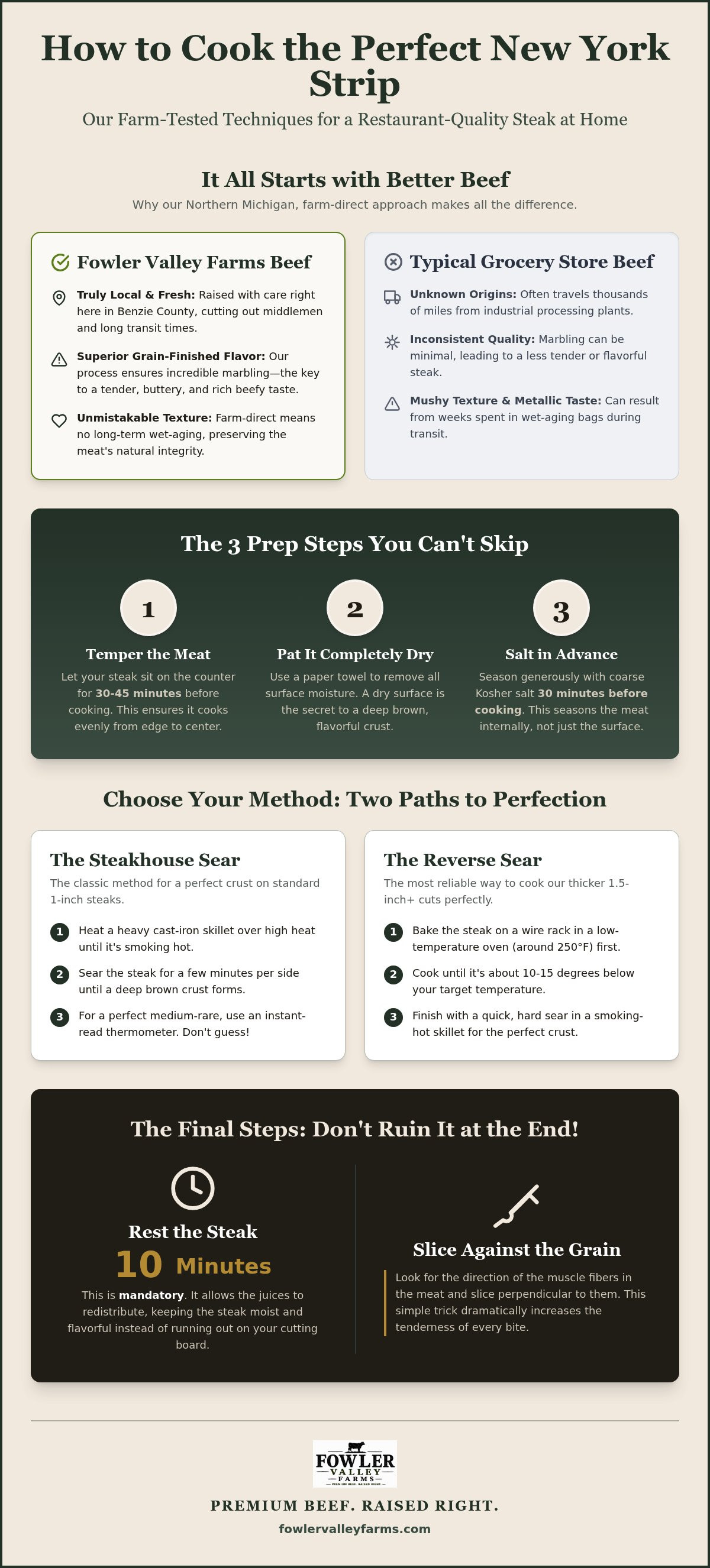
Freshness is not just a buzzword for us. It is about the time between our farm and your table in Traverse City, Frankfort, or Honor. Grocery store meat often travels thousands of miles and sits in wet-aging bags for weeks. This can lead to a metallic taste and a mushy texture. Our direct-to-consumer model cuts out the middleman. This preserves the natural integrity of the meat. You don't need heavy marinades to hide the flavor of our steaks. A simple seasoning is all it takes when the beef is this fresh. You can see how we handle our cattle and manage our pastures on our about page.
There are several reasons why our farm-direct beef makes a difference for your family:
- Better texture: Our beef isn't over-processed or sitting in industrial warehouses.
- Superior flavor: Grain-finishing creates the buttery taste people expect from a high-end steakhouse.
- Local accountability: We are your neighbors in Benzie County, and we stand by every cut we sell.
When you know how to cook a new york strip steak that has been raised with care, the results are unmistakable. You are starting with a superior product that makes your job in the kitchen much easier.
Preparation: Getting Your Farm-Fresh Steak Ready for the Heat
Taking a cold steak from the fridge and throwing it directly onto a hot skillet is a mistake we see often. The center stays cold while the outside overcooks. We recommend letting your beef sit on the counter for at least 30 to 45 minutes. This process, called tempering, ensures the meat cooks evenly from edge to center. While the meat rests, use a paper towel to pat the surface completely dry. Moisture is the enemy of a good sear. If the surface is wet, the steak will steam instead of crusting. You want that deep brown color, not a grey, boiled appearance. This is a vital step in learning how to cook a new york strip steak that rivals your favorite Traverse City steakhouse.
The 30-Minute Salt Rule
Coarse Kosher salt is our preferred seasoning. It creates a better crust than fine table salt because the larger grains don't dissolve instantly. Apply it generously about 30 minutes before you start cooking. The salt draws moisture out at first, but then it dissolves into a brine and is reabsorbed into the muscle fibers. This seasons the interior of the beef, not just the surface. We avoid pre-mixed steak rubs that contain sugar or dried herbs. At the high temperatures required for a proper sear, those ingredients often char and turn bitter. Stick to salt and cracked black pepper to let the natural grain-finished flavor shine through.
Selecting Your Tools
A heavy cast-iron skillet is the best tool in your kitchen for this job. It holds heat better than thin stainless steel or non-stick pans; it provides the steady, high heat needed for a thick crust. You also need an instant-read meat thermometer. Guessing the doneness by poking the meat is a quick way to overcook an expensive cut. Finally, use tongs or a flat stainless steel spatula. Never use a fork to flip your steak. Piercing the meat allows the juices we worked so hard to preserve to leak out into the pan. If you are planning your next family meal in Frankfort or Honor, our Build Your Own Beef Box allows you to select the exact thickness you prefer for your kitchen setup.
To ensure your prep is successful, keep these fats in mind:
- High-smoke point oil: Use avocado or grapeseed oil for the initial sear.
- Avoid butter early: Butter burns quickly at high heat and will leave a bitter taste if used too soon.
- Finish with flavor: Save the butter and fresh herbs for the final two minutes of cooking to baste the meat.
Preparation is half the battle. By taking the time to temper, dry, and season your beef correctly, you set the stage for a successful meal. When the meat is prepped properly, the actual cooking process becomes much simpler and more predictable.
The Steakhouse Method: Pan-Searing and Oven Finishing
The pan-sear and oven-finish method is a classic for a reason. It is the most reliable way to get a crunchy, salty exterior while keeping the inside tender and juicy. When you learn how to cook a new york strip steak this way, you are utilizing the Maillard reaction. This is the chemical process that occurs when the meat hits high heat, creating those complex, savory flavors we all love. Whether you are cooking in your kitchen in Benzie County or hosting a summer dinner in Leelanau, this method provides a consistent result every time.
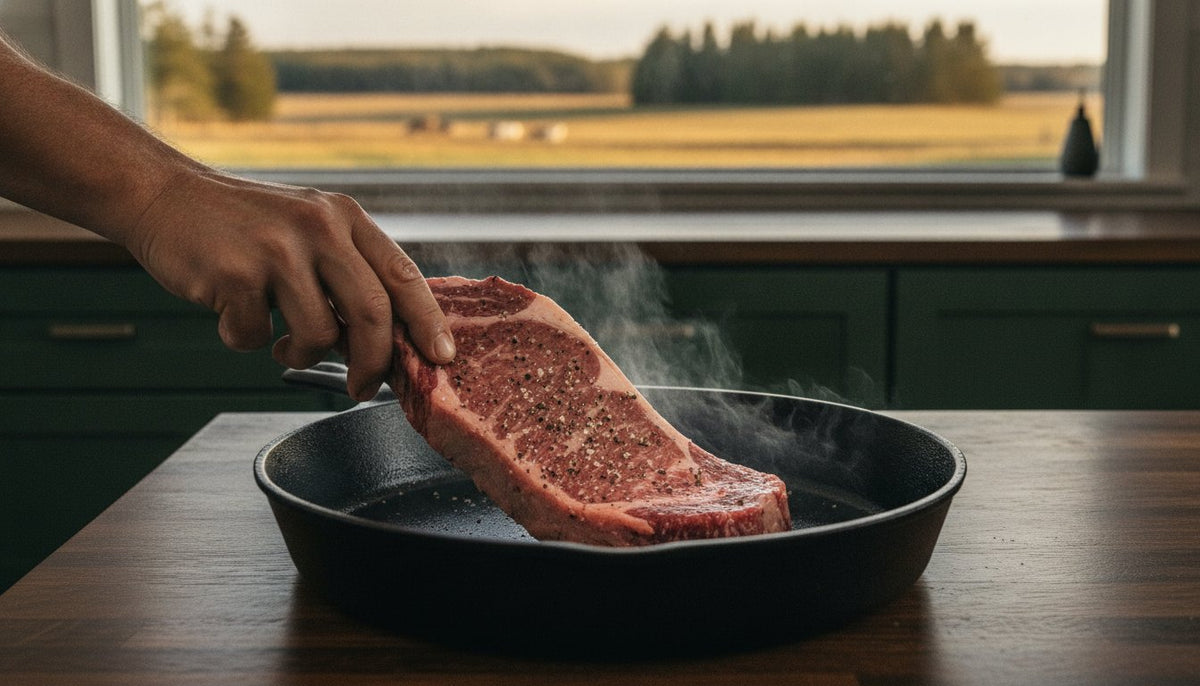
One detail people often overlook is the fat cap. That thick strip of white fat along the side of our grain-finished beef is a flavor powerhouse. We recommend using your tongs to hold the steak upright in the pan for about 30 to 45 seconds. This renders the fat down and makes it crispy rather than chewy. Once you have a good sear on both sides, it is time for the butter baste. Drop in a knob of butter, a few smashed garlic cloves, and a sprig of fresh rosemary. Tilt the pan and spoon that foaming butter over the meat. It adds a layer of richness that defines a true restaurant-quality meal.
Steps for the Perfect Sear
Success in the pan starts with high heat and a bit of patience. Follow these steps to ensure you don't lose the juices or ruin the crust:
- 1. Heat the oil: Add a tablespoon of high-smoke point oil to your cast iron. Wait until it shimmers and just begins to show wisps of smoke.
- 2. Placement: Lay the steak into the pan, moving away from your body. This prevents hot oil from splashing back onto your hands or clothes.
- 3. Patience: Let the meat sear for 2 to 3 minutes without moving it. If you move the steak too soon, it will tear and won't develop that deep brown crust we are looking for.
The Oven Finish and Temperature Guide
If your steak is thicker than one inch, the center might still be raw when the outside is perfect. This is when we transfer the entire skillet into a preheated 400°F oven. This indirect heat cooks the meat more gently and evenly through the middle. Use your meat thermometer to check the internal temperature every few minutes. We recommend pulling the meat when it hits 130°F for a perfect medium-rare finish. If your family prefers a medium steak, wait until it reaches 140°F. For more details on handling our farm-direct cuts or managing your delivery, visit our FAQ page. This method ensures your Northern Michigan beef is treated with the respect it deserves.
The Reverse Sear: Mastering Thicker Cuts from Your Beef Box
When we cut our New York strips to a 1.5-inch thickness, the standard pan-sear method can be tricky. If you leave it in the pan too long, you risk a wide "grey band" of overcooked meat around the edges. The reverse sear is the most foolproof way to master how to cook a new york strip steak when you are working with these thicker, premium cuts. This method flips the traditional process on its head. We start the meat in a low oven to gently bring up the internal temperature while drying out the exterior. This preparation creates the perfect surface for a final, intense sear that takes less than a minute.
Why We Use This for Our Thickest Cuts
The science behind the reverse sear is simple. By starting at 225°F, the muscle fibers don't tighten up as aggressively as they do with high heat. This mimics the precision of a sous-vide water bath but without the need for plastic bags or specialized gear. It results in a steak that is wall-to-wall pink with almost no overcooked grey meat under the crust. This is our favorite method for a special Sunday dinner in Frankfort or Traverse City. It works exceptionally well for our individual cuts because it respects the high-quality marbling of our grain-finished beef. You get a tender, juicy interior and a professional-grade crust every single time.
Step-by-Step Reverse Sear Instructions
You will need a wire cooling rack and a baking sheet for this process. The rack allows air to circulate around the entire steak, drying the surface as it warms. This is a slow process, so don't rush it. It might take 45 to 60 minutes depending on the exact thickness of your beef. Follow these steps for the best results:
- Bake: Place the seasoned steak on the wire rack in a 225°F oven. Bake until your instant-read thermometer hits 115°F for a medium-rare target.
- Rest: Remove the steak from the oven and let it rest on the counter for 10 minutes. Do not skip this step. The surface needs to cool slightly so the final sear doesn't overcook the inside.
- Flash-Sear: Get your cast-iron skillet screaming hot with a tablespoon of avocado oil. Sear the steak for only 45 to 60 seconds per side.
Because the oven has already dried the surface of the meat, the crust will form almost instantly. You won't need to leave it in the pan long enough to ruin the internal temperature. If you are ready to try this method at home, you can order our Northern Michigan beef for local delivery straight to your door. This technique ensures that even the thickest steaks from our farm are served with total confidence and perfect doneness.
Resting and Serving: Bringing the Farm to Your Traverse City Table
The hardest part of learning how to cook a new york strip steak is the final ten minutes. After you pull that meat from the skillet or oven, it looks and smells incredible. Your instinct is to cut into it immediately. Resist that urge. Resting is just as important as the sear itself. If you slice it too soon, the juices will run all over the cutting board, leaving the meat dry and tough. By giving it time, you ensure every bite is as tender as the last. This is how we serve our families here in Benzie County, and it is the final step to a perfect farm-fresh meal.
The Science of Resting
During the cooking process, the heat causes the muscle fibers to tighten and push moisture toward the center. When the steak rests, those fibers relax and reabsorb the juices into the meat. Your steak will rise 5 degrees after leaving the pan because of carry-over cooking. We don't recommend tenting your steak with foil during this time. While it keeps the meat warm, it also traps steam that softens the crust you worked so hard to build. Let it sit uncovered on a warm plate or a wooden board instead. This preserves the texture and ensures the internal temperature reaches its final target naturally.
When you are finally ready to serve, look at the direction of the muscle fibers. Always slice against the grain. This breaks up the long fibers and makes the meat feel much more tender in your mouth. Keep your sides simple so the quality of the beef remains the focus. A baked potato or some roasted seasonal vegetables from a Traverse City farmers market are all you need. The star of the show should always be the beef.
Stocking Up in Northern Michigan
Once you master how to cook a new york strip steak, you will want to have them on hand for whenever the craving hits. Buying a 10 lb or 15 lb beef box is a much smarter move than making weekly trips to the grocery store. It ensures you always have premium, grain-finished cuts in your freezer for a quick Tuesday night dinner or a weekend celebration. We offer free local delivery to Frankfort, Honor, and Leelanau County, bringing the farm's best directly to your doorstep. You can even customize your order with our Box Builder to make sure you have the exact cuts your family loves most. It is about building a relationship with your food and the people who raise it right here in Northern Michigan.
Fire Up the Skillet with Confidence
Mastering the perfect steak doesn't require a restaurant kitchen; it just takes a bit of patience and the right starting point. We have covered why sourcing grain-finished beef with superior marbling is the foundation of every great meal. Whether you choose a classic pan-sear or the foolproof reverse sear for thicker cuts, remember that surface moisture is the enemy and resting your meat is mandatory. These simple farm-tested steps ensure your family enjoys a juicy, tender result every time you step into the kitchen in Benzie County or Leelanau.
We are proud to provide our neighbors in Traverse City, Frankfort, and Honor with beef that is raised with integrity right here on our farm. You can skip the grocery store lines and trust that your dinner is coming from a local source that values quality above all else. Build Your Own Beef Box and get steakhouse quality delivered to your Northern Michigan home with our free local delivery service. Now that you know how to cook a new york strip steak with total confidence, we can't wait to hear how your next steak night turns out. Happy cooking from our family to yours.
Frequently Asked Questions
How long does it take to cook a New York strip steak to medium-rare?
It usually takes about 6 to 8 minutes of total cooking time for a standard 1-inch steak to reach medium-rare in a hot skillet. If you are using the reverse sear for a thicker 1.5-inch cut from our farm, the oven time might take 45 minutes followed by a quick 1-minute sear. We always recommend using a thermometer rather than a timer. This ensures your Benzie County beef is perfect every single time you learn how to cook a new york strip steak.
What is the best temperature to pull a New York strip off the heat?
We recommend pulling your steak off the heat when it hits 130°F for a medium-rare finish. The temperature will rise about 5 degrees while it rests on your counter in Traverse City. While the USDA recommends a minimum internal temperature of 145°F followed by a three-minute rest for food safety, many of our customers prefer the tenderness of a 135°F final temp. Always use an accurate instant-read thermometer to be certain of your results.
Should I marinate my New York strip steak before cooking?
You don't need to marinate our grain-finished beef to get a tender result. Because we focus on superior marbling and freshness, the natural flavor of the meat should be the star. Heavy marinades often mask the high-quality taste of the short loin. A generous coating of coarse Kosher salt and cracked black pepper is all you need. This simplicity is the secret to how to cook a new york strip steak properly for your family.
Can I cook a New York strip steak on a gas grill instead of a skillet?
Yes, you can certainly use a gas grill, especially during those beautiful Northern Michigan summer evenings. We recommend preheating the grill to high heat to get a good sear. Keep a close eye on the fat cap to avoid flare-ups that can char the meat too quickly. If you have a thicker 1.5-inch cut, try using indirect heat on one side of the grill to finish it after the initial sear is complete.
Why is my New York strip steak tough and chewy?
Toughness usually comes from overcooking the meat or failing to let it rest properly after it leaves the heat. If you slice into the beef immediately, the juices escape and leave the fibers dry. Another common mistake is slicing with the grain instead of against it. Breaking those fibers with your knife makes every bite much easier to chew. Our grain-finished beef is naturally tender, so following these simple kitchen steps is the key to success.
Do I need to trim the fat off my New York strip before cooking?
We suggest leaving the fat cap intact while you cook. That white strip of fat along the edge melts down and bastes the meat with incredible flavor. It is one of the best parts of our grain-finished beef. You can always trim it off on your plate after cooking if you prefer, but leaving it on during the sear ensures the steak stays juicy. Don't forget to sear that edge specifically for a few seconds.
What is the difference between a New York strip and a Ribeye?
The main difference is the fat distribution and where the cut comes from on the animal. A New York strip comes from the short loin and has a tighter grain with a distinct fat cap along one side. A ribeye comes from the rib section and features more internal fat pockets, known as marbling and the eye. Both are favorites in Frankfort and Honor, but the strip offers a more balanced, robust beefy flavor profile.
How do I store leftover cooked steak to keep it from drying out?
To keep your leftovers fresh, store the steak in an airtight container in the fridge as soon as it cools. We recommend keeping the steak whole rather than slicing it before storing. This helps retain the moisture inside the meat. When you're ready for a second meal, try slicing it thin while it's cold for a salad or a sandwich. This avoids the drying effect of reheating the beef in a microwave or oven.