Leelanau County Pork Chops: A Local Guide to Choosing and Cooking Them
The best pork chop for supper isn’t always the thickest one. The right choice depends on how you plan to cook it, whether that’s a quick skillet sear or a slower turn on the grill. Here in Northern Michigan, choosing Leelanau County pork chops with clear sourcing matters just as much as knowing how to keep them tender.
At the meat counter, start with two questions: how thick is the chop, and how will you cook it? Those details help you choose a cut and plan your cooking time. We’ll cover what to look for, practical steps for juicy results, and the safe internal temperature for serving pork. Fowler & Valley Farms is a family-owned farm offering pork and local delivery, with customers across Northern Michigan and communities including Traverse City, Frankfort, Leelanau County, Kalkaska, Boyne City, Grand Rapids, Bay City, Midland, Saginaw, Freeland, Clare, Cadillac, Kingsley, Grand Haven, Muskegon, Detroit, and Chicago.
We’ll look at how different chops suit different meals, then get into seasoning, cooking, and resting. No fuss, just useful guidance for bringing a well-cooked pork chop to the table.
Key Takeaways
- Match chop thickness and visible fat to your cooking method before you start cooking.
- Use a meat thermometer and let pork chops rest so they’re safely cooked without guesswork.
- Compare farm-direct and grocery shopping by the sourcing information, shopping format, and convenience each provides.
- Plan a simple meal around seasonings and sides, and store the pork safely if you’re cooking later.
- Look for specific sourcing details when choosing Leelanau County pork chops.
Leelanau County Pork Chops: What to Look for Before You Buy
When choosing pork chops in Northern Michigan, begin with three practical details: thickness, visible fat, and your cooking method. A thin chop works for a quick meal but needs close attention at the stove. A thick chop takes longer for the center to cook through, so it calls for steadier heat and a thermometer. Think about those details before you heat the skillet, whether supper is a quick weeknight meal or a grill dinner outdoors.
Pork chops are cut from a hog, most commonly from the loin along the back. The name covers different shapes and bone structures, so look beyond the label when deciding how to cook one. For a useful overview of common cuts and cooking approaches, see Pork Chop Varieties and Preparation.
Bone-in or boneless: which pork chop suits the meal?
Bone-in chops have a bone along one edge, which can take up more room in a pan and make the chop less straightforward to arrange on a plate. Boneless chops are easier to portion and serve, making them convenient for a weeknight skillet dinner. Neither format is automatically right for every meal. A boneless chop can suit a quick stovetop supper, while a bone-in chop can work well on the grill if it fits your setup.
Keep thickness in mind, too. A thick boneless chop and a thin bone-in chop won’t cook at the same pace just because of their bone structure. Choose the format that works for your meal, then adjust the cooking method to the chop’s thickness.
How thickness and appearance shape your cooking plan
Thickness affects how quickly heat reaches the center. A thinner chop cooks through sooner, so watch it closely to avoid drying it out. A thicker one needs a more gradual approach: cook it through without keeping the outside over high heat for too long. Follow a reliable recipe for timing, and use a food thermometer rather than judging doneness by appearance alone.
Look for meat that appears moist, with a fairly even pinkish color. Check the package for the cut description, weight, and handling details. Some chops have a visible edge or streak of fat, which can contribute moisture and flavor as the meat cooks. The amount varies from chop to chop. Color by itself doesn’t tell you whether meat is safe to eat; cooking temperature does. We’ll cover safe doneness in the cooking section.
Choose portions that suit the meal and the people at your table. The package weight and number of chops help with serving plans, while thickness helps you estimate how to cook them. With Leelanau County pork chops, knowing the cut, portion size, and cooking method makes it easier to decide what will work before you bring them home.
How to Cook Pork Chops Without Drying Them Out
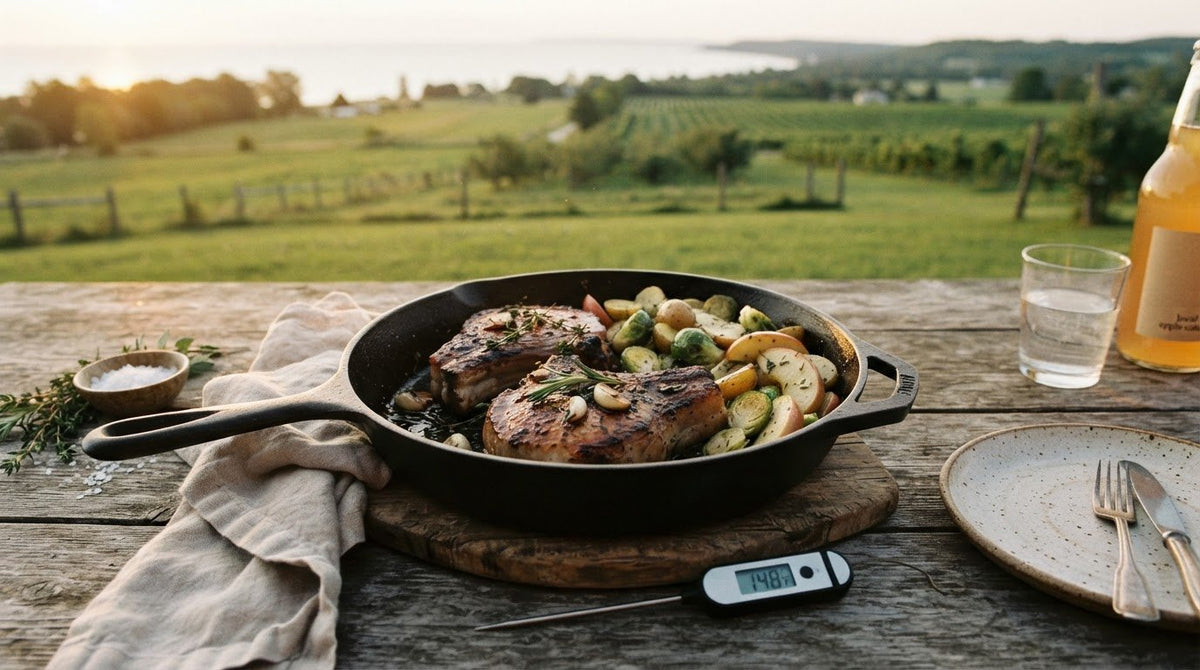
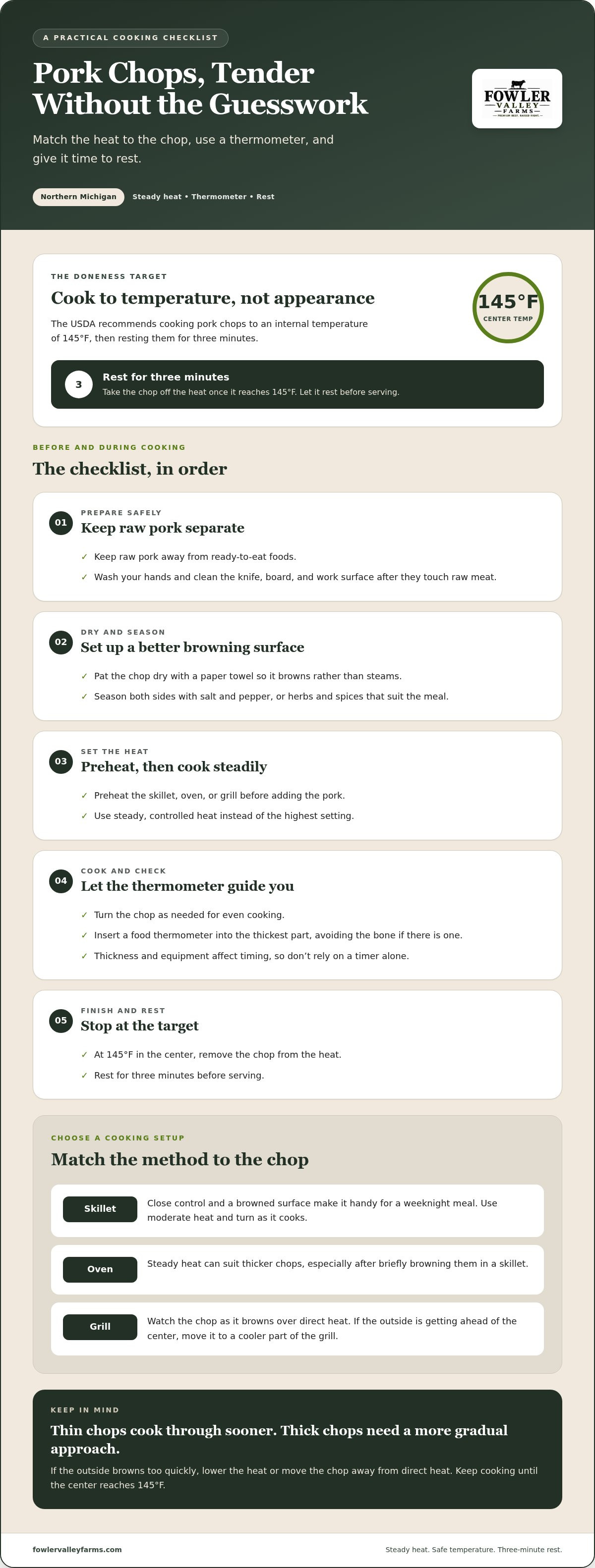
Tender pork chops come from steady heat and a thermometer, not guesswork. Thickness affects how quickly the center cooks, and high heat can brown the outside before the middle is ready. Keep an eye on both. The USDA recommends cooking pork chops to an internal temperature of 145°F, followed by a three-minute rest before serving.
A simple sequence for cooking pork chops
- Prepare safely. Keep raw pork separate from ready-to-eat foods. Wash your hands, and clean the knife, board, and work surface after they touch raw meat. For further guidance on safe handling and storage, read Michigan State University Extension on Pork Handling and Storage.
- Dry and season. Pat the chop’s surface dry with a paper towel. This helps it brown rather than steam in the pan or on the grill. Season both sides with salt and pepper, or add herbs and spices that suit the rest of the meal.
- Set up your heat. Preheat the skillet, oven, or grill before adding the pork. Use steady, controlled heat rather than the highest setting.
- Cook and check. Turn the chop as needed for even cooking. Since timing depends on thickness and equipment, use a food thermometer. Insert it into the thickest part, avoiding the bone if there is one.
- Rest before serving. Once the center reaches 145°F, take the chop off the heat and let it rest for three minutes. The USDA recommends this rest as part of its safe cooking guidance.
Skillet, oven, or grill: match the method to the chop
A skillet gives you close control and a browned surface, making it handy for a weeknight meal. Use moderate heat and turn the chop as it cooks. The oven provides steady heat and can suit thicker chops, especially after briefly browning them in a skillet. On the grill, chops cook over direct heat and need attention as they brown. If the outside is getting ahead of the center, move them to a cooler part of the grill.
There’s no single cooking time that fits every chop. Thickness, bone, starting temperature, pan, oven, and grill all affect how quickly the center heats. Let the thermometer guide you, not a timer alone. If a chop browns too quickly, lower the heat or move it away from direct heat, then keep cooking until it reaches the safe temperature.
To keep pork chops from drying out, control the heat, check the center with a thermometer, and stop cooking at 145°F before resting for three minutes. That simple routine works whether you’re cooking Leelanau County pork chops in a skillet, oven, or on the grill. Pay attention to heat and doneness, and you can serve a tender chop without guesswork.
Choosing Local Pork Chops: What Farm-Direct Buying Can Clarify
For shoppers in Leelanau County, buying pork direct from a farm is one way to learn who produces it and how it reaches the table. Grocery stores and farms offer different ways to browse, get information, and plan a meal. Compare the sourcing details and shopping format, then choose the option that fits what you value and how you like to shop.
Specific descriptions are more useful than broad labels. Look for information about where the hogs are raised, their care and feed, where processing takes place, and how the pork is handled before sale. Those details help you understand the source without relying on assumptions. For more guidance on assessing sourcing details, read our Michigan farm meat sourcing guide.
What to learn about the farm behind your pork
Farm-direct shopping gives you a direct route to a farm’s own description of its work. Fowler Valley Farms is a family-owned, direct-to-consumer farm offering pork alongside beef and chicken. Learn about the people and farm behind that work through our family and farm background. Clear information gives you a better basis for deciding what matters to your household.
A practical comparison for Leelanau County shoppers
Use this comparison as a starting point, not a rule. Farms and grocery stores differ in how they share information and how shoppers buy from them.
| Consideration | Farm-direct | Grocery store |
|---|---|---|
| Shopping format | Buying directly from a farm, with the process shaped by how that farm sells. | Browsing meat alongside other household groceries in one store. |
| Sourcing information | A direct route to the farm’s own description of its raising and processing practices. | Package labels and information from the store or producer can help explain sourcing. |
| Convenience | Can suit shoppers who want to buy from a farm and plan around its purchasing format. | Can fit a regular grocery trip, with products available while you shop for other items. |
Before choosing Leelanau County pork chops, decide which details matter to you and how you prefer to shop. If raising practices are important, look for specific explanations instead of relying on a general phrase. If fitting the purchase into your week matters most, consider which format works with your routine. Useful sourcing information helps you make an informed choice without asking you to assume more than the seller has explained.
Planning, Seasoning, and Storing Pork Chops for an Easy Meal
A little planning makes pork chops easier to fit into a busy Northern Michigan evening. Consider how many people are eating, what else is on the table, and whether you’ll cook every chop at once. Use the package count and weight to plan portions, then choose sides you can prepare while the chops cook. Roasted potatoes, applesauce, green beans, or a simple salad all make familiar companions.
Simple seasoning and sides for a pork-chop dinner
Pork’s mild flavor pairs well with everyday pantry seasonings. Pat the surface dry, then season with salt and black pepper. For more depth, add garlic powder, dried thyme, or paprika. Use a light hand so the seasoning supports the meat rather than covering it.
For a simple savory combination, use black pepper, garlic, and a pinch of thyme. Pair the chops with roasted root vegetables in colder months, or serve them with a green salad and corn when the weather is warm. Choose sides that can share the oven or stovetop without crowding your cooking space. If you have a busy evening ahead, prep vegetables and season the chops earlier, then keep the raw pork refrigerated until you’re ready to cook.
Safe refrigeration, freezing, and thawing
Keep raw pork cold. The USDA advises storing fresh pork chops in a refrigerator at 40°F or below and using them within three to five days. If you won’t cook them in that window, freeze them. At 0°F, pork chops can be kept frozen; the USDA’s recommended freezer time of four to six months is for best quality.
For freezing, protect the chops in suitable freezer-safe wrapping and mark the date so you can keep track. Keep raw pork separate from ready-to-eat foods in the refrigerator, and set it on a plate or tray to catch drips. That simple step helps keep other food and shelves clean.
Thaw pork safely in the refrigerator, in cold water, or in the microwave. For cold-water thawing, keep the meat in a leakproof package and change the water every 30 minutes. If you thaw chops in cold water or the microwave, cook them right away. Don’t thaw pork on the counter; the outside can warm while the center is still frozen. Refrigerator thawing takes more planning, but you can move the chops to the fridge ahead of supper.
With Leelanau County pork chops, simple seasoning and safe storage make it easier to turn a package into a meal on your schedule. Explore Fowler Valley Farms’ pork offerings as you plan your next supper.
Finding Farm-Raised Pork Near Leelanau County
Once you’ve chosen a chop that suits your meal, match it to your cooking method. A thinner chop needs closer attention at the stove or grill, while a thicker one needs time for the center to cook through. Keep a thermometer handy, then plan your sides and serving time around the cooking approach. That simple order makes it easier to turn a meat purchase into supper for your household.
For shoppers looking for Leelanau County pork chops, farm-direct buying offers another way to learn where meat comes from. Fowler Valley Farms is a family-owned, direct-to-consumer farm that sells pork products and offers local delivery. We serve customers in Northern Michigan communities including Leelanau County, Traverse City, Frankfort, Kalkaska, and Boyne City, as well as Grand Rapids, Bay City, Midland, Saginaw, Freeland, Clare, Cadillac, Kingsley, Grand Haven, Muskegon, Detroit, and Chicago.
How Fowler Valley Farms fits a local meat-shopping routine
We’re a family farm, and selling directly to households is how we bring our meat to customers. Local delivery is part of our service, giving shoppers another way to plan a purchase alongside the size of the meal and how they’ll cook it. Our local delivery information can help you plan.
Shopping farm-direct also gives you a way to learn about the people behind the farm and explore meat for your household. We believe plain, useful information helps you decide what fits your kitchen. As you browse our offerings, keep your meal in mind: the cooking method you prefer, the time you have, and the portions you want to serve. Those are practical guides for a simple weekday dinner or a meal with family around the table.
A low-pressure next step for local shoppers
Start with the farm’s pork offerings, then consider how they might fit into meals you already cook. If you have a particular chop in mind, use the guidance in this article to think through thickness, cooking method, and timing.
Choosing local meat is a personal decision. Some households value buying directly from a family farm; others prioritize the ease of picking up groceries during a regular errand. Both approaches can work well. The important thing is having clear information to make a choice that suits your plans, then handling and cooking the pork with care.
For a straightforward next step, explore Fowler Valley Farms’ pork offerings and plan your next meal with local farm meat in Leelanau County.
Make Your Next Pork-Chop Supper Your Own
Good meals don’t need a complicated plan. Let the season, your schedule, and what’s already in the kitchen guide supper. A few thoughtful choices can make cooking easier, whether you’re setting the table after a day outdoors or gathering everyone for a weekend meal.
Keep the details that matter to your household in mind. The best choice is one you feel comfortable preparing and serving. With a little practice, choosing and cooking Leelanau County pork chops can become a simple part of your kitchen routine.
We’re glad to help you explore farm meat for your table. Explore Fowler Valley Farms’ pork offerings and find a fitting starting point for your next meal.
Frequently Asked Questions
How do I keep pork chops from drying out?
Use a thermometer to avoid cooking pork longer than needed. Check the thickest part of the chop, then let it rest before serving. If Leelanau County pork chops are browning quickly, lower the heat or move them away from direct heat so the outside doesn’t overcook while the center finishes. Avoid cutting into the chop repeatedly to check it; that releases juices and still doesn’t tell you its internal temperature.
Are bone-in pork chops better than boneless pork chops?
Neither is automatically better. Choose the format that works for the meal and the people eating it. Boneless chops can be simpler to portion for a quick dinner, while bone-in chops may take more care to arrange in a pan or serve neatly. If you’re cooking several chops together, choose pieces of similar thickness so they’re easier to cook evenly.
How should I store pork chops safely?
Keep raw chops refrigerated until you’re ready to cook, and set them on a tray on a low shelf to contain any leaks. If freezing, separate portions so you can thaw only what the meal needs, and label them with the date. Thaw in the refrigerator when you have time, or use cold water or a microwave when you need a quicker option. Cook promptly after microwave or cold-water thawing.