Premium Roast Beef Cuts: A Chef’s Guide to Farm-Fresh Roasting
Why does a sixty-dollar roast from the grocery store so often end up tasting like a piece of dry leather? It is a frustrating experience that many of us have faced, especially when you have spent your hard-earned money and an entire afternoon in the kitchen. You want that melt-in-your-mouth tenderness, but instead, you are left chewing through a tough, flavorless dinner. It's time to stop settling for mediocre meat. Selecting the right premium roast beef cuts is the first step toward a meal that your family will actually remember.
We believe that quality starts in the pasture and ends with a chef’s touch in your own home. In this guide, you’ll discover which cuts offer the best marbling for that rich, buttery flavor and how to choose between a slow-cooker staple and an oven-ready centerpiece. We will also look at why grain-finishing makes the ultimate difference in texture and how you can save money by choosing smart value roasts. From our family farm to your table, we are here to help you master the art of the perfect roast with reliable knowledge and local Traverse City delivery.
Key Takeaways
- Learn why grain-finished marbling is the true secret to preventing dry meat and unlocking deep, savory flavor.
- Discover the best premium roast beef cuts for every budget, from the celebratory Ribeye to the surprisingly affordable Chuck Eye.
- Master the "Reverse Sear" and the rule of early salting to achieve a reliable, professional finish in your own oven.
- Find out how local delivery and beef subscriptions can bring the quality of the pasture directly to your kitchen in Traverse City and beyond.
What Makes a Beef Cut "Premium" for Roasting?
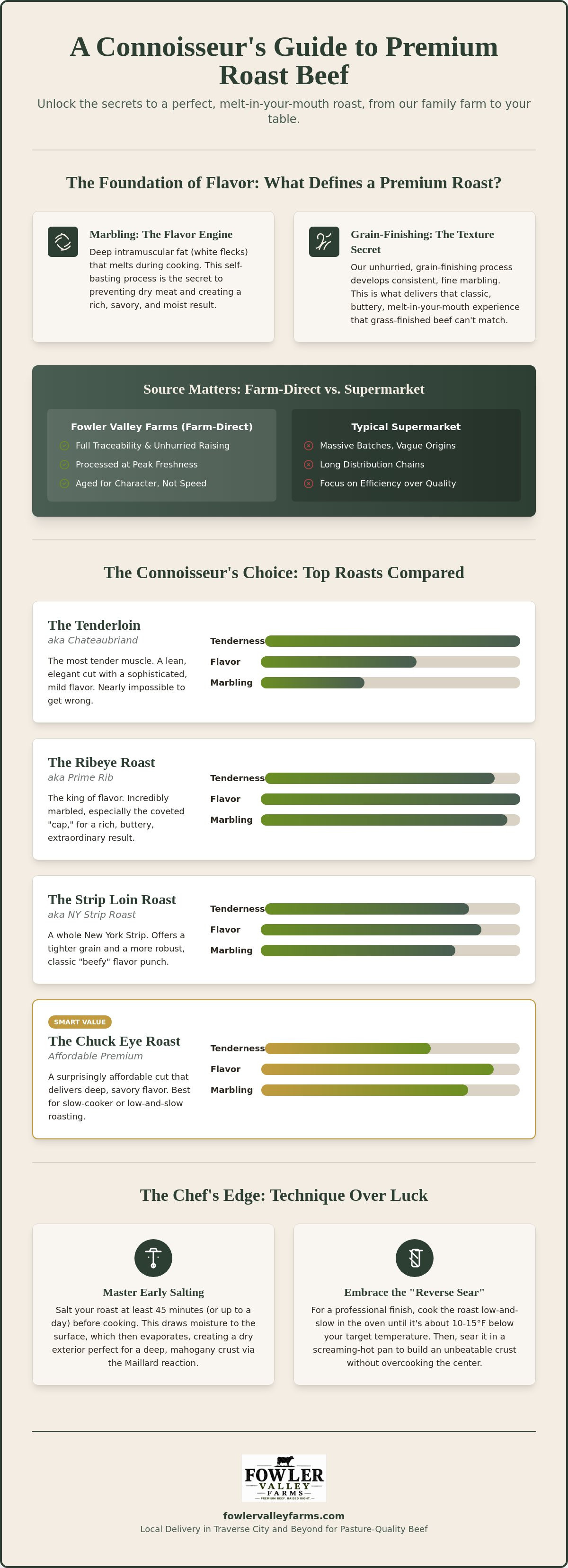
A great roast doesn't happen by accident. It starts with the right animal and the right care. When we talk about premium roast beef cuts, we are looking for two specific things: deep intramuscular fat and a fine, consistent texture. This fat, known as marbling, is the engine that drives flavor while your meat is in the oven. As the temperature rises, this fat melts into the muscle fibers. It keeps the roast moist and creates that rich, savory profile we all crave. Historically, Roast beef has been the centerpiece of the family table because it relies on the natural quality of the beef rather than heavy sauces or marinades.
When the exterior of your roast hits the heat, a chemical process called the Maillard reaction begins. This is where proteins and sugars transform into hundreds of different flavor compounds. Without enough surface marbling, you won't get that deep, mahogany crust that defines a professional roast. At Fowler Valley Farms, the Putt family follows a tradition of unhurried raising. We don't rush the process. Our cattle are grain-finished to ensure that when you pull a roast out of your oven, it has the richness that only time and proper nutrition can provide.
The Role of Marbling and Grain-Finishing
Grain-finishing is what creates the melt-in-your-mouth texture that distinguishes a premium roast from a standard one. When you look at a raw cut, you should see white flecks of fat dispersed throughout the red muscle. These aren't just fatty bits to be trimmed away. Marbling is the flavor insurance of a premium roast beef cut. It provides a buffer against the heat; this ensures the meat stays tender even if your timing is off by a few minutes. While grass-finished beef has its place, the consistent marbling of grain-finished beef is what delivers that classic, buttery roasting experience.
Farm-Direct vs. Supermarket Quality
Supermarket beef is often a product of efficiency. It is processed in massive batches and aged for speed, not character. When you source directly from a Northern Michigan pasture, you gain traceability. You know exactly where your food came from, whether it's a field in Leelanau or Benzie county. Buying individual cuts from a local farm means you are getting meat processed at its peak freshness. It hasn't spent weeks in a distribution chain. It has been handled with the care of a neighbor who values their reputation and understands the land.
The Top 3 Premium Roast Beef Cuts for Special Occasions
While the way an animal is raised sets the stage, the specific cut you choose determines the performance in your kitchen. Not all premium roast beef cuts are created equal. Some are prized for their delicate texture; others are loved for their bold, fatty richness. Whether you are hosting a quiet anniversary or a noisy family reunion, matching the cut to the crowd is the first step toward a successful meal. At Fowler Valley Farms, we see these three roasts as the pillars of a great roasting tradition.
The Tenderloin: Elegance and Ease
The Beef Tenderloin, or Chateaubriand, is the most tender muscle on the animal. Because this muscle does very little work, it remains incredibly soft. It is nearly impossible to get wrong as long as you pull it from the oven at the right internal temperature. Since it is a leaner cut, it benefits from quick roasting at higher heats or a gentle finish. Its mild, sophisticated flavor pairs beautifully with a simple garlic-herb butter. It is the ideal choice for an impressive presentation that won't keep you tethered to the kitchen all day. This cut is perfect for those who prefer a refined, melt-in-your-mouth experience without the heavy fat of other roasts.
The Ribeye Roast: The Marble Master
Commonly known as the Prime Rib, this is the king of flavor. The secret lies in the "cap," also known as the spinalis dorsi. This outer layer of the roast is the most coveted bite in the world of beef. It is incredibly marbled and tender. Our grain-finishing process is specifically designed to enhance this fat content, turning a standard roast into something extraordinary. This is the cut for your Christmas dinner or a large Sunday gathering in Grand Rapids. It holds up well to longer cooking times and provides a variety of textures in every slice, making it a true centerpiece for any major celebration.
The Strip Loin Roast offers a tighter grain and a more robust "beefy" punch than the tenderloin. It is essentially a whole New York Strip before it is sliced into steaks. When choosing any of these premium roast beef cuts, you'll often face the choice between bone-in or boneless. Bones act as natural insulators. They help the heat distribute more evenly and can prevent the meat from drying out. However, a boneless roast is much easier to carve into uniform, restaurant-quality slices at the table. If you are looking to stock your freezer with these high-end options, our individual cuts allow you to pick exactly what fits your next occasion.
Regardless of which cut you bring home, success depends on technique. Consulting an expert roasting guide can help you navigate the specifics of heat and timing. Remember, a premium cut deserves a patient cook. Don't rush the rest period after it leaves the oven. This allows the juices to settle back into the fibers for a perfect finish.
Affordable Premium: Great Roasts for Every Sunday
You don't always need a holiday or a major milestone to justify a high-quality roast. Sunday dinner is a tradition that deserves better than a tough, flavorless block of grocery store beef. While the high-end cuts we discussed earlier are spectacular, there are several other premium roast beef cuts that offer incredible value. These roasts rely on the same grain-finished marbling and careful raising practices as our Ribeyes, but they come at a friendlier price point. They are the workhorses of the kitchen. They turn a standard weekend meal into something your family will look forward to all week.
The Chuck Eye Roast is often called the "Poor Man’s Ribeye" for good reason. It sits right next to the ribeye on the animal, sharing much of that same rich fat and tender muscle. It is a hidden gem that many shoppers overlook. Similarly, the Brisket is more than just a summer BBQ staple. When slow-braised in a heavy pot during a Northern Michigan winter, it transforms into a succulent, fork-tender roast. If you are looking to stock your freezer while managing a budget, our Build Your Own Beef Box allows you to mix these value-driven roasts with occasional high-end treats.
The Chuck Roast: More Than Just Stew Meat
A good Chuck Roast is packed with connective tissue. This might sound unappealing, but it is actually the secret to a succulent mouthfeel. During a long, slow roast, that collagen breaks down into gelatin. This process coats the muscle fibers and creates a richness that lean cuts simply cannot match. For the best results, you can "pot roast" it in a Dutch oven with a bit of liquid. If you want to elevate the flavor even further, try adding a small portion of our local pork to the braise. The fat from the pork mingles with the beef to create a deeper, more complex sauce.
Sirloin Tip: The Monday Morning Hero
The Sirloin Tip Roast is lean, affordable, and incredibly versatile. It is the best cut for those who love home-cooked roast beef sandwiches for Monday's lunch. Because it is leaner, it is perfect for thin-slicing against the grain. To mimic the tenderness of more expensive premium roast beef cuts, we recommend a simple marinade of olive oil and salt for 24 hours before cooking. This helps break down the tighter muscle structure. By buying these individual cuts direct from the Putt family, you ensure you are getting peak freshness without the middleman markup found in national chains.
The Chef’s Guide to Roasting: Technique Over Luck
Bringing home the right meat is only half the battle. Even the finest premium roast beef cuts can be ruined by a rushed process or a lack of preparation. Many home cooks rely on luck or an unreliable oven timer, but professional results come from understanding the science of heat and moisture. At Fowler Valley Farms, we believe that if we have spent months raising an animal with care, it deserves a thoughtful approach in your kitchen. Mastering a few simple techniques will take the fear out of roasting and ensure your meal is as tender as the day it was processed.
The "Salt Early" rule is the most important habit you can adopt. Seasoning your roast at least 24 hours in advance does more than just add flavor to the surface. Salt draws moisture out, dissolves into a brine, and is eventually reabsorbed into the muscle fibers. This process breaks down tough proteins and helps the meat retain its natural juices during the cook. If you salt right before putting it in the oven, you are only seasoning the crust. Give it time to work its way deep into the center.
For a perfect finish, we recommend the Reverse Sear method. Instead of starting with high heat, cook your roast at a low temperature (around 225°F) until it is about ten degrees away from your target. Once it reaches that point, take it out and let it rest. Finally, blast it with high heat for a few minutes to create a crust. This ensures edge-to-edge pink perfection without the gray, overcooked ring often found in traditional roasting. Use this temperature guide for your final targets:
- Rare: 125°F (Cool red center)
- Medium-Rare: 135°F (Warm red center)
- Medium: 145°F (Warm pink center)
- Medium-Well: 150°F (Slightly pink center)
- Well Done: 160°F (Little to no pink)
Searing for Flavor
A great roast needs a crust that rivals a Traverse City steakhouse. This mahogany exterior is not just "burnt" meat; it is the result of caramelized protein. To achieve this, your roast must be bone-dry before it hits the heat. Pat it down with paper towels after its 24-hour salt rest. Whether you finish it in a screaming-hot oven or a heavy skillet, that golden-brown layer is where the deepest savory notes live. If you want to ensure your freezer is always ready for a practice run, you can Build Your Own Beef Box with the specific roasts you want to master.
Tools of the Trade
Your oven timer is your enemy. Every oven has hot spots, and every roast has a different thickness. An instant-read thermometer is the only tool that provides the truth. For larger roasts, a heavy roasting pan with a rack allows air to circulate underneath the meat. For smaller cuts, a cast iron skillet provides superior heat retention for a better sear. We often suggest tucking a few local herbs, like rosemary or thyme, into the pan. These aromatics mingle with the rendered fat to enhance the natural, farm-fresh flavor of the beef without masking its quality.
Finally, never skip the rest. When a roast is hot, the juices are thin and active. If you slice it immediately, those juices will end up on your cutting board. Let it sit for at least 15 to 20 minutes. This allows the fibers to relax and soak up the moisture, ensuring every bite is succulent.
Sourcing Your Roasts: Meat Delivery in Northern Michigan
Knowing where your food comes from changes the way you cook. It isn't just about a transaction at a counter. It is about a relationship with the land and the people who steward it. When you source premium roast beef cuts directly from our farm, you are cutting out the middleman. You are choosing transparency. The Putt family has been doing this for generations. We take pride in the quiet, steady work that results in a better meal for your family. This direct link ensures that the quality we see in the pasture is the same quality you see on your plate.
Meat Delivery Near Me: How We Serve You
We make it simple to get farm-fresh meat without the drive. Our local delivery service covers a wide stretch of Northern Michigan. Whether you are in Frankfort, Leelanau, or Kalkaska, we bring the pasture to your doorstep. If you are visiting the region to enjoy the local food scene, you can learn more about Water Street Inn for a premier stay in Boyne City. We also maintain regular delivery schedules for our neighbors in Grand Rapids to ensure our southern customers are well-supplied. Every roast is carefully packaged for freshness. We use methods that ensure your meat stays chilled during the journey. You don't have to worry about quality being lost in transit. We handle each order as if it were going to our own table.
Stocking the Freezer with a Beef Box
A well-stocked freezer is a sign of a prepared kitchen. Buying in bulk is the most economical way to enjoy premium roast beef cuts year-round. Our Beef Boxes allow you to plan your meals with confidence. You can choose a pre-set selection or use our "Build Your Own" option to find the perfect balance for your household. Maybe you need a Ribeye for a special occasion, a few Chuck roasts for Sunday dinners, and some ground beef for the weeknights. It’s about flexibility. You get exactly what you need, and nothing you don't.
For those who want total peace of mind, our Beef Subscriptions are a reliable choice. It ensures you never miss out on seasonal premium cuts. You set the pace, and we ensure your supply never runs dry. It is a partnership. It supports local agriculture and keeps your family fed with the best Michigan has to offer. Our promise is simple: honesty, quality, and a direct link to the land. We aren't interested in quick wins. We want to be your family's trusted source for years to come. Start building your custom beef box today! and experience the difference that farm-direct sourcing makes.
Master the Art of Your Next Family Roast
A great meal is more than just a recipe. It's about the land. It's about the care that went into the animal long before it reached your kitchen. By selecting roasts with deep, grain-finished marbling, you've already done the hard work of ensuring a flavorful dinner. Whether you're serving an elegant tenderloin for a holiday or a slow-cooked chuck roast for a quiet Sunday, remember that patience is your best tool. Salt early. Use a thermometer. Always let the meat rest. These small steps honor the craftsmanship of the producer and the quality of the cut, much like the refined experience offered by Beim Wartner for those seeking a premium getaway.
The Putt family has been raising cattle for generations with a commitment to integrity and traditional methods. We take pride in being your honest neighbor and providing a direct link to the pastures of Northern Michigan. With local delivery to Traverse City, Grand Rapids, and Frankfort, we make it easy to keep your freezer stocked with elite, grain-finished beef. You don't have to settle for the uncertainty of the grocery store aisle. Order your premium roast beef cuts from Fowler Valley Farms and bring a restaurant-quality experience to your own dining room. We look forward to being a part of your family's traditions.
Frequently Asked Questions
What is the most tender beef roast for a special dinner?
The Beef Tenderloin is the most tender cut available for a celebratory meal. It comes from a muscle that does very little work, resulting in a soft, buttery texture that is unmatched by other cuts. While it is leaner than other premium roast beef cuts, its natural tenderness makes it a sophisticated choice for an elegant centerpiece that is easy to carve and serve.
How much roast beef should I buy per person?
Plan on purchasing about half a pound of meat per person for boneless roasts. If you are buying a bone-in roast, such as a standing rib, you should increase that to three-quarters or one pound per guest. This ensures everyone has a generous portion at the table with enough left over for a few good sandwiches the next day. It's always better to have a bit too much than to run short during a family gathering.
Is it better to cook a roast covered or uncovered?
You should always cook your roast uncovered to achieve the best flavor and texture. Covering the meat traps steam, which prevents the exterior from browning and results in a gray, boiled appearance. Roasting in an open pan allows the dry heat of the oven to trigger the Maillard reaction. This creates the savory, mahogany crust that defines a high-quality, farm-fresh meal.
What is the difference between a Prime Rib and a Ribeye roast?
The primary difference is the size and how the meat is trimmed. A Prime Rib is usually a larger, bone-in section of the rib primal, often referred to as a standing rib roast. A Ribeye roast is the same muscle but is typically sold boneless and trimmed into a smaller, more manageable size. Both offer the exceptional marbling and richness that make them top-tier premium roast beef cuts.
Can I get meat delivery in Traverse City for just one roast?
We provide local delivery to Traverse City and surrounding counties for our individual cuts and beef boxes. While you can certainly order a single roast, many of our neighbors find that building a custom beef box is a more efficient way to keep the kitchen stocked. It allows you to combine your favorite roasting cuts with steaks and ground beef in one convenient trip to your doorstep.
How long can I store a premium roast in the freezer?
A premium roast can be stored in the freezer for six to twelve months without a significant loss in quality. To prevent freezer burn, you must ensure the meat is tightly wrapped or vacuum-sealed to keep all air out. We process and package our beef at peak freshness, which helps maintain the integrity of the muscle fibers and the flavor of the fat during long-term storage.
What is the best way to reheat leftover roast beef without drying it out?
The best way to reheat roast beef is to use a low-temperature oven with a small amount of liquid. Place the sliced beef in a baking dish with a splash of beef broth or water and cover it tightly with foil. Heat it at 250°F until it is just warmed through. This gentle method prevents the meat from overcooking or becoming dry and tough, preserving the original quality of the roast.
Why is grain-finished beef better for roasting than grass-finished?
Grain-finished beef is superior for roasting because it develops higher levels of intramuscular fat, known as marbling. This fat acts as a natural insulator and basting agent during the dry-heat roasting process. While grass-finished beef is often leaner and can be prone to drying out, the consistent marbling of grain-finished cattle ensures the succulent, melt-in-your-mouth texture that most families expect from a high-end Sunday roast.