Beef Tenderloin Price: What Affects the Cost and How to Compare
The lowest beef tenderloin price isn’t always the best value. A per-pound listing can seem simple until you see that one cut is trimmed and ready to cook, while another includes more weight you’ll need to prepare yourself. Here in Northern Michigan, whether you’re comparing options in Traverse City or planning a special meal at home, those details matter.
To compare fairly, look beyond the sticker price. Check whether the cost is listed by pound or by package, how the cut is prepared, and how much you need for your table. The right choice depends on both the beef and the meal you have in mind.
We’re the Putt family, and at Fowler & Valley Farms we offer individual cuts and beef boxes for households across Northern Michigan. In this guide, we’ll explain what shapes tenderloin pricing, how to weigh package size and preparation against serving needs, and how farm-direct options can fit your plans. Clear details make for a more confident choice.
- Compare the beef tenderloin price by both unit cost and package total, then account for how the cut is prepared.
- A whole tenderloin, trimmed roast, and portioned steaks offer different balances of preparation and ready-to-cook portions.
- Match tenderloin and other beef cuts to their distinct cooking roles instead of treating them as interchangeable.
- Choose a format by considering the meal, portions needed, and room for storing the beef.
- In Northern Michigan, Fowler & Valley Farms offers individual cuts and beef boxes, with local delivery for households around Honor, Frankfort, and Traverse City.
Why Beef Tenderloin Price Can Differ from One Listing to Another
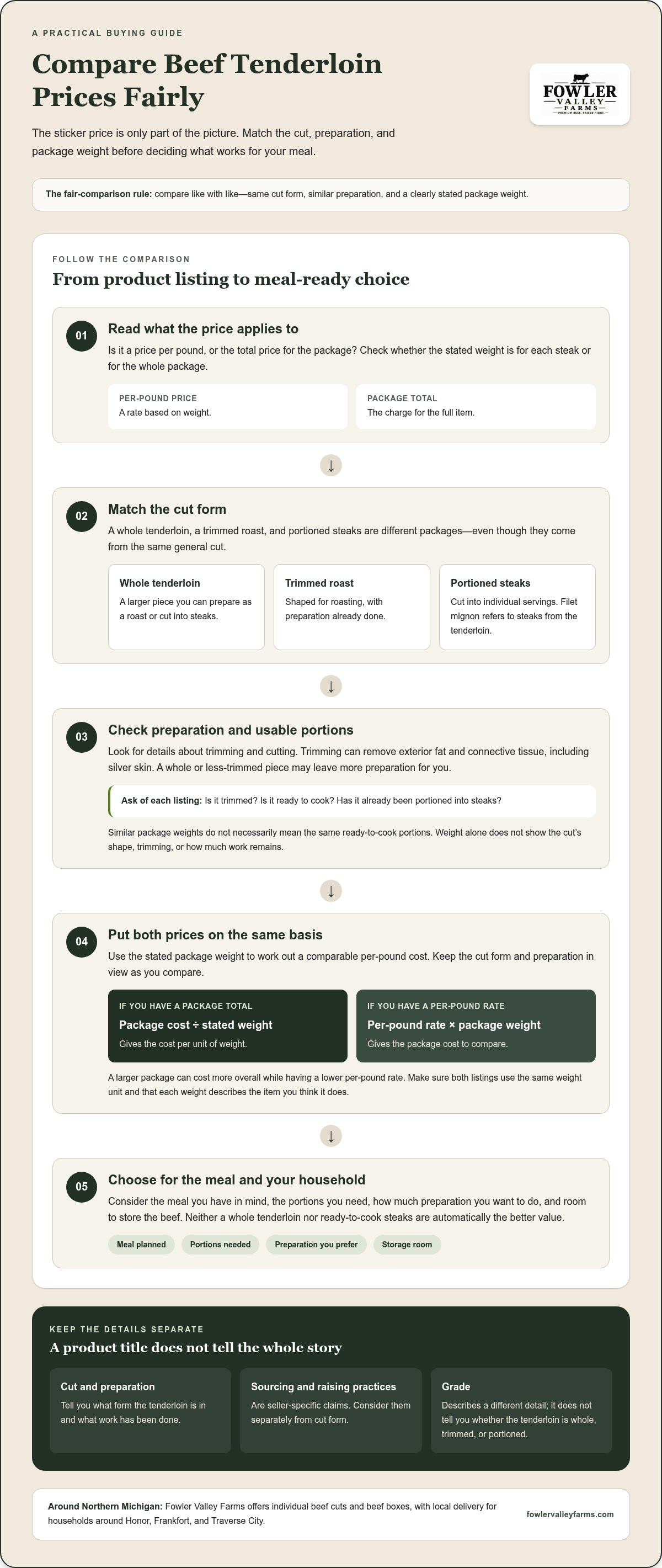
Tenderloin is a premium cut, but listings can still be difficult to compare. One may show a price per pound for a whole piece, while another gives the total for a package of portioned steaks. The beef tenderloin price reflects what’s being sold, not just the name of the cut. For a fair comparison, match the cut form, preparation, and package weight.
Read the listing details before comparing the numbers. Is the tenderloin whole, trimmed into a roast, or sliced into steaks? Has the seller removed exterior fat and connective tissue, or will you prepare the cut yourself? These differences affect what you take home and how much work remains before cooking. Two packages with similar weights may not provide the same ready-to-cook portions.
The tenderloin’s location and familiar names can add another layer of confusion. The Beef Tenderloin Overview describes the cut and its relationship to steaks such as filet mignon. That background helps, but a product title alone won’t tell you the exact form or preparation. Read the description and weight together. For Northern Michigan shoppers comparing farm beef, our individual beef cuts show how beef can be offered in household-ready formats.
Per-pound price versus the price of the package
A per-pound listing gives a rate based on weight. The package total is the amount charged for the full item. To compare them, divide the package cost by its stated weight, or multiply the per-pound rate by the package weight. Then compare like with like, using the same unit of weight and the same cut form. A larger package can cost more overall while having a lower per-pound rate.
Check whether the weight is stated for each steak or for the whole package. A package price without a clear weight is difficult to compare with a per-pound listing. Comparing a pound of prepared steaks with a pound of an untrimmed whole tenderloin may also be misleading. First establish what the listed weight describes.
What sellers mean by tenderloin and filet mignon
Filet mignon refers to steaks cut from the tenderloin. A whole tenderloin, by contrast, is sold as a larger piece that can be prepared as a roast or cut into steaks. Sellers may trim or portion these cuts differently, and names aren’t always used in exactly the same way. Check the product description for the form, preparation, and package weight before comparing prices.
That small bit of reading can prevent a misleading comparison. Match the listing to the meal you’re planning and the amount of preparation you want to do. A whole piece gives you a different starting point than individually portioned steaks. Neither format is automatically the better value. The useful comparison accounts for what’s in the package and how you’ll serve it.
What Shapes Beef Tenderloin Price: Cut, Trim, and Preparation
A tenderloin’s format changes what you’re buying and how much work remains before it reaches the table. A whole tenderloin, a trimmed roast, and portioned steaks come from the same general cut, but they aren’t identical packages. Some preparation may already be done, while some may be left to you.
Trimming removes unwanted exterior fat and connective tissue, including the thin silver skin. That can make a cut easier to cook, but package weight alone won’t tell you how much preparation has been done. With steaks, the seller has also divided the tenderloin into portions. The listing should make clear whether the price and weight refer to the prepared item or a less-trimmed piece.
To compare two tenderloin listings fairly, match the cut form, preparation level, and package weight before judging the price. Then consider whether you’d rather handle trimming and portioning yourself or have those steps done before the beef reaches your kitchen.
Whole tenderloin, trimmed roast, or portioned steaks
A whole tenderloin gives you room to decide how to prepare and portion it, but you’ll handle more of that work. A trimmed roast is shaped for roasting, while portioned steaks are already cut for individual servings. Neither is automatically the better value. Compare what’s included and how it suits your meal before deciding.
Look closely at the product description. It may identify a tenderloin as trimmed, ready to cook, or cut into steaks. Don’t assume that two sellers use the same trimming standard or that every item called a roast has been prepared the same way. The description should give you enough detail to compare the preparation.
Why package weight does not tell the whole story
Weight is useful, but it doesn’t describe shape, trimming, or how the beef is portioned. Imagine two packages with the same stated weight: one is a less-trimmed whole tenderloin, and the other contains trimmed steaks. The scale shows the same amount, but the packages differ in preparation and in the steps needed before cooking.
For a clearer comparison, group listings by format first. Compare whole pieces with whole pieces, roasts with roasts, and portioned steaks with portioned steaks. Then look at the listed weight and any details about trimming or cutting. This keeps a ready-to-cook package from being judged against a cut that still needs hands-on preparation.
Cut and preparation aren’t the only details that may appear in a listing. Sourcing and raising practices are seller-specific claims, so treat them separately from the tenderloin’s form. A grade is another distinct piece of information: the USDA Beef Grading System explains the grading categories, but a grade does not tell you whether a tenderloin is whole, trimmed, or portioned. Read each detail for what it describes.
At Fowler Valley Farms, we offer individual beef cuts alongside other ways to buy beef. Use the product details to choose a format that fits your kitchen and the meal you have planned.
How to Compare Beef Tenderloin Price with Other Beef Options
A tenderloin’s price makes more sense beside the meal you want to cook, not as a stand-in for every other beef cut. Tenderloin is prized for its tenderness and works well for a special steak dinner or roast. Other cuts have their own strengths: some suit quick cooking, while others do well with slower methods. Compare each cut by preparation and use, not by price alone.
Tenderloin versus other steak cuts
Tenderloin steaks offer a tender bite, while a ribeye has a different texture and cooking character. A chuck roast is built for a slower meal, so it isn’t a direct steak-for-steak comparison. Choose tenderloin if tenderness is central to the occasion. Consider another cut if you want a different texture or a cut suited to another cooking method.
| Beef option | Preparation to consider | Typical meal use |
|---|---|---|
| Tenderloin steaks | Portioned into steaks; check whether trimming is included | Individual steaks for a special dinner |
| Whole tenderloin | Requires you to decide how to trim, portion, or roast it | A roast or steaks cut at home for a planned meal |
| Ribeye or another steak cut | Prepare as a steak, with a distinct texture from tenderloin | A steak dinner when you prefer that cut’s character |
| Chuck roast | Allow time for a slower cooking method | A roast-style meal rather than a tenderloin steak supper |
Use the table to narrow your comparison to cuts that fit the same occasion. If you’re weighing beef tenderloin price against another steak, decide first whether tenderness is worth prioritizing for that meal. A roast cut serves a different purpose, so its price alone won’t tell you whether it’s a better choice for a steak dinner.
Individual cuts versus a beef box
Individual cuts make sense when you have a specific meal in mind and want to choose that cut. A beef box offers a broader selection for households planning several meals, but its mix of cuts won’t compare directly with one tenderloin package. Choose based on the meals you expect to cook and the variety you want on hand, not on an assumed savings.
Buying format also shapes how you source beef. Farm-direct and grocery-store beef describe different routes from producer to household, but they don’t make different cuts interchangeable. At Fowler Valley Farms, we offer individual cuts and beef boxes for planning multiple meals. Compare the format, selection, and intended use, then decide what fits your table.
How to Judge Tenderloin Value for Your Household
A useful choice starts with your plans, not the package total. The beef tenderloin price tells only part of the story if the cut is more than you need, takes extra preparation, or won’t fit comfortably in your freezer. Think through the meal, format, portions, and storage before deciding.
- Start with the occasion. Is this for a steak supper, a roast, or another kind of meal? If you’re set on tenderloin, choose the form that suits the meal. If you’re flexible, another beef cut may better match your cooking plans.
- Choose the preparation level. A whole tenderloin leaves trimming and portioning to you. Portion-cut steaks are easier to plan around individually. Consider how much time you have for preparation, especially if the meal is part of a busy gathering.
- Plan portions around your household. Think about who will be eating, appetites at your table, and whether you want leftovers. Use your usual serving habits rather than relying on a fixed serving count for every package.
- Check your storage space. Compare the package size with room in your freezer and the other food you need to store. A package that fits your meal plan but crowds out everyday staples may not be the right fit.
Choose a format around the meal
For individual steaks, portioned tenderloin can make it easier to plan each plate. A whole piece gives you more say in how you divide it, but takes time and care to trim or cut. A roast calls for a different approach. Match the format to the meal and the preparation you’re willing to do. If tenderloin isn’t essential, consider whether another cut suits the dish better.
Then compare listings on equal terms. Two packages may have similar totals but differ in preparation and usefulness for your plans. The better fit is the one that leaves you with an amount and format you can use, not simply the one with the most beef in the package.
Plan portions and freezer space before buying
Picture the meal from serving to storage. If you’re hosting, account for the people coming and what else will be served. For a household meal, think about whether you want one sitting or enough to set aside for another occasion. These choices help you decide whether steaks, a roast, or another cut makes sense without guessing at exact yields.
Make room before bringing home a larger package. Keep raw beef properly refrigerated or frozen, and follow current food-safety guidance for handling and storage rather than relying on a guessed storage duration. Our individual beef cuts let you browse options by cut as you plan.
Once you know the meal, format, portions, and freezer space you’re working with, the comparison becomes more practical. Explore Fowler Valley Farms’ beef options and choose a way to buy that fits the meals you plan to make.
Buying Farm-Direct Beef in Northern Michigan: A Practical Next Step
Once you’ve compared cut form, preparation, and package size, decide how you want to buy beef for your household. The beef tenderloin price can help you assess a particular listing, but it won’t tell you whether buying one cut or planning across several meals suits your table better. At Fowler Valley Farms, we offer individual cuts and beef boxes, so you can choose a focused purchase or build a broader supply around your meal plans.
Individual cuts and custom-built beef options
Individual cuts are a straightforward fit when you have a particular kind of beef in mind. You can focus on that cut, its package details, and the meal you’re planning. This format works well when you’re preparing for a specific dinner or want to add one type of beef to what’s already in the freezer.
If you’d rather choose across available beef options, our Build Your Own Beef Box lets you put together a broader selection. It suits households planning different meals and wanting more say in what goes into their box. The choice depends on whether you’re shopping for a particular cut or for variety across the household’s meals.
Think about the needs you identified: the occasion, how much preparation you want to do, the portions your household expects to use, and the freezer space you have. Those same questions help guide a farm-direct purchase. Start with the meal plan, then choose the buying format that matches it.
A local farm relationship, from Northern Michigan
We’re the Putt family, and Fowler Valley Farms is family-owned and operated across multiple generations. Our family connection shapes how we approach feeding households, with care for the beef we raise and a direct relationship with the people who bring it home. We offer local delivery and serve households across Northern Michigan, including areas around Honor, Frankfort, Traverse City, Leelanau County, Kalkaska, Boyne City, and Cadillac, as well as Grand Rapids, Bay City, Midland, Saginaw, Freeland, Clare, Detroit, Chicago, Grand Haven, and Muskegon.
From Traverse City to Leelanau County, the practical questions are the same: which cuts suit the meals ahead, whether individual selections or a box better fits the household, and how much beef can be stored and used well. Farm-direct buying still calls for comparing details. It gives you a direct way to choose processed beef for your kitchen in the format that fits your plans.
If you’re ready to look beyond a single listing and see the beef-buying options available to your household, explore Fowler Valley Farms’ beef options. Compare them with your meal plans, then choose what makes sense for your table.
Choose Beef That Fits the Meal Ahead
A good buying decision should make sense after the package is home, too. Think about the meal you’re looking forward to, the space you have to store beef, and whether you want to make one focused purchase or plan for several dinners. That’s a practical way to put a beef tenderloin price comparison to work without letting the number alone make the decision.
There’s no need to settle on tenderloin for every special meal. Choose the cut and format that suit the occasion and your household. In Northern Michigan, a thoughtfully planned beef order can be ready for a family gathering, a quiet supper, or meals you’ll cook another day. Start with what you’ll enjoy serving.
At Fowler Valley Farms, we’re glad to help households find farm-direct beef choices that fit their plans. Build a selection for several meals with our Build Your Own Beef Box, or browse individual cuts to choose the right beef for the meal ahead.
Frequently Asked Questions
Why is beef tenderloin usually more expensive than other beef cuts?
Tenderloin is prized for its tenderness and is a smaller portion of the animal than many larger, commonly used cuts. That combination helps explain why the beef tenderloin price can be higher than prices for cuts used for roasts or everyday meals. Preparation matters, too: trimmed pieces or portioned steaks include work that may be left to the buyer with a less-prepared cut.
Is beef tenderloin the same as filet mignon?
Not exactly. Beef tenderloin is the larger cut, while filet mignon is a steak cut from it. That distinction helps explain why the terms may appear on different product listings. A filet mignon listing describes portioned steaks; a tenderloin listing may refer to a whole piece or another preparation. Check the product name and description together so you know what form you’re considering.
How should I compare beef tenderloin prices when package sizes differ?
Convert each listing to the same unit before comparing. For a package with a total price, divide that amount by the stated weight to find its per-unit rate. If the listing gives a per-pound rate, multiply it by package weight to understand the package total. Then compare similar preparations, such as trimmed steaks with trimmed steaks, rather than different formats.
Can I buy beef tenderloin directly from a farm?
Yes, some farms sell processed beef directly to households. Fowler Valley Farms offers individual beef cuts and beef boxes, with local delivery for Northern Michigan households around places such as Traverse City and Frankfort. Farm-direct buying lets you choose among the farm’s household beef options. Read the cut and package details carefully so the product suits the meal you have planned.
Is a beef box a better value than buying tenderloin by itself?
It depends on what your household will use. If you’re planning one meal around a specific cut, buying an individual cut keeps the choice focused. A beef box may suit you better if you want a selection for several meals. Compare the cuts included with the meals you expect to cook, along with your storage room. A box isn’t automatically the better fit for every household.
How do I store beef tenderloin after bringing it home?
Keep the beef cold and follow the handling and storage directions on its packaging. If you won’t use it soon, freezing may be an option; use current food-safety guidance for details on safe refrigeration, freezing, and thawing. Keep raw meat contained so its juices don’t touch other foods. Planning storage before shopping also helps you choose a package that fits the space you have.
What should I look for in a beef tenderloin product description?
Look for the cut’s form, package weight, and preparation details. The description should help you tell whether you’re viewing a whole tenderloin, a roast, or portioned steaks, and whether trimming has been done. If the seller gives information about grade, sourcing, or raising practices, treat each as a separate detail. Together, these points help you understand what the listing describes without relying on its title alone.