Best Beef Cuts for Smoking: Northern Michigan Guide (2026)
A five-thousand-dollar smoker won't save a lean piece of meat from turning into leather. We know how frustrating it is to spend twelve hours tending a fire on a brisk Northern Michigan afternoon, only to carve into a dry, tough roast. Real barbecue success doesn't come from high-tech temperature controllers or fancy gadgets. It starts with deep marbling and the right connective tissue. Finding the best cuts of beef for smoking simply comes down to choosing cuts with enough intramuscular fat to baste the meat from the inside out as it cooks.
You don't have to waste time or money on cuts that fight your smoker. In this guide, we'll show you which beef cuts yield tender, wood-fired barbecue and explain how pasture-raised, grain-finished beef makes all the difference on the grate. We'll also cover realistic cook times, simple ways to push through the internal stall, and how to stock your freezer with wholesome cuts raised right here in Honor, Michigan.
Key Takeaways
- Discover why intramuscular fat and rich connective tissue make brisket, chuck, and short ribs the best cuts of beef for smoking.
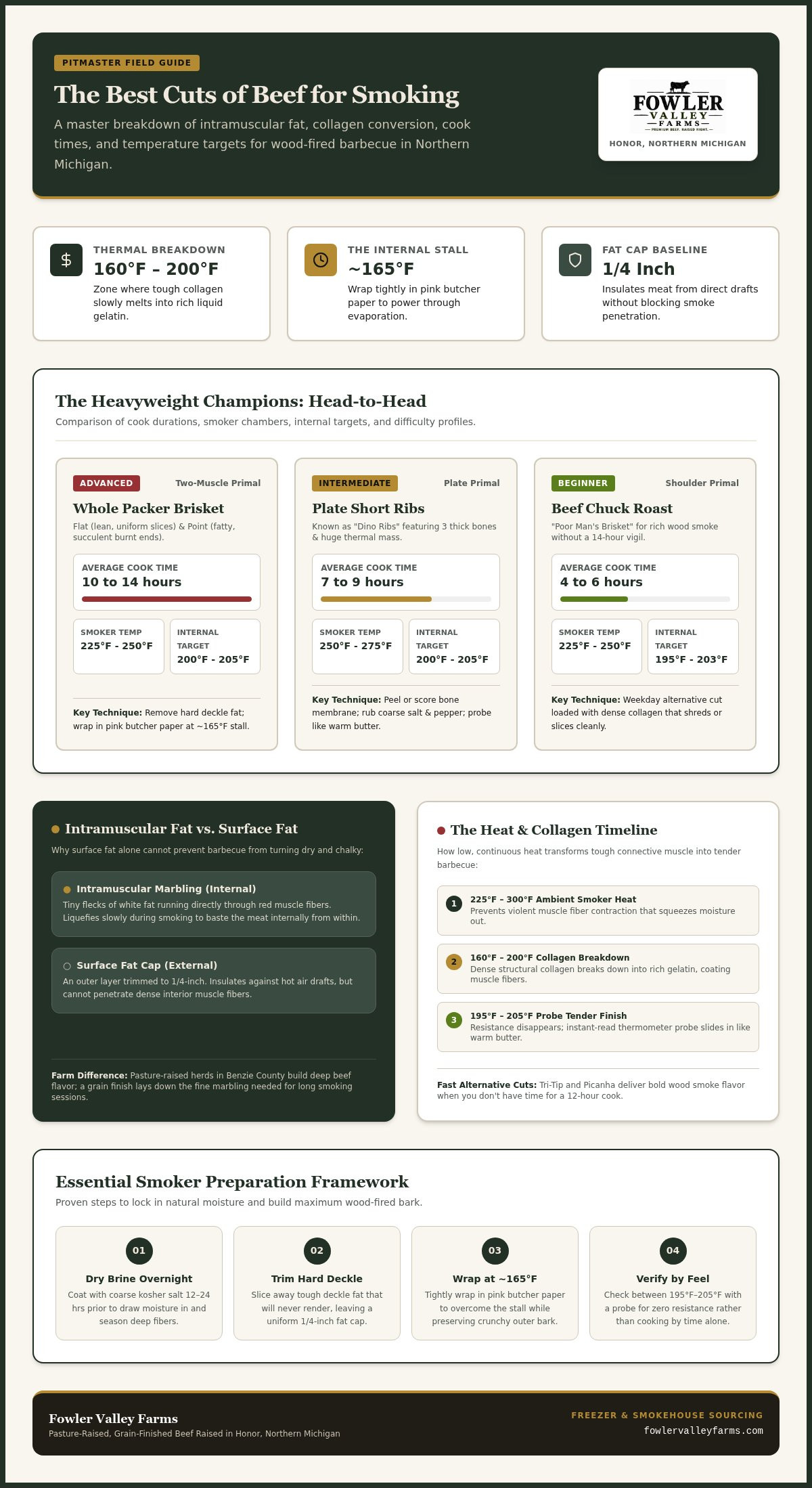
- Learn how low-and-slow heat breaks tough collagen down into melting gelatin between 160°F and 200°F to keep your meat juicy.
- Explore faster-cooking cuts like tri-tip and picanha when you want bold wood smoke without a twelve-hour commitment.
- Master a reliable prep framework, including how dry brining with coarse salt overnight locks in natural moisture and enhances your bark.
- See how pasture-raised, grain-finished beef raised right here in Honor gives Northern Michigan pitmasters an edge at the smoker.
What Makes a Cut of Beef Ideal for Smoking?
Pellet grill companies love to promise that any cut turns to butter with the right wood blend. Out on the farm, we know better. A lean tenderloin placed in a smoker for eight hours will emerge dry, chalky, and completely ruined. Successful wood-fired barbecue depends on the anatomy of the steer, not the spice rub in your cabinet. The best cuts of beef for smoking come from hard-working muscles packed with tight connective tissue, dense collagen, and generous intramuscular fat.
The Science of Collagen and Low-and-Slow Heat
Cattle build tough structural proteins in muscles that carry their weight every day. When you examine the primary primal cuts of beef, sections like the brisket, chuck, and plate contain immense amounts of collagen. If you throw a tough chuck roast onto a hot grill grate for ten minutes, those protein fibers contract violently, squeezing out every drop of moisture. But hold an ambient smoker temperature between 225°F and 300°F, and something magical happens. Between 160°F and 200°F, tough collagen slowly melts into rich liquid gelatin. This gelatin coats each individual muscle bundle, creating the luscious, melt-in-your-mouth bite authentic barbecue is known for.
Intramuscular Marbling vs. Surface Fat Caps
Many backyard cooks rely entirely on a thick outer fat cap to keep their meat moist. While a quarter-inch fat cap helps insulate the meat from harsh direct draft, it cannot penetrate dense muscle fibers. True internal moisture comes from intramuscular marbling, which refers to the tiny flecks of white fat running through the red meat itself. As the meat warms, that interior fat liquefies slowly, basting the beef from within. This is why our herd at Fowler & Valley Farms in Honor is pasture-raised and finished on grain. Grazing builds robust, deep beef flavor, while the grain finish lays down the fine, balanced marbling essential for hot smoke. Pitmasters looking for the best cuts of beef for smoking will find that our locally raised grain-finished beef cuts hold their juiciness through the longest Northern Michigan cooks.
- Connective tissue: Demands low, continuous heat to break tough collagen down into savory gelatin.
- Intramuscular marbling: Delivers essential internal lubrication that a surface fat layer simply cannot provide.
- Muscle density: Allows large roasts to absorb gentle wood smoke over several hours without drying out.
The Heavyweight Champions: Brisket, Beef Ribs, and Chuck Roast
Most smokehouse conversations inevitably circle back to three legendary cuts. Brisket, plate short ribs, and chuck roast represent the pinnacle of barbecue because they reward patience with unforgettable texture. They are widely regarded as the best cuts of beef for smoking, but each behaves differently once you close the smoker lid.
| Cut | Average Cook Time | Smoker Temp | Target Internal Temp | Difficulty Level |
|---|---|---|---|---|
| Whole Packer Brisket | 10 to 14 hours | 225°F - 250°F | 200°F - 205°F | Advanced |
| Plate Short Ribs (Dino Ribs) | 7 to 9 hours | 250°F - 275°F | 200°F - 205°F | Intermediate |
| Beef Chuck Roast | 4 to 6 hours | 225°F - 250°F | 195°F - 203°F | Beginner |
Whole Packer Brisket: Flat vs. Point
A full packer brisket brings together two distinct muscles. The flat is lean and uniform, perfect for clean, picturesque slices. The point sits on top, layered with rich fat that yields succulent burnt ends. When trimming, remove the hard deckle fat that will never render, leaving an even quarter-inch fat cap across the meat. Expect a stubborn stall around 165°F as surface moisture evaporates. Wrapping the brisket tightly in pink butcher paper powers through the stall without softening your crunchy exterior bark.
Dino Ribs: Plate Short Ribs on the Smoker
Three-bone beef plate short ribs look straight out of the prehistoric era. They carry a massive blanket of meat over thick rib bones, giving them plenty of thermal mass to soak up hickory or cherry smoke. Peel or score the tough membrane on the bone side, then coat the meat with coarse kosher salt and cracked black pepper. At 250°F, short ribs will render down over eight hours until an instant-read probe slides in like warm butter.
Smoked Chuck Roast: The Weekday Brisket Alternative
Pitmasters often call chuck roast the "poor man's brisket," and for good reason. Sourced from the shoulder, it delivers that deep, beefy flavor without demanding a 14-hour vigil. While federal safe internal cooking guidelines note that beef roasts are technically done at 145°F, taking chuck roast up past 195°F transforms tough muscle into juicy pulled beef for weekend sandwiches. Selecting our farm-fresh beef cuts ensures your chuck has the rich marbling required to stay moist all afternoon.
If you are looking to restock your smoker without driving all over Benzie County, you can build a custom order directly through our Build Your Own Beef Box.
Alternative and Fast-Cooking Beef Cuts for the Smoker
You don't always have twelve hours to nurse oak embers on a Saturday. Sometimes family pulls into the driveway after a long afternoon along Lake Michigan, and you want rich wood smoke on the table by evening. While long-haul classics get the glory, quick-cooking roasts stand among the best cuts of beef for smoking when time is short. With the right technique, these faster cuts deliver intense beef character without the midnight alarm.
Tri-Tip and Picanha: Reverse-Sear Flavor Powerhouses
Tri-tip comes from the bottom sirloin, shaped like an uneven boomerang with robust marbling throughout. Picanha, cut from the top of the rump, carries a glorious white fat cap that renders into the meat as it heats. Both cuts excel under a reverse-sear technique. Place them in your smoker at 225°F using light oak or cherry wood. Let the meat gently climb until the internal temperature reaches 125°F to 130°F, which usually takes under ninety minutes. Pull the roast, stoke your coals or fire up a cast-iron skillet until screaming hot, and sear each side for two minutes. You get wood-fired depth coupled with a crisp, medium-rare crust.
Top Round and Rump Roast: The Secret to Pit Beef
Leaner cuts from the round often end up stewed, but they make legendary barbecue when cooked rare. Baltimore-style pit beef relies on whole top round or rump roast bathed in smoke until it hits 130°F. Because these cuts carry less internal marbling, they cannot take an all-day smoking session. Smoke them fast at 275°F, rest them for twenty minutes, and slice them paper-thin across the grain. Piled high on a soft roll with shaved red onion and spicy horseradish sauce, lean roast transforms into a tender barbecue feast.
To keep fast-smoked cuts tender, pay attention to the grain before slicing:
- Tri-tip grain shifts: Look closely at the grain before cooking. The muscle fibers run in two distinct directions, meeting near the center. Split the roast where the grain changes, then slice each half perpendicular to its fibers.
- Picanha thickness: Slice thin against the grain for sandwiches, or cut thick two-finger steaks along the curve if you want a classic churrasco presentation.
- Sharp knife required: Dull blades tear smoked beef fibers instead of cutting cleanly, which makes even the best cuts of beef for smoking feel tough to chew.
How to Choose and Prepare Beef Cuts for Your Smoker
Great barbecue starts at the cutting board, long before you strike a match. Even the best cuts of beef for smoking will turn out dry if prepped haphazardly. Taking the time to properly inspect, trim, and brine your beef ensures tender slices and a deep, savory mahogany bark.
- Inspect the grain: Look closely at the raw muscle fibers before any seasoning goes on. Note the direction so you know how to slice after hours in the smoke.
- Trim excess fat: Shave away brittle, hard deckle fat while leaving an even quarter-inch cushion across the meat. Smooth out sharp corners so heat glides over the roast without burning thin edges.
- Dry brine early: Coat the meat with half a teaspoon of coarse kosher salt per pound, twelve to twenty-four hours before cooking. Place it uncovered on a wire rack in the refrigerator. Salt draws moisture to the surface, dissolves, and pulls back deep into the muscle, locking in natural juices.
- Pair your wood: Choose hardwoods that balance your cut. Oak provides a clean, sturdy burn for briskets. Wild cherry adds sweet aromatics and deep mahogany color to beef short ribs, while sugar maple offers mild sweetness.
Evaluating Cut Quality and Grain Structure
When selecting a raw cut, seek firm, ivory-white fat rather than yellowed or greasy trimmings. Look for dense, even specks of marbling throughout the lean meat. Avoid pre-trimmed supermarket cuts stripped down to bare muscle. Without an even fat cushion, continuous wood smoke quickly dehydrates the meat before collagen can convert to gelatin.
Trimming, Seasoning, and Northern Michigan Wood Selection
Keep your seasonings honest. Heavy, sugary rubs often scorch during long cooks. A classic Texas-style blend of equal parts coarse black pepper and kosher salt, rounded out with a dash of granulated garlic, lets the natural character of grain-finished beef take center stage.
Living in Benzie and Grand Traverse counties means contending with brisk weather for much of the year. When smoking through a chilly Northern Michigan autumn or winter, offset cook chambers lose heat rapidly. Shield your smoker from harsh winds blowing off Lake Michigan, burn dense local hardwoods like red oak or sugar maple, and anticipate adding an extra thirty to forty-five minutes to your cook times.
Ready to fire up your pit? You can pick your favorite cuts directly using our Build Your Own Beef Box.
Fill Your Smoker with Northern Michigan Farm-Fresh Beef
Supermarket meat counters make it easy to forget where beef actually comes from. Massive commercial packing facilities move animals rapidly through crowded feedlots, which creates stress that degrades meat texture long before it reaches your kitchen. When you buy directly from a family farm, that entire relationship changes. Knowing your grower means you know how the cattle were cared for, what they ate, and why that care translates into superior flavor on your cutting board. Finding the best cuts of beef for smoking shouldn't involve guessing at water-pumped store packaging.
The Fowler & Valley Farms Pasture-to-Pit Difference
Our operation is family-owned and operated right in Honor, Michigan, where the Putt family manages each step of animal care. We raise our cattle on open, lush pastures and finish them slowly on grain. This deliberate combination builds rich, healthy beef flavor from natural forage alongside dense intramuscular marbling from quality grain. Because we work with trusted local butchers in small batches, our beef holds its natural juices. We never inject saline solutions, preservatives, or water enhancers into our cuts. You get pure, unadulterated beef that retains its own moisture through hours of wood smoke.
Custom Beef Boxes and Convenient Local Delivery
Most meat delivery services lock you into pre-packaged bundles full of cuts you might never cook. We believe Northern Michigan pitmasters deserve complete control over their pit. When you build a custom meat box with us, you select the exact cuts your smoker requires, whether that means a hefty chuck roast for weekend pulled beef or thick plate ribs for a neighborhood cookout.
We provide steady, reliable access to the best cuts of beef for smoking with doorstep drop-offs across our region:
- Regular routes: We bring farm-fresh beef right to your porch across Traverse City, Frankfort, Benzie County, Leelanau County, and down into Grand Rapids.
- Custom orders: Fill your insulated box with individual steaks, whole smoking roasts, or ground beef without excess clutter.
- Steady supply: Set up flexible local beef subscriptions so your freezer stays ready whenever good smoking weather rolls through.
Skip the industrial meat counter. Taste the honest difference that multi-generational stewardship, pasture grazing, and slow grain finishing bring to your next weekend smoke.
Fire Up Your Pit with Honest Northern Michigan Beef
Mastering backyard barbecue comes down to respecting the steer and giving dense fibers the time they need over seasoned hardwoods. When you start with the best cuts of beef for smoking, you don't need complicated injections or artificial tenderizers to achieve a melting texture. Pure pasture forage combined with patient grain finishing builds the marbling that protects your meat through changing lake breezes and long smoking runs.
At Fowler & Valley Farms, the Putt family takes pride in tending cattle with integrity right here in Honor. From thick-cut plate ribs to rich shoulder roasts, our beef brings genuine farm freshness to grates across Traverse City, Benzie County, and Western Michigan. Choose your favorite cuts and pack your home freezer by ordering our Build Your Own Beef Box, or secure a regular monthly rotation with our Beef Subscriptions.
Suggested URL Slug: best-cuts-beef-smoking-guide
Frequently Asked Questions
What is the easiest cut of beef to smoke for beginners?
Beef chuck roast is the most forgiving cut on the pit, making it one of the best cuts of beef for smoking when you are just learning fire management. Sourced from the shoulder, its heavy intramuscular fat handles temperature swings without drying out. Chuck cooks in roughly four to six hours instead of half a day, yielding tender, rich shredded beef with deep wood-fired flavor.
Can I smoke a frozen roast directly, or should I thaw it completely first?
Always thaw your beef completely in the refrigerator before setting it on the smoker grate. Putting a rock-hard roast into a 225°F chamber holds the center in the bacterial danger zone between 40°F and 140°F far too long. Fully thawed meat also absorbs wood smoke uniformly, sweats clean surface moisture for dry brining, and builds an even, savory bark without patchy soft spots.
How does Fowler & Valley Farms deliver fresh beef across Traverse City and Northern Michigan?
We deliver our pasture-raised, grain-finished meats straight to your doorstep on designated neighborhood routes. The Putt family handles deliveries personally across Traverse City, Frankfort, Benzie County, Leelanau County, and down into Grand Rapids. You can fill a custom order with individual roasts and steaks or set up recurring subscriptions so your pit is always stocked for the weekend.