Cooking the Perfect Ribeye Steak: The Northern Michigan Farmhouse Guide (2026)
Cranking your burner to maximum heat and smoking out the kitchen won't give you a steakhouse crust; it usually just chars the surface while leaving the center cold. Here on our farm in Honor, Michigan, we know that cooking the perfect ribeye steak requires matching cast-iron heat to intramuscular marbling rather than blasting it with raw flame.
We understand the disappointment of slicing into a thick cut only to find wide gray banding beneath the crust, chewy unrendered fat pockets, or meat that drifted past medium-rare on the cutting board. Achieving that deep mahogany sear shouldn't feel like a high-stakes guessing game with your dinner.
By following our farm-tested skillet method, you will master rendering marbling cleanly while protecting a tender, juicy pink center from edge to edge. We will walk you through proper skillet heat, exact pull temperatures on your thermometer, and the precise resting window that guarantees every bite melts in your mouth.
Key Takeaways
- Seek out grain-finished ribeye with abundant intramuscular marbling and a thick cap, which bastes the meat naturally from the inside out.
- Pull your steak from the fridge early and blot the exterior completely dry to eliminate moisture that prevents a deep sear.
- Learn the skillet fundamentals for cooking the perfect ribeye steak, including preheating dry cast iron and laying the cut safely away from you.
- Rely on an instant-read digital thermometer to pull your steak 5 to 8 degrees before your target doneness to account for carryover heat.
- Choose pasture-raised, locally finished beef to secure superior tenderness and flavor that supermarket shelves simply cannot match.
Selecting the Cut: Why Grain-Finished Marbling Dictates Cooking Success
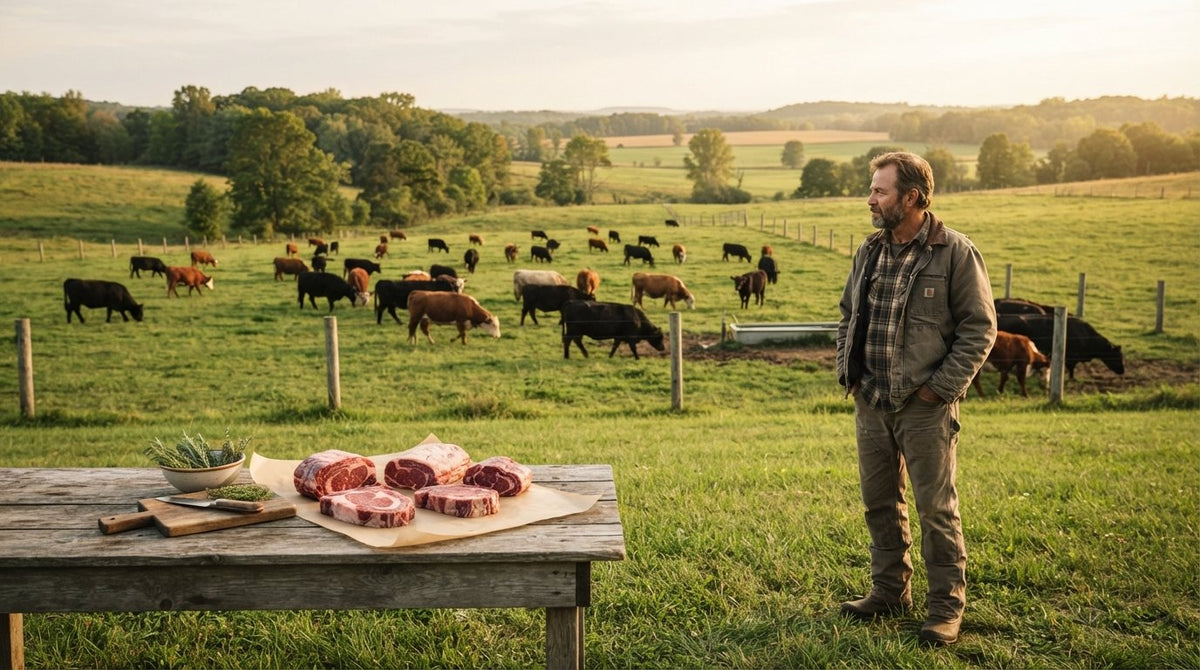
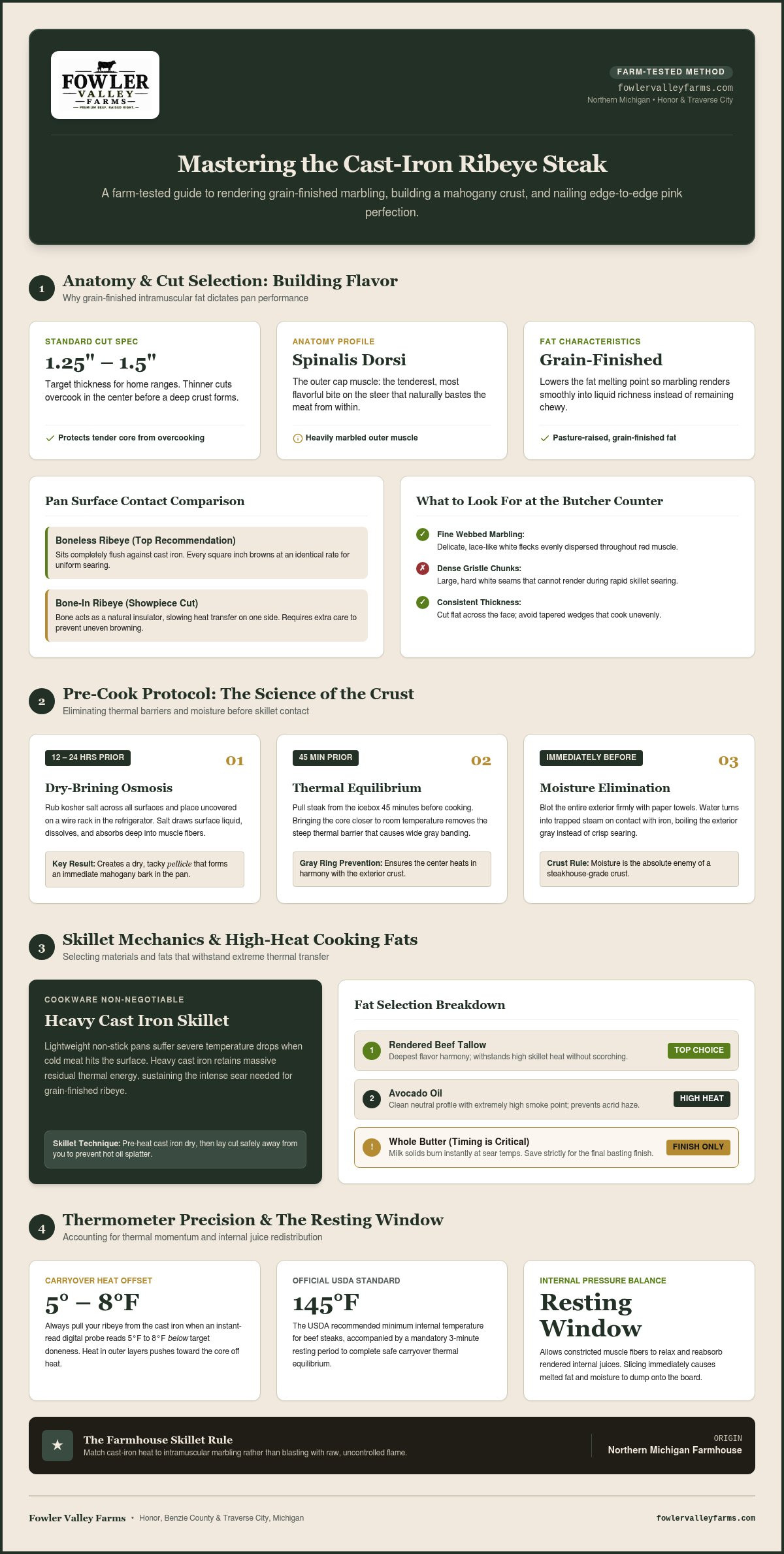
Every great meal starts long before your skillet gets hot. When you look at a classic rib eye steak, you see two distinct muscles: the central eye and the heavily marbled outer cap, known as the spinalis dorsi. That outer cap is the tenderest, most flavorful bite on the entire steer. As heat moves through the meat, fine flecks of intramuscular fat melt directly into the muscle fibers, acting as an internal basting mechanism. For cooking the perfect ribeye steak on a home range, ask for a cut between 1.25 and 1.5 inches thick. Thinner cuts overcook in the middle before you ever build a decent crust.
Bone-In vs. Boneless Ribeyes
Choosing between bone-in and boneless comes down to pan contact and presentation. The bone acts as a natural insulator, slowing heat transfer along one side of the cut. That makes bone-in steaks an impressive centerpiece for relaxed weekend dinners in Traverse City, but they require extra care to cook evenly. Boneless ribeyes sit completely flush against cast iron. Every square inch of the surface browns at the exact same rate, making them our top recommendation for straightforward weeknight cooking.
The Role of Grain-Finished Fat Rendering
Cattle diet dictates how beef behaves in the pan. Purely grass-fed beef often carries firmer, yellow-tinted fat with a higher melting point that can stay chewy under high heat. Here in Northern Michigan, we raise our cattle on pasture and finish them on grain. This final diet softens the fat structure, lowering its melting point so it renders smoothly into liquid gold during cooking.
When selecting cuts from our farm-fresh beef collection, evaluate the marbling pattern across the meat:
- Fine webbed marbling: Look for delicate, lace-like flecks scattered evenly throughout the red muscle. These liquefy rapidly under skillet heat to yield real tenderness.
- Avoid dense gristle chunks: Large, hard wedges of white fat along the interior seams will not render during a fast sear.
- Consistent thickness: Make sure the steak is cut flat across the face, without tapering edges that cook unevenly.
Starting with properly marbled beef removes the guesswork from cooking the perfect ribeye steak, giving you tender results every single time.
Pre-Cook Preparation: The Critical Steps Before Fire Meets Meat
Great steaks are made before they ever touch iron. Taking a cold steak straight from the refrigerator to a hot pan creates a steep thermal barrier. The outside burns before the center warms, leaving you with that dreaded gray ring. We pull our meat from the icebox at least 45 minutes ahead of dinner. That resting period takes the chill off the core, so the center heats evenly once cooking begins. Blotting the exterior with clean paper towels is just as vital. Surface moisture is the enemy of a crisp crust; water turns into trapped steam, boiling the exterior instead of searing it.
Dry-Brining for Crust Perfection
Dry-brining changes everything. Rub kosher salt over every surface of your steak 12 to 24 hours before cooking, then set it uncovered on a wire rack inside your refrigerator. The salt draws out surface liquids, dissolves, and absorbs back deep into the muscle fibers through osmosis. This process breaks down dense proteins and seasons the cut throughout, not just on the outer edge. More importantly, the refrigerator airflow creates a dry, tacky surface known as a pellicle. When you are cooking the perfect ribeye steak, this dehydrated exterior transforms into an immediate, deep mahogany bark.
Choosing Cookware and High-Smoke-Point Fats
Cast iron is non-negotiable in our farmhouse kitchen. Heavy skillets hold residual heat when cold beef hits the metal, preventing the severe temperature drops common with lightweight non-stick pans. You also need a fat that handles high heat without turning bitter:
- Beef tallow: Rendered beef fat offers rich flavor and handles high temperatures without scorching.
- Avocado oil: A clean alternative with a very high smoke point that will not fill your kitchen with acrid haze.
- Whole butter: Save butter for the final baste. Adding it early burns the delicate milk solids instantly.
Understanding these kitchen principles makes cooking the perfect ribeye steak predictable rather than chaotic. While the USDA recommends a safe minimum internal temperature of 145°F with a mandatory three-minute rest for beef steaks, precise prep work gives you total control over whichever finish you prefer. If you want to know how we raise our cattle to produce this standard of marbling, read our story on pasture-raised cuts.
Step-by-Step Technique: Cooking the Perfect Ribeye Steak in Cast Iron
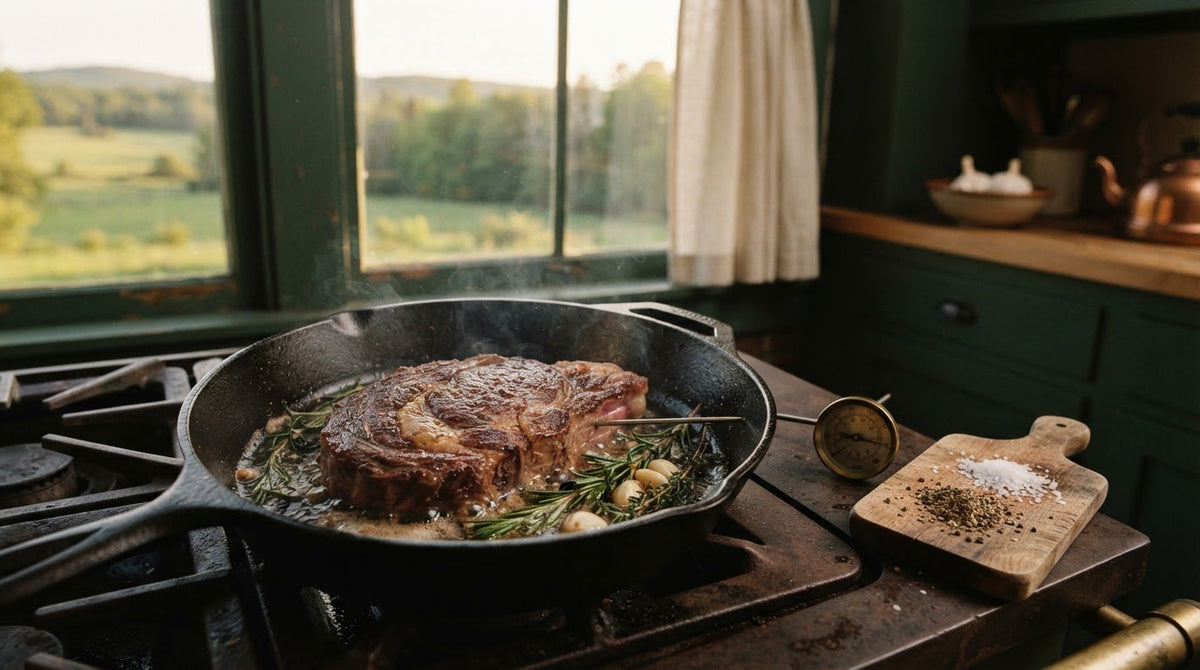
Cooking the perfect ribeye steak comes down to rhythm and heat control. Start by placing your dry cast-iron skillet over medium-high heat for about five minutes. You want the metal hot enough to release a faint wisp of smoke before any oil touches the surface. Add a thin sheen of high-smoke-point beef tallow or avocado oil. Lay your seasoned cut into the pan gently, angling the meat away from you so hot grease splashes toward the back of the stove instead of your hands.
Mastering the Frequent Flip Method
Old kitchen lore insists you should only flip a steak once. That advice creates a thick band of gray, overcooked beef sitting right under the crust. Turn your ribeye every 60 seconds instead. Flipping often lets each side cool slightly between contact moments, which prevents harsh surface heat from driving too deep into the center. You build a deep, golden crust in less total time while keeping that pink center uniform from edge to edge.
Arrosé: Basting with Herb Butter
Once you develop a pale golden crust on both sides, it is time to baste. Turn the heat down to medium to keep the pan from scorching the dairy. Drop in two tablespoons of unsalted butter, three smashed garlic cloves, and a sprig of fresh rosemary or thyme. As the butter melts, tilt the skillet slightly toward your hip so the bubbling fat pools at the bottom edge.
Keep these steps in mind as you finish the sear:
- Spoon continuously: Scoop hot, foaming butter over the top of the steak, directing it over the outer fat cap.
- Render the cap: This constant bath of warm fat softens the connective seams and crisps the tender spinalis muscle.
- Stand it on edge: Use kitchen tongs to hold the steak upright on its fat edge for 30 seconds to render any thick outer rim.
The science outlined in USDA Beef Quality Grades shows that generous marbling delivers the juiciness consumers expect, and this spoon-basting technique guarantees that intramuscular fat liquefies fully. The aroma of browned butter and garlic will fill your kitchen, signaling that your steak is ready for the thermometer.
Doneness Temperatures, Carryover Heat, and the Art of Resting
Forget the old poke test. Pressing your thumb against the palm of your hand will never tell you what is happening inside a dense, 1.5-inch cut. When cooking the perfect ribeye steak, an instant-read digital thermometer is your most reliable tool. Insert the probe horizontally through the side into the thickest part of the meat, avoiding bone and dense fat seams. Thick farm-raised beef holds considerable thermal mass. If you leave the cut in the pan until it hits your final desired temperature, carryover heat will push it into the next doneness tier on the board. Pull the meat 5 to 8 degrees early every time.
Temperature Guide for Ribeye Doneness
Ribeye demands slightly more heat than ultra-lean cuts like tenderloin. Those rich ribbons of marbling require heat to liquefy. At rare temperatures, intramuscular fat remains firm and waxy. Medium-rare to medium is where this specific cut shines, allowing the fat to melt directly into the red meat:
- Rare: Pull at 118°F for a rested target of 125°F. Best for lean cuts, but leaves ribeye marbling slightly chewy.
- Medium-Rare (Our Farmhouse Favorite): Pull between 125°F and 128°F for a rested target of 135°F. Intramuscular fat turns silky and self-bastes the meat.
- Medium: Pull at 135°F for a rested target of 142°F. Ideal for heavily marbled cuts where you want every trace of fat fully rendered.
Why Resting Preserves Internal Juiciness
Transfer your steak to a wooden cutting board and leave it alone for eight full minutes. Skillet heat forces muscle fibers to contract tightly, driving juices toward the center. Resting gives those fibers time to relax, letting moisture redistribute back toward the edges so juices stay in the beef rather than puddling on your cutting board. Resist the urge to cover the meat tightly with aluminum foil. Trapped steam ruins that crisp mahogany bark you worked hard to build.
When the rest is complete, slice across the grain to shorten muscle strands for a tender chew. To keep your freezer stocked with farm-fresh cuts across Benzie and Grand Traverse counties, look into our convenient beef subscriptions.
Elevate Your Table: Sourcing Farm-Fresh Steaks Across Northern Michigan
Mastering the heat of a cast-iron skillet is only half the journey. Truly memorable results depend on starting with honest beef raised with patience and care. When you cook pasture-raised, grain-finished beef, you immediately taste the difference on your tongue. The meat offers a clean, rich beef flavor, free from the watery texture often found in cuts from industrial supermarket supply chains. By sourcing directly from our pastures to your kitchen, cooking the perfect ribeye steak turns an everyday dinner into an exceptional meal. Complete the table by serving a balanced red that cuts through the savory richness; dinner hosts seeking to buy Burgundy wine UK can turn to independent merchants for classic bottles that pair seamlessly with a perfectly seared cut.
The Advantage of Knowing Your Michigan Farmer
Our family, the Putts, tends cattle right here in Benzie County and Grand Traverse County. We believe you should always know where your food comes from and how the animals were treated. Our cattle graze open green pastures before finishing on a balanced grain ration that builds deep, tender marbling. We never use added hormones. Once processed, our cuts are immediately flash-frozen and vacuum-sealed at peak quality. This seals in natural juices and freshness until the moment you thaw them on your kitchen counter, whether you live in Frankfort, Honor, or down near Grand Rapids.
Stocking Your Freezer with Hand-Selected Cuts
Keeping a steady supply of premium steaks on hand should never feel complicated. We deliver directly to your doorstep across Northern Michigan, making it simple to plan weekend dinners or family celebrations. You can fill your freezer with our curated 10 lb or 15 lb boxes, or choose your family’s preferred steaks through our customizable beef boxes.
Here are the easiest ways to bring our farm to your home table:
- Regular freezer replenishment: Sign up for flexible recurring beef subscriptions tailored to your cooking schedule so you never run out of quality cuts.
- Custom box selections: Handpick individual ribeyes, tender roasts, and lean ground beef to match your household's exact meal plans.
- Direct doorstep delivery: We pack every order carefully to ensure each cut arrives frozen solid and ready for storage.
Take the uncertainty out of cooking the perfect ribeye steak by starting with beef raised by neighbors you trust. Order your Build Your Own Beef Box today to enjoy honest Northern Michigan beef at your table.
Bring Farmhouse Flavor to Your Dinner Table
Mastering the skillet isn't complicated once you respect the meat. When you start with hot cast iron, flip frequently, and pull early to account for carryover heat, cooking the perfect ribeye steak becomes second nature. A well-rested cut with thoroughly rendered marbling will always outshine a rushed dinner.
Great cooking starts with beef raised with patience and care. Right here in Benzie County, our family raises pasture-raised, grain-finished cattle that produce rich marbling and clean flavor. We provide doorstep delivery across Traverse City, Frankfort, and down through Grand Rapids, packing every cut carefully so it arrives frozen solid at your door.
Whether you want to stock your freezer with our curated 10 lb or 15 lb boxes or pick out individual steaks, we make it simple to bring honest food to your family. Build your own beef box today and taste the difference farm-fresh Northern Michigan beef makes on your plate.
Frequently Asked Questions
What is the best thickness when cooking the perfect ribeye steak?
When cooking the perfect ribeye steak, the ideal thickness is between 1.25 and 1.5 inches—a benchmark often seen with hand-cut portions at traditional dining spots like Pine Lodge Steakhouse. A cut in this range provides enough mass to develop a dark, caramelized crust without pushing the center past medium-rare. Thinner cuts cook through too quickly in cast iron, turning gray before a sear can develop. Thicker cuts over two inches generally require an oven finish rather than direct skillet searing.
Should I cook my ribeye steak with the bone in or boneless?
Boneless ribeye is easiest for home stovetop searing, while bone-in cuts shine for table presentation. Boneless steaks sit completely flat against cast iron, guaranteeing uniform contact across every square inch of the pan. A bone can lift meat away from the hot metal, leading to uneven browning. Bone-in cuts also take longer to cook near the bone, making boneless the more reliable choice for quick farmhouse suppers.
Why is my ribeye tough even though I bought a prime cut?
A tough ribeye usually results from unrendered marbling or cutting with the grain instead of across it. Ribeyes have heavy intramuscular fat deposits that require sufficient heat to melt. If cooked too rare, that fat stays waxy and chewy instead of basting the muscle fibers. Slicing along the muscle grain also leaves long, stringy fibers that are tough to chew. Always rest your cut and slice across the grain.
Is it better to grill or pan-sear a grain-finished ribeye steak?
Pan-searing in cast iron is better for cooking the perfect ribeye steak because it recaptures melting fat rather than losing it to flare-ups. Grain-finished ribeye carries generous marbling that liquefies rapidly over heat. On an outdoor grill, dripping fat causes sudden grease flames that leave an acrid, sooty taste on the crust. In a heavy skillet, those rendered juices stay in the pan, actively basting the beef as it browns.
How do I avoid filling my kitchen with smoke while searing steaks?
Use a cooking fat with a high smoke point and make sure the meat surface is completely dry. Swap out whole butter or olive oil for beef tallow or avocado oil, which can withstand heat above 400°F without smoking. Excess surface moisture turns to steam and spatters hot oil everywhere, so pat the beef dry with paper towels before searing. Turn on your range vent early to keep the air clear.
Can I use butter for the entire searing process?
No, you should never use butter for the initial sear because its milk solids burn quickly. Whole butter contains water and dairy solids that scorch and turn bitter at roughly 350°F. Cast iron searing requires much higher temperatures to build a proper crust. Start your pan with beef tallow or avocado oil. Drop butter into the skillet during the final two minutes of cooking, spooning the foaming fat over the meat.
How long does a farm-fresh vacuum-sealed ribeye last in the freezer?
Vacuum-sealed ribeye maintains peak flavor and texture in a standard home freezer for up to 12 months. Because we vacuum-seal and flash-freeze our cuts right after aging, there is zero air contact to cause freezer burn. Store the cuts flat in your deep freeze. When you are ready for dinner, thaw the package slowly inside your refrigerator for 24 hours to protect the delicate meat fibers and retain natural juices.