Chuck Roast Recipes for Slow, Flavorful Meals
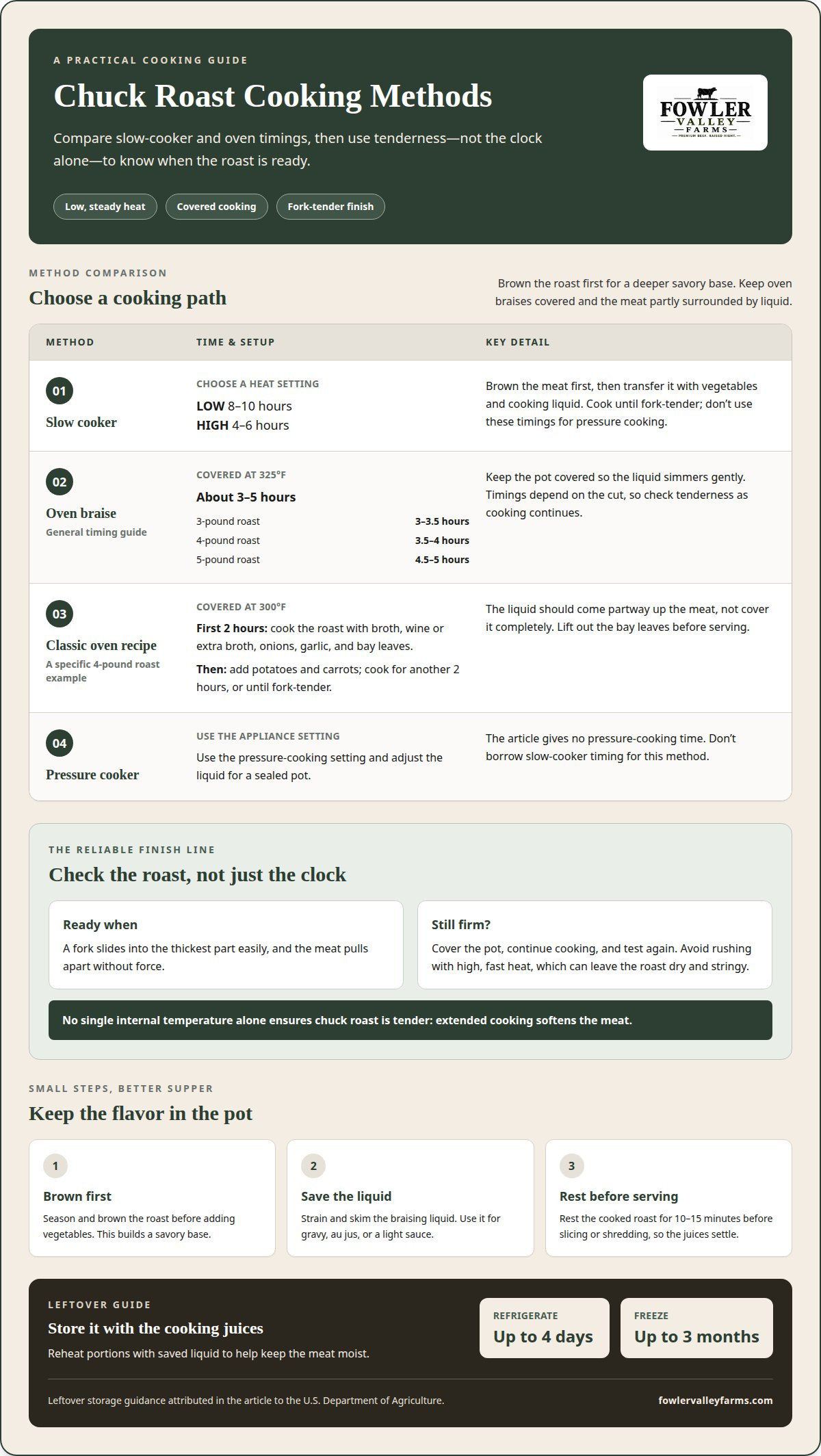
A slow-cooked chuck roast can turn a modest cut into a generous family supper, and chuck roast recipes work especially well when you give the meat time to become tender. For the slow cooker, cook on low for 8 to 10 hours or on high for 4 to 6 hours, until the roast pulls apart easily.
That’s a welcome way to cook in Northern Michigan, whether you’re planning a weeknight meal near Traverse City or setting a pot on before a long day at home: prepare a few ingredients, cook the roast steadily, and share a hearty dinner.
Learn how to adapt chuck roast recipes for a slow cooker, make classic pot roast gravy from the cooking liquid, and turn leftovers into another easy meal. The method is straightforward, helping you make the most of this cut and serve a warm, familiar supper.
Key Takeaways
- Brown the roast before braising to build a deeper, savory base for a classic pot roast.
- Turn the flavorful braising liquid into gravy, using a roux or a little cornstarch to thicken it.
- Plan vegetables and cooking juices alongside the roast for a hearty meal that can serve 6-8 people.
- According to the U.S. Department of Agriculture, refrigerate leftover pot roast for up to 4 days or freeze it for up to 3 months.
- For local beef in Northern Michigan, Fowler Valley Farms offers free Friday delivery in Benzie, Leelanau, and Grand Traverse counties when you order by Thursday.
Can I Cook Chuck Roast in a Slow Cooker?
Yes. Chuck roast becomes tender with steady, low heat and enough cooking time. Choose an oven, slow cooker, or pressure cooker, then check for tenderness rather than relying on the clock alone.
-
Set Up Low-and-Slow Cooking
Season the roast and brown it in a hot pan. Transfer it to a covered Dutch oven with broth and aromatics, keeping the meat partly surrounded by liquid. Cook slowly until fork-tender. Add carrots, potatoes, onions, garlic, and black pepper for a savory meal. Avoid high, fast cooking, which can leave the roast dry and stringy.
-
Braise at the Right Temperature
Set the oven to 325F for braising, and keep the pot covered so the liquid can simmer gently. Braise for 3 hours and up to 5 hours, depending on the cut. As a guide, a 3-pound roast takes about 3 to 3.5 hours; a 4-pound roast takes about 3.5 to 4 hours; and a 5-pound roast takes about 4.5 to 5 hours. Check tenderness as cooking continues.
-
Check for Tenderness
Test the thickest part with a fork. The roast is ready when the fork slides in easily and the meat pulls apart without force. No single internal temperature alone ensures chuck roast is tender: extended cooking softens the meat. If it still feels firm, cover the pot, continue cooking, and test again rather than relying on a fixed time.
-
Save the Cooking Liquids
Strain the braising liquid into a bowl, keeping the onions and garlic if you want them in the meal. Skim excess fat, then use the savory liquid for gravy, au jus, or a light sauce. Don’t discard it: the drippings carry flavor from the roast and seasonings, and help keep shredded leftovers moist.
- For a slow-cooker chuck roast, brown the meat first, then transfer it with vegetables and cooking liquid. Cook for 8 to 10 hours on low or 4 to 6 hours on high, until fork-tender. For a pressure cooker or Instant Pot, use the appliance’s pressure-cooking setting and adjust the liquid to suit a sealed pot. Avoid borrowing slow-cooker timing for pressure cooking.
- Rest the cooked roast for 10-15 minutes before slicing or shredding, so the juices settle. Serve it with carrots, potatoes, and onions, seasoned with garlic, black pepper, and bay leaves. Common mistakes include rushing the cooking, using high heat, and stopping while the meat is still tough. Give a firm roast more covered cooking time.
Refrigerate leftovers in a covered container; according to the U.S. Department of Agriculture, leftover pot roast can be refrigerated for up to 4 days. For longer storage, freeze it; according to the U.S. Department of Agriculture, leftover pot roast can be frozen for up to 3 months. Reheat portions with saved cooking liquid to keep the meat moist.
How to Make a Classic Chuck Roast
- Choose a 3 to 4-pound chuck roast or rump roast for a classic braise. Pat the cut of beef dry, then season every side with kosher salt and black pepper. Use 3/4 to 1 teaspoon of kosher salt per pound. Let the seasoning sit while you prepare the onions, garlic, broth, and cooking pot. A little preparation gives the salt time to season the roast evenly.
- Heat 1 tablespoon of olive oil in a heavy, oven-safe pot over medium-high heat. Add the roast once the oil shimmers. Brown each side until deeply colored, about 7 to 10 minutes in total. Turn it with tongs, and brown the edges too. This step builds a savory base in the pot. Don’t crowd the roast with vegetables before browning.
- Transfer the browned roast to a plate. Add 3 small onions, cut into wedges, and cook them briefly in the pot. Stir in 4 cloves of garlic, then pour in 2 cups of beef broth and 1 cup of red wine. Replace the wine with additional beef broth if you prefer. Scrape browned bits from the pot bottom; they add flavor to the braising liquid.
- Return the roast to the pot and add 3 large bay leaves. The liquid should come partway up the meat, not cover it completely. Cover the pot tightly and place it in a 300 °F oven. Cook the roast for 2 hours before adding vegetables. Keep the lid closed during this first stretch, so the covered pot holds steady heat and moisture.
- Add potatoes and carrots around the roast after those first 2 hours. Cover the pot again and cook for an additional 2 hours for a 4-pound roast, or until fork-tender. Check the vegetables and meat near the end. If the fork meets resistance, keep cooking and test again. The roast should pull apart easily, while the vegetables should be tender but not falling apart.
- Lift out the bay leaves before serving, then slice the roast or pull it into pieces. Spoon the onions, carrots, and potatoes onto each plate, and moisten the beef with the pot juices. This recipe serves 8 people. For another meal built around a familiar cut, beef boxes for home cooking offer a practical way to stock cuts for slow, delicious suppers.
How to Make Gravy with Braising Liquid
- Lift the cooked chuck roast and vegetables from the pot and set them aside. Strain the braising liquid through a fine sieve into a heatproof bowl to catch bay leaves, garlic pieces, and loose bits while preserving the savory juices. Leave soft onions in for rustic gravy, or strain them out for a smoother finish. Keep the liquid warm while you prepare the thickener.
- Let the strained liquid settle, then skim excess fat from the surface with a spoon. Leave a little for flavor, but remove a thick layer that could make the gravy greasy. Taste before adding salt: the braising liquid has already cooked with beef and seasonings, so it may need little or none. Add black pepper to taste.
- For a quick thickened gravy, whisk 1 1/2 tablespoons of cornstarch with cool water in a small bowl until smooth. Stir the slurry into gently simmering braising liquid a little at a time. Keep whisking to prevent lumps, and let the gravy simmer until it thickens. Add more strained liquid if it becomes too thick. Don’t pour dry cornstarch straight into the hot pot.
- For roux-based gravy, melt butter in a saucepan and stir in flour until smooth. Cook, stirring, without letting the mixture scorch. Slowly whisk in the warm braising liquid, letting each addition blend before adding more. This builds a fuller texture and spreads the beef flavor through the gravy. Keep the heat gentle as the sauce thickens.
- Check how the finished gravy coats a spoon. If it runs off quickly, simmer it longer while stirring. If it clings too heavily, whisk in more braising liquid or broth. Taste again before serving: beef juices, onions, garlic, and bay leaves can season each pot differently. Wait until the gravy reaches its final consistency before adjusting the salt.
- Spoon gravy over sliced chuck roast, potatoes, and carrots for a complete dinner. Serve extra cooking liquid with leftovers over rice or alongside bread. The drippings add a deep, savory finish without requiring prepared sauce. Store extra gravy with the roast to help keep the meat moist when reheating.
Why Chuck Roast Makes an Affordable Family Meal
One chuck roast can serve 6-8 people. The amount you need per person depends on appetites, the roast’s size, and how generously you serve vegetables and sides.
- Plan the meal around the whole roast, not just the meat on each plate. Slow-cooked beef with potatoes, carrots, and onions makes a substantial shared dinner. Slice or shred the meat for easier serving. Arrange beef and vegetables on a platter, then spoon cooking juices over both.
- Choose vegetables that cook well with beef. Potatoes and carrots are familiar choices, while onions soften in the braising liquid and add a savory base. Cut vegetables into similar-sized pieces so they cook at a similar pace. Add them late enough to hold their shape through the roast’s long cooking.
- Make the juices part of the meal. Strain and serve them as a light sauce, or thicken them into gravy for potatoes and sliced beef. The liquid carries flavor from the roast and vegetables, bringing simple sides together with little extra preparation. Taste before adding salt, especially if the roast is already well seasoned.
- Give leftovers a new purpose instead of reheating the same plate. Shred the beef for tacos, pile it into sandwiches, or serve it over rice. Add a spoonful of saved cooking juices to keep the meat moist. One pot roast can anchor dinner and provide the filling for another meal.
- Set aside portions you won’t serve right away before the meal begins. Store the remaining beef and vegetables together with enough cooking liquid to coat them. This makes leftovers easy to portion and keeps the meat flavorful. Use the beef in tacos or sandwiches, where shredded pieces work well.
- Think of affordability as making the whole roast work hard at the table. Potatoes, carrots, onions, and cooking juices add substance and flavor around the beef. One roast can serve 6-8 people, and leftover portions can become tacos, sandwiches, or a meal over rice. The practical takeaway: plan the sides and the next use before the roast goes into the oven.
Local Beef from Fowler Valley Farms for Traverse City and Northern Michigan
Fowler & Valley Farms helps Northern Michigan home cooks bring locally raised beef to the table, including for a slow-braised chuck roast dinner. Our beef comes from pasture-raised, grain-finished cattle and is processed at a local USDA-inspected processor. That sourcing gives you a clear starting point when you’re choosing beef for the steady cooking and savory meals described above.
For households in Traverse City, Honor, Frankfort, Benzie County, and Leelanau County, Fowler & Valley Farms offers local delivery to make meal planning easier. Order by Thursday for free Friday delivery in Benzie, Leelanau, and Grand Traverse counties. Saturday pickup is available in Honor. These options make it practical to bring home beef for a weekend pot roast or future dinners.
Our Beef Boxes offer a ready-made way to choose beef, while a Build Your Own Beef Box lets you shape a box around the cuts you want to cook. If you’re planning slow meals, think about how a roast fits with the other dinners you make. A box can help you plan beyond one recipe, with beef on hand for more than a single evening. Beef Subscriptions suit households that prefer a recurring way to stock up.
Buying directly from a family farm connects the meal to the place and people behind the beef. Andrew, Doug, and Lori Putt run Fowler & Valley Farms on 125 acres in Honor, Benzie County. The farm started in 2016. Cattle are pasture-raised and grain-finished, and processing takes place at a local USDA-inspected processor. These details help explain how our beef moves from the farm to family meals without relying on vague claims about its source.
Local delivery serves Benzie, Leelanau, and Grand Traverse counties, including buyers around Traverse City and Frankfort. Order by Thursday for free Friday delivery, or choose Saturday pickup in Honor. If you’re outside the local delivery counties, Fowler & Valley Farms also ships nationwide. For a cook planning chuck roast recipes, the best next step is choosing a beef option that suits how your household likes to cook and eat.
Contact Fowler & Valley Farms to talk about bringing our beef to your table.
Make the Next Slow Meal Your Own
Make your next pot roast suit the people gathered around your table. Choose seasonings and sides to match the occasion, then give the roast time to cook steadily. A little planning helps you decide whether to serve one shared supper or save beef for another meal. The best chuck roast recipes fit naturally into your household’s routine.
For a future meal, choose a Build Your Own Beef Box to select beef for the way you cook. Fowler Valley Farms also offers Beef Subscriptions and Local Delivery.
Take your time, then enjoy the hearty meal at the end.
Frequently Asked Questions
Does Fowler Valley Farms deliver to Traverse City?
Yes. Traverse City is in Grand Traverse County, where Fowler Valley Farms offers free Friday local delivery. Order by Thursday. Saturday pickup is available in Honor. These options make it easier to plan a pot roast dinner with beef on hand, whether you’re cooking for the weekend or saving portions for later.
What is pot roast?
Pot roast is made by slowly cooking a whole cut of beef in a covered pot with liquid. The name describes the cooking method, not a specific cut or set of seasonings. Chuck is a common choice, but the vegetables, herbs, and braising liquid can vary to suit the meal.
How do you make Instant Pot chuck roast?
Brown the chuck roast, then place it in the Instant Pot with vegetables and enough liquid for pressure cooking. Use the pressure-cooking setting and cook until fork-tender. Don’t use slow-cooker timing.