
Article: Compare Leelanau County meat subscriptions by price and fees
Compare Leelanau County meat subscriptions by price and fees
The lowest box price isn’t always the best value. A Leelanau County meat subscription is worth considering when the cuts suit your household, the farm’s sourcing is clear, and the full cost, including delivery or shipping, fits your budget. Compare what arrives and how often, not just the price shown upfront.
It’s reasonable to want good meat and a clear sense of what you’re paying for. A recurring box can simplify meal planning, but it may not suit you if the portions, mix of cuts, or schedule don’t match how your household cooks.
Here, we explain how to compare subscription value, farm traceability, total costs, plan flexibility, and household fit. You’ll learn what to look for in box details, how to weigh fees alongside the meat itself, and which considerations matter when choosing a plan for life in Leelanau County.
Key Takeaways
- Judge a subscription by the cuts, portions, and delivery schedule your household will actually use, not just the box price.
- Look for clear details about where the meat comes from and how it is raised before comparing plans.
- Compare the full cost, including shipping or delivery fees, and consider the price per pound alongside the cut mix.
- Choose a plan whose ordering rhythm and flexibility suit your freezer space, cooking habits, and household size.
- Compare curated boxes with customizable options to find the right balance of convenience and choice.
Is a meat subscription box worth it?
A meat subscription earns its place when its ordering format offers the right balance of convenience and choice. Compare curated, customizable, and à la carte options by how much control each gives you over your order.
Curated Meat Boxes
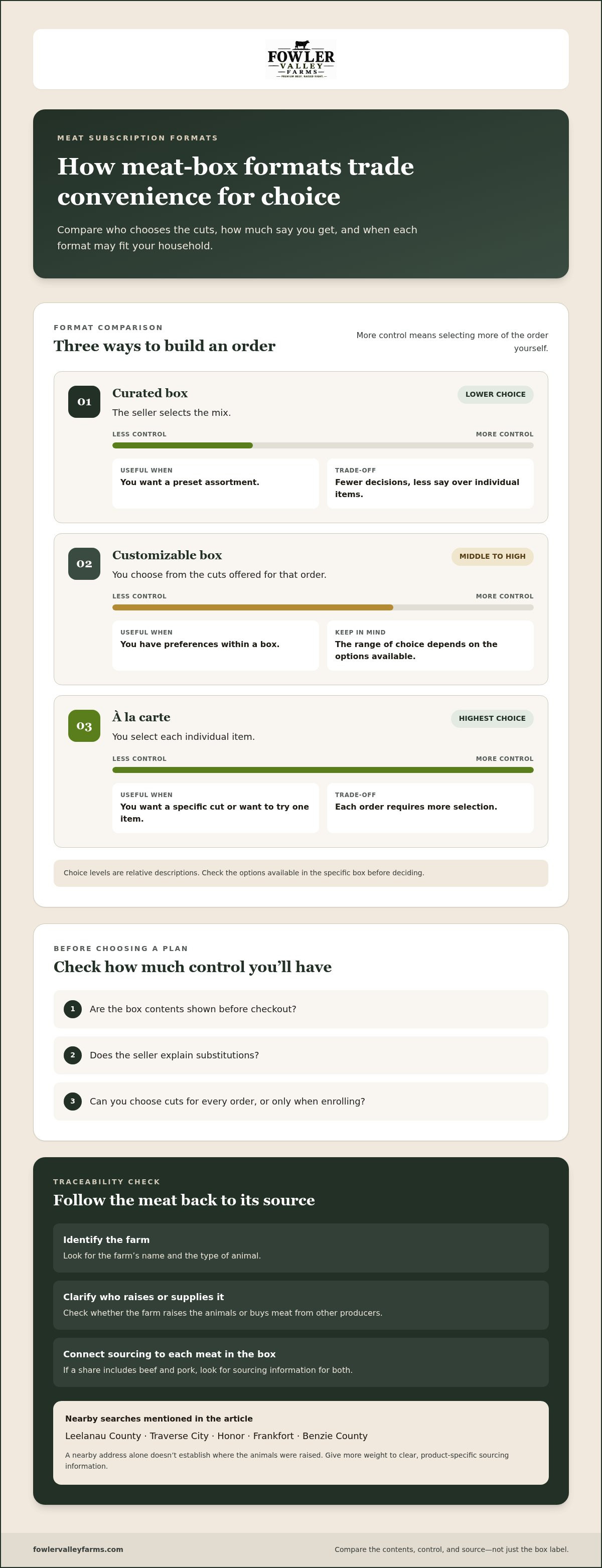
A curated box contains a selection assembled by the seller, often organized around a type of meat or assortment. It’s the simplest format: choose from the available boxes, then receive the selected mix. Compared with customizable orders, curated boxes require fewer decisions but offer less say over individual items. They work best when you’re comfortable trying the assortment as presented.
Meat Cuts and Box Customization
A customizable box lets you select from the cuts offered for that order. This format is useful when you have clear preferences, such as choosing ground beef over roasts or selecting particular steak cuts. Unlike a curated box, it gives you a say in shaping the assortment. The range of choice depends on the options available in the box.
À la carte ordering lets you choose individual items without committing to a preset assortment. It can suit someone looking for a specific cut or wanting to try one item before choosing a recurring box. The tradeoff is that each order requires more selection. A subscription box, by contrast, groups choices into a ready-made or customizable format.
We use this table to compare the main differences:
| Option | Who selects the contents? | Choice level | Useful when |
|---|---|---|---|
| Curated box | The seller selects the mix | Lower | You want a preset assortment |
| Customizable box | You choose from offered cuts | Middle to high | You have preferences within a box |
| À la carte | You select each item | Highest | You want specific individual cuts |
Choose the format that matches how much control you want over each order.
Before deciding, compare the selection process. Check whether a box shows its contents before checkout, explains substitutions, and lets you choose cuts for every order or only when enrolling. These details show how much control you’ll have after signing up, beyond a broad label such as “customizable.”
A Leelanau County meat subscription may also introduce you to cuts you wouldn’t choose on your own. That can be welcome if you enjoy variety. If you prefer familiar items, a box that gives you more say over its contents may suit you better. Weigh the appeal of a ready-made assortment against choosing each item, then select a format that feels straightforward to manage.
Sourcing transparency and farm traceability
For a Leelanau County meat subscription, we compare farms that explain both their recurring plan and the meat’s origin. If you’re looking nearby, we include Traverse City, Honor, Frankfort, and Benzie County in the search, focusing on farms that advertise subscriptions for local households.
Meat Sourcing Transparency
Look for the farm’s name, the type of animal, and a clear explanation of whether the farm raises the animals or buys meat from other producers. These details show how closely the seller is connected to the meat in the box. A description that lists cuts but names no source offers less traceability than one identifying the farm behind them.
For American or imported meat, look for a country-of-origin statement connected to the products being sold. Don’t infer origin from a farm’s address, a regional name, or pasture photographs. If a subscription combines meat from different sources, clear distinctions help you understand where each product comes from. Specific product information provides a firmer basis for comparison than broad claims about local food.
Farm Sources and Production
Separate farm sourcing from production practices. Sourcing tells you who raises the animals; production details explain how they are raised and processed. A subscription may identify its source farm without describing those practices, or explain its practices while sourcing from multiple farms. Assess each detail on its own rather than treating one statement as proof of the other.
Follow a simple traceability sequence: identify the farm, learn whether it raises or sources each type of meat, then connect that information to the box contents. If a share contains beef and pork, for example, look for clear sourcing information for both. This helps you understand which parts of production the named farm handles and which involve other producers.
Local and Nearby Farm Options
We compare local farms by location, recurring-plan details, and sourcing information together. In Leelanau County, a nearby address alone doesn’t establish where the animals were raised. For alternatives, we include farms around Traverse City, Honor, Frankfort, and Benzie County that advertise meat subscriptions available to local households.
Keep a comparison note for each farm: its stated location, the meats offered, the named source, and the production details provided. Distinguish a regional description from a product’s origin. “Based in Northern Michigan,” for instance, identifies a region but doesn’t explain where each animal was raised. Product-specific sourcing statements make that distinction clearer.
When comparing subscriptions, look for clear answers to these points:
- Does the farm name the source of each meat type?
- Does it distinguish animals it raises from meat supplied by another farm?
- Are production details tied to the products in the subscription?
- Can you tell which statements apply to beef, pork, or other meats?
These checks help distinguish a farm’s own production from a box assembled across multiple sources. They also keep proximity in perspective: a farm close to Suttons Bay or Traverse City may still source meat elsewhere. Give the most weight to clear, product-specific sourcing information because it shows the connection between the farm and what reaches your household.
Subscription pricing and shipping fees
Compare the full checkout total, not just the box price. Separate the meat charge from delivery, shipping, and recurring billing terms.
Box Prices and Shipping Costs
A listed box price and shipping charge are separate parts of the order total. Compare the same type of order across sellers, adding the stated fees before judging value. Check whether shipping appears at checkout or is included in the displayed total. That distinction can change how two offers look side by side, even when their contents seem similar.
For a useful comparison, note the box weight, included items, and every charge shown before payment. Then divide the total by the listed weight to calculate a comparable per-pound figure. Treat this as one measure, not the whole decision. Taxes, delivery charges, and billing frequency can affect how much you pay across recurring orders.
Shipping and Delivery
Carrier shipping and local delivery use different routes, so their fees and receiving arrangements may differ. Compare the final charge with the delivery method and stated timing. A carrier shipment may require someone to receive the parcel, while local delivery follows the farm’s delivery arrangement. The relevant cost depends on the order and how it reaches your household.
Frozen meat sent by carrier needs packaging intended to keep the order cold during transit. Read the seller’s instructions for receiving the shipment and handling it on arrival. These details help you understand the practical side of shipping beyond the checkout fee. For local delivery, look for the delivery area, timing, and any receiving instructions.
We use this checklist before comparing the totals:
- Record the box charge and listed weight.
- Add shipping or delivery charges shown during checkout.
- Note whether the displayed total includes every stated fee.
- Compare billing timing for recurring orders.
- Read the receiving instructions for shipped or locally delivered meat.
For households in Leelanau County, delivery distance and method can shape the final amount. Carrier shipping involves different logistics from a nearby drop-off. Compare the routes separately rather than assuming one method always costs less. The order total and stated delivery terms provide the clearest basis for weighing them.
Recurring billing deserves a closer look. A subscription may charge for each order according to its schedule, while a one-time purchase is paid as a single order. Compare how often charges occur and whether the amount changes with each shipment. This makes the ongoing commitment easier to understand than focusing only on the first checkout total.
Subscription flexibility and cancellation
A meat subscription in Leelanau County may follow a year-round or seasonal schedule. The farm’s production calendar and subscription terms determine when orders recur and whether enrollment follows a set season.
Customers generally sign up by selecting a plan, entering delivery details, and authorizing payment under its stated billing schedule. Renewal follows that schedule, so check whether the plan renews automatically or requires a new order for each delivery.
Flexibility matters when a household’s routine changes. A family traveling during summer, for example, may need to skip an order, pause deliveries, change frequency, or cancel. These actions differ: skipping affects one delivery, pausing suspends deliveries temporarily, and cancellation ends recurring orders. The subscription’s written terms define which options apply and when changes take effect.
Before enrolling, compare the plan’s order rhythm with your freezer space and meal habits. A household that cooks beef weekly may use recurring deliveries steadily; one that buys meat for specific gatherings may prefer individual orders. A seasonal plan can suit a household that wants meat during a defined part of the year, while a year-round plan can provide a consistent supply through Northern Michigan’s changing seasons.
Consider the practical terms together, rather than as separate fine print:
- Delivery frequency and the dates that trigger each order.
- Whether payment renews automatically or requires a new purchase.
- How the plan handles skipped or paused deliveries.
- When cancellation takes effect and whether an order is already being prepared.
- Whether the subscription runs year-round or within a stated season.
For example, if an order is scheduled near a planned trip to Traverse City, the pause and cutoff rules determine whether you can change that delivery. The same applies when your freezer is full or weekly meals shift. Clear cancellation terms explain how to end future renewals and what happens to an order already placed.
Signing up is usually a short sequence: choose a plan, provide the required delivery information, and approve its payment terms. Renewal then follows the plan’s billing cadence. The cadence, payment method, and ways to change or cancel differ by subscription, so compare the stated terms before committing. This makes flexibility concrete: you can see whether the schedule suits your household before recurring orders begin.
For Leelanau County households, the best fit depends on the calendar as much as the meat. Match the delivery cycle to your cooking routine, travel plans, and available freezer space. A plan with a suitable pause or cancellation option may suit changing schedules better than one whose recurring orders continue without those choices.
Meat subscriptions for households
Recurring meat orders offer value when the portions suit your meals, freezer, and cooking habits. In Leelanau County, compare a plan against the dishes you actually make, from burgers on a busy weeknight to a roast for a family gathering.
Start with a short meal inventory. Write down the cuts your household uses most, such as ground beef for tacos, steaks for grilling, or stew meat for a slow-cooked dinner. Then compare those choices with the subscription’s typical assortment. A box heavy on cuts your family rarely cooks may create extra planning instead of simplifying meals.
Household size alone doesn’t determine the right order. A couple that cooks at home often may use more meat than a larger household that eats out regularly. Think about how many meals you prepare, whether children prefer familiar cuts, and how often you share meals with relatives. Those habits give a clearer picture than a broad label such as “family-sized.”
Freezer space is another practical limit. Before an order arrives, make room and consider what is already stored. A packed freezer can make a large delivery awkward to organize, while a smaller order may fit more comfortably. Group cuts by meal, so ground beef for chili doesn’t get buried beneath roasts saved for later.
Subscriptions can also change how you plan. A regular assortment may encourage you to rotate cuts, but it works best when you’re willing to cook beyond familiar recipes. For example, plan a meal around a roast and another around ground beef before the next delivery. If you prefer choosing each cut for a specific dish, a recurring mixed box may suit you less than buying individual items.
Use these household checks before choosing a plan:
- List the cuts your household cooks repeatedly.
- Match the box contents to planned meals, not idealized meal plans.
- Measure available freezer space and leave room to organize new packages.
- Consider who eats each meal and whether preferences differ.
- Decide whether your household welcomes unfamiliar cuts or prefers a familiar mix.
For a household in Suttons Bay, a workable choice might mean familiar ground beef for routine dinners, plus cuts reserved for a planned weekend meal. A household in Northport with different cooking habits may value another mix. The useful comparison is how each plan supports your own table, not how much meat another household uses.
Choose a subscription when recurring deliveries match your meal rhythm and storage space. If you can name the meals that will use the cuts and make room for each order, the plan has a practical place in your routine. If not, reconsider the box size or ordering format before committing.
Fowler & Valley Farms: Build Your Own Beef Box
Fowler Valley Farms offers a Build Your Own Beef Box for households that want a hands-on way to order beef. If you prefer recurring orders, Beef Subscriptions offer another option; Beef Boxes suit shoppers choosing a box without a subscription. Local Delivery is available, making it relevant for households comparing how their meat reaches the door.
Choose the option that matches your routine. A custom box may suit meals built around particular cuts, while a subscription fits households seeking recurring orders. A standard beef box offers a straightforward alternative. Compare the available choices with your meal plans and freezer space before deciding.
Visit fowlervalleyfarms.com to explore the beef box and subscription options.
Choose a plan that fits your table
Let your household’s ordinary week guide the decision. Before placing an order, think about who cooks, which meals repeat, and how much room you can make in the freezer. A Leelanau County meat subscription should feel manageable in daily life, not like another commitment to work around.
Judge the fit practically: notice which cuts become meals, which stay stored, and whether the order rhythm suits your calendar. This can help you adjust your choices over time, rather than relying on a box description alone. Keep the goal simple: meat you’re glad to bring to the table.
If you’re ready to take the next step, Contact Fowler & Valley Farms today. We’ll be glad to help you find a fitting place to begin.
Fowler & Valley Farms for Leelanau County Meat Subscriptions
Fowler & Valley Farms offers Beef Subscriptions and Local Delivery for readers looking for a Leelanau County meat subscription.
Choose a Build Your Own Beef Box, a Beef Box, or Individual Cuts. Fowler Valley Farms also offers pork and chicken, giving you more options when choosing meat for your order.
Frequently Asked Questions
What types of meat are included in Leelanau County meat shares?
Meat shares can include beef, pork, or chicken, depending on the farm and the box selected. Fowler Valley Farms offers beef, pork, and chicken as individual cuts and in boxes. A household that mainly cooks beef can choose a beef-focused order, while shoppers seeking different proteins can consider the farm’s other meat offerings. Read each box description to see which products it contains.
How much do local meat subscriptions cost, and what are the share sizes?
Subscription cost and share size depend on the plan, the amount of meat, and the cuts included. Compare the contents and weight shown for each option, then consider how much your household can store and use. Fowler & Valley Farms offers Beef Subscriptions and Beef Boxes, giving shoppers recurring and non-recurring ways to buy. Choose a share based on your meals and freezer space rather than household size alone.
Where and how can customers pick up or receive meat shares in Leelanau County?
Receiving options depend on the farm’s arrangements; Fowler & Valley Farms offers Local Delivery. For a Leelanau County household, delivery can be a practical alternative to arranging a pickup, especially when coordinating a grocery run from Suttons Bay or Northport. Before ordering, review the delivery details for the specific purchase, including where the order can be received and any instructions for bringing frozen meat inside.
Do Leelanau County farms offer home delivery or shipping for meat subscriptions?
Some farms offer delivery, while shipping and local delivery are different fulfillment methods. Fowler & Valley Farms offers Local Delivery for orders. Delivery is useful for nearby households that want their order brought to them; shipping involves carrier transit and its own receiving arrangements. For a household in Leland, compare the available delivery details with your schedule and freezer space so the meat can be put away promptly.
What are the subscription cancellation, refund, and waitlist policies?
Cancellation, refund, and waitlist terms depend on the subscription plan and farm. Before enrolling, read the terms for how to stop future orders, whether a payment can be refunded, and how a waitlist works if enrollment is full. These policies can apply at different stages of an order. For example, cancelling future renewals may not be the same as changing an order already being prepared.
How are local meat animals raised, processed, and packaged?
Fowler Valley Farms describes its beef as pasture-raised and grain-finished, and says it uses the whole animal while avoiding shortcuts. Raising, processing, and packaging are separate parts of a farm’s production story, so look for clear details about each. For instance, a description of how cattle are raised doesn’t by itself explain where processing occurs or how cuts are packaged for a household freezer.
Which nearby farms offer meat subscriptions if none are available in Leelanau County?
Fowler Valley Farms offers beef subscriptions and local delivery for households in Leelanau County and Northern Michigan.

