Grain-Finished Beef: What It Means for Flavor, Marbling, and Your Table
More marbling doesn’t automatically mean better beef for every table. Grain finished beef and grass-finished beef come from different finishing approaches, and the label alone may not tell you what to expect in flavor or texture.
If those terms feel hard to compare, you’re not alone. Beef descriptions can make broad claims without explaining how a finishing choice may shape the eating experience. This guide explains grain finishing, how it differs from grass finishing, and what marbling and USDA grades can and can’t tell you.
We’ll also cover practical questions to ask before choosing beef for your household, including questions about a farm’s practices and current options. Fowler Valley Farms offers both grain-finished and grass-finished beef, and we believe in explaining the distinction plainly. Here’s a grounded place to start, whether you’re exploring beef from a Northern Michigan farm or making sense of the labels at your table.
Key Takeaways
- Grain finished beef describes a finishing approach, not necessarily how cattle were raised throughout their lives.
- Marbling is visible fat within the muscle, but a finishing label alone can’t predict every part of a cut’s flavor or eating experience.
- Compare grain-finished and grass-finished beef by asking the farm about its practices and considering what suits your table.
- Before buying, clarify the label, ask about sourcing and finishing, compare cuts, and check current availability.
- Fowler Valley Farms offers both finishing approaches. Explore available beef boxes or subscriptions to see what may fit your household.
What Does Grain-Finished Beef Mean?
Grain finished beef comes from cattle finished with grain as part of their final production stage. “Finished” describes an approach during production, not a full record of the animal’s life. A listing that says grain finished beef gives you one useful detail, but it doesn’t answer every question about sourcing or farm practices.
Read the words on a package or product page as a starting point. Ask the farm what its label means and which details it can verify. A broader view of the beef production cycle can also help put finishing in context.
What does the word finished mean in beef production?
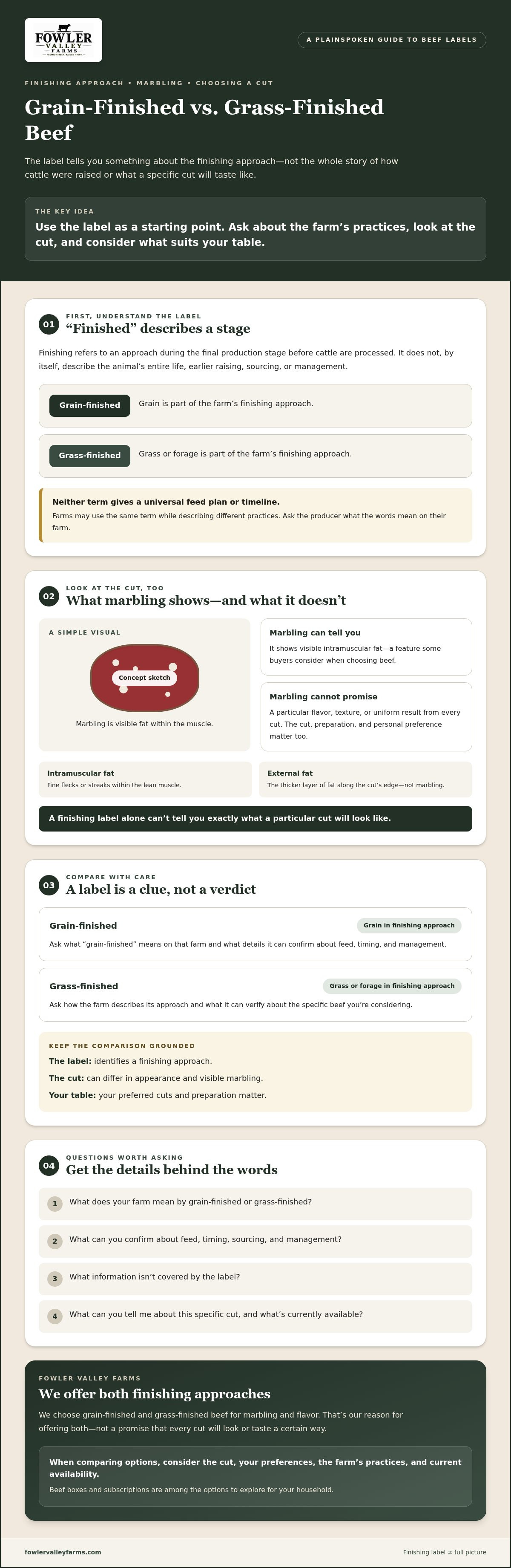
Finishing describes a production stage or approach before cattle are processed. It isn’t a complete description of earlier raising, sourcing, or management. Farms may use the same term while describing different practices, so don’t assume the label tells you a universal feed plan or timeline.
For a clear answer, ask the producer to explain how it uses the term. Which details about feed, timing, and management can it confirm? What information isn’t covered by the label? These questions help you understand what you’re choosing without expecting a short description to tell the whole story.
How is grain-finished beef different from grass-finished beef?
Grain finishing: Grain is part of the farm’s finishing approach.
Grass finishing: Grass or forage is part of the farm’s finishing approach.
These terms describe different choices, but neither tells you everything about earlier raising or sourcing. At Fowler Valley Farms, we choose both approaches for marbling and flavor. We’re glad to explain what we can about our choices. For current beef descriptions, review our available beef and ask us about any details you’d like clarified.
How Grain Finishing Relates to Beef Marbling and Flavor
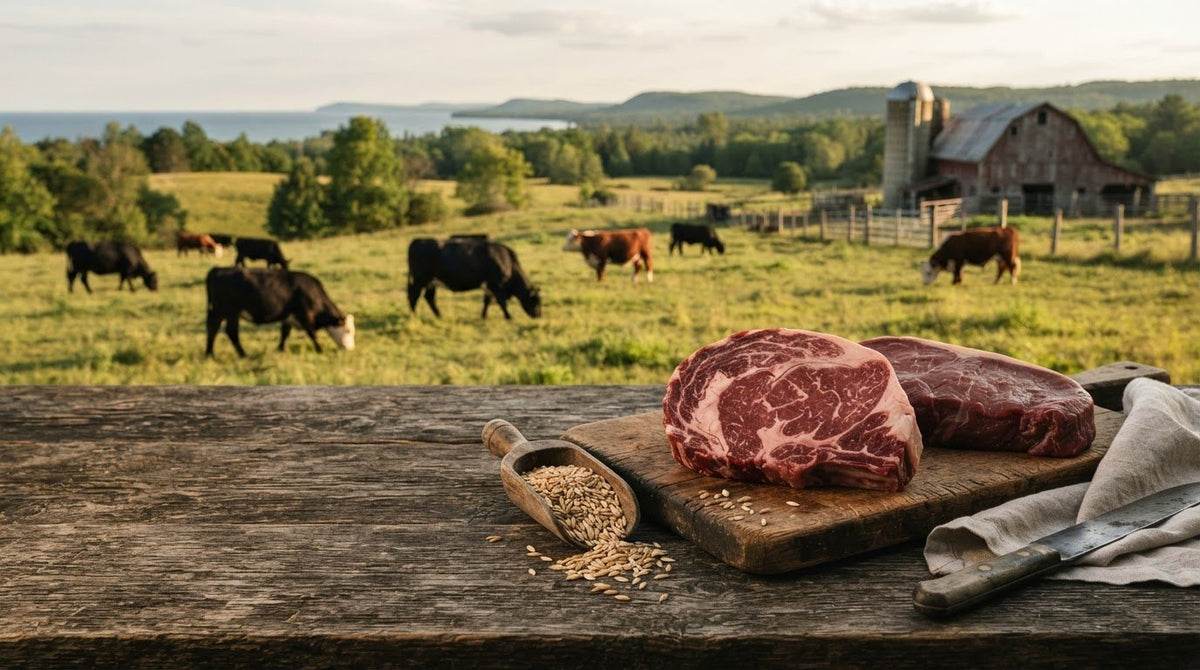
Look closely at a cut of beef and you may see small white flecks or fine streaks running through the lean meat. That pattern is marbling, or visible intramuscular fat within the muscle. It is distinct from the thicker layer of external fat along a cut’s edge. Marbling changes a cut’s appearance and is one feature buyers may consider when choosing beef.
What marbling can tell you
Marbling is one part of the eating experience, not a promise about how every steak will taste or feel. The cut, how it’s prepared, and your preferences matter too. A richly marbled cut may appeal to someone who enjoys more visible fat, while another household may prefer a leaner-looking piece. Neither preference is wrong.
Finishing approach can be part of a conversation about marbling, but the label alone can’t tell you exactly what a particular cut will look like. Penn State Extension’s Grass-fed vs. grain-fed system comparison offers additional context on how the systems differ. For a specific cut, ask the farm what it can tell you about that beef rather than relying on a broad claim.
Does grain-finished beef always taste or look the same?
No single label guarantees a uniform appearance or flavor. Cuts and farm practices can differ, and preparation at home also shapes the result. Grain finished beef shouldn’t be treated as a shortcut for predicting exactly how a meal will turn out.
When choosing, consider the cut, its visible marbling, and how you plan to use it. Then ask the farm about its finishing approach and any details it can confirm about that specific cut. These questions help distinguish general expectations from information a producer can verify.
At Fowler Valley Farms, we choose both grain-finished and grass-finished beef for marbling and flavor. That’s our reason for offering both approaches, not a guarantee that every cut will look or taste a certain way. Ask us about the practices behind the beef and check which options are currently available.
If you’d like to explore our beef options as you compare, take a look at Fowler Valley Farms and consider which cuts or beef boxes may suit your table.
Grain-Finished vs. Grass-Finished Beef: A Practical Comparison
The labels point to different finishing approaches, but they don’t tell the whole story of how cattle were raised or where the beef was sourced. Treat them as a starting point for a conversation, not a complete account of a farm’s practices or a verdict on quality.
| Label | What it generally describes | What to ask | May suit you if |
|---|---|---|---|
| Grain-finished | Grain is part of the finishing approach. | What does your farm mean by grain-finished, and can you explain the practices behind the label? | You want to understand this approach and compare its cuts with your household’s preferences. |
| Grass-finished | Grass or forage is part of the finishing approach. | How do you define grass-finished, and what can you share about the cattle’s earlier raising and sourcing? | You want to learn how this approach aligns with your preferences for flavor, marbling, and sourcing. |
Which questions make the comparison more useful?
Start by asking what the farm means by each term. Labels can be brief, while the practices behind them may need more explanation. Ask whether the farm can describe its approach and sourcing beyond the product label, and whether it can answer questions about the specific beef you’re considering.
For broader context on where a farm-direct purchase fits into your shopping choices, read our farm-direct versus grocery-store meat comparison. The goal is to understand what you’re buying, not to treat one source or finishing label as automatically superior.
Which finishing approach may suit your preferences?
Think about what matters most at your table. You may be comparing visible marbling, the flavor you enjoy, or how much detail you want about sourcing. Personal taste is just that: personal. Liking one cut or approach doesn’t prove that it’s objectively better quality for every household.
At Fowler Valley Farms, we choose both grain-finished and grass-finished beef. We don’t suggest the two approaches produce identical results; we offer them as distinct choices. Compare the farm’s descriptions, ask what’s currently available, and consider our beef boxes as one way to explore options for your household.
What to Ask a Farm Before Buying Grain-Finished Beef
A clear label is useful, but it may leave out details you need to make a confident choice. Before buying grain finished beef, clarify what the farm means, ask what it can verify, compare the cuts or box options, and check current availability.
How can you get clear answers about sourcing?
Ask direct questions and look for plain, specific answers. A farm should be able to explain what its finishing terms mean, though the details each producer can confirm may differ. For more on our family and sourcing, see our farm’s background.
- What does “grain-finished” mean in your farm’s description?
- What can you tell me about the cattle’s sourcing and finishing practices?
- Which details are you able to verify, and which aren’t included in the label?
- Can you explain the differences between the cuts or options currently available?
Before choosing, ask what the label means, what sourcing and finishing details the farm can verify, which cuts are available, and whether the option suits your household. These are practical questions, not a test with one correct answer. Personal taste can guide your choice, but it doesn’t prove that one finishing approach is objectively higher quality.
What should Northern Michigan buyers check before ordering?
If you’re considering beef in Northern Michigan, confirm the details for your own order rather than assuming they apply across the region. Whether you’re in Traverse City, Frankfort, Grand Rapids, Leelanau, Kalkaska, Boyne City, Bay City, Midland, Saginaw, Freeland, Clare, Cadillac, Kingsley, Detroit, Chicago, Grand Haven, or Muskegon, check local delivery eligibility directly. These place names offer local context, not a promise of coverage.
Next, review current cuts and the listed contents of any beef box or subscription. Availability can change, so confirm that the option you want is currently offered before ordering. If you’re planning a household meal or stocking your freezer, consider the cuts you use most and make room for the amount you plan to store. Ask the farm to clarify anything the listing doesn’t answer.
At Fowler Valley Farms, we choose both grain-finished and grass-finished beef, and we welcome questions about the distinctions and current options. To explore what’s available, visit Fowler Valley Farms and review the beef boxes or subscriptions that may fit your household.
Fowler Valley Farms' Grain-Finished Beef and Your Next Step
Choosing between grain-finished and grass-finished beef doesn’t mean deciding that one approach is right for every household. At Fowler Valley Farms, we choose both approaches for marbling and flavor. That’s the reason behind offering a choice, not a promise that every cut will look or taste the same. Your preferences, the cut you’re considering, and the details we can confirm about it all matter.
How does offering both approaches help buyers choose?
Having both options gives you a chance to consider what suits your table rather than relying on a single label to make the decision. Compare the descriptions, ask us to clarify details, and decide which option better fits what you enjoy cooking and eating. Our choice to offer both reflects our stated focus on marbling and flavor. It doesn’t mean the approaches are interchangeable or that one will suit everyone.
For a wider look at questions to consider when buying from a farm, read our guide to real farm meat sourcing. As you compare, focus on the details the farm can explain about its own beef instead of assuming a short description tells you every part of its sourcing or production.
Where can readers explore current beef options?
Start with our available beef cuts and offerings. Review the current descriptions and check which cuts or options are listed now. If something about the finishing approach or a particular item isn’t clear, ask before choosing. Current offerings can change, so don’t assume a specific cut or finishing option is always available.
Beef boxes and subscriptions are other ways to explore the beef we offer. Consider what your household cooks regularly and whether you’d rather review individual cuts or look at a box or subscription. Check the current details for each before deciding, so you know what’s included and available.
Take your time, compare the options, and choose what fits your household. Explore available beef boxes and subscriptions to see what may be right for your table.
Choose Beef That Fits Your Household
A label can help you compare beef, but the farm’s explanation and the cut itself give you more useful context. Keep your priorities in mind, whether that’s marbling, flavor, or understanding how the beef is sourced. Then ask what the farm can confirm and check which options are currently available.
At Fowler Valley Farms, our family, the Putt family, has operated the farm across multiple generations. We choose both grain-finished and grass-finished beef for marbling and flavor, giving you approaches to consider according to your preferences. We also offer individual cuts, beef boxes, custom boxes, and subscriptions. Current options may vary, so check the details before choosing.
Ready to take a look? Explore available beef boxes and subscriptions, and see what may suit your table. A few thoughtful questions can make the choice clearer. We’re glad to help you find a good fit.
Frequently Asked Questions
What does grain-finished beef mean?
Grain-finished beef comes from cattle whose finishing approach includes grain. “Finished” describes a stage, not the animal’s entire raising history. The label alone doesn’t explain what cattle ate earlier, the exact feed used, or a farm’s management practices. Ask the producer how it defines the term and what details it can confirm. Fowler Valley Farms offers both grain-finished and grass-finished beef for households to compare.
Is grain-finished beef the same as grain-fed beef?
The terms may be used interchangeably, but “grain-finished” points specifically to grain being part of the finishing approach. “Grain-fed” may be less precise about when or how grain was included. There’s no official USDA certification for grain-finished beef, so labels may not answer every sourcing question. If you’re comparing farms around Traverse City or elsewhere in Northern Michigan, ask what each producer means by the term.
Does grain-finished beef have more marbling than grass-finished beef?
Grain-finished beef may be more likely to have greater marbling, but the label can’t guarantee how much you’ll see in a particular cut. Marbling is fat within the muscle, and individual beef can vary. USDA quality grades consider marbling and maturity, but a finishing description isn’t itself a grade. Ask the farm about the specific cut and its practices, then weigh that information against your preferences.