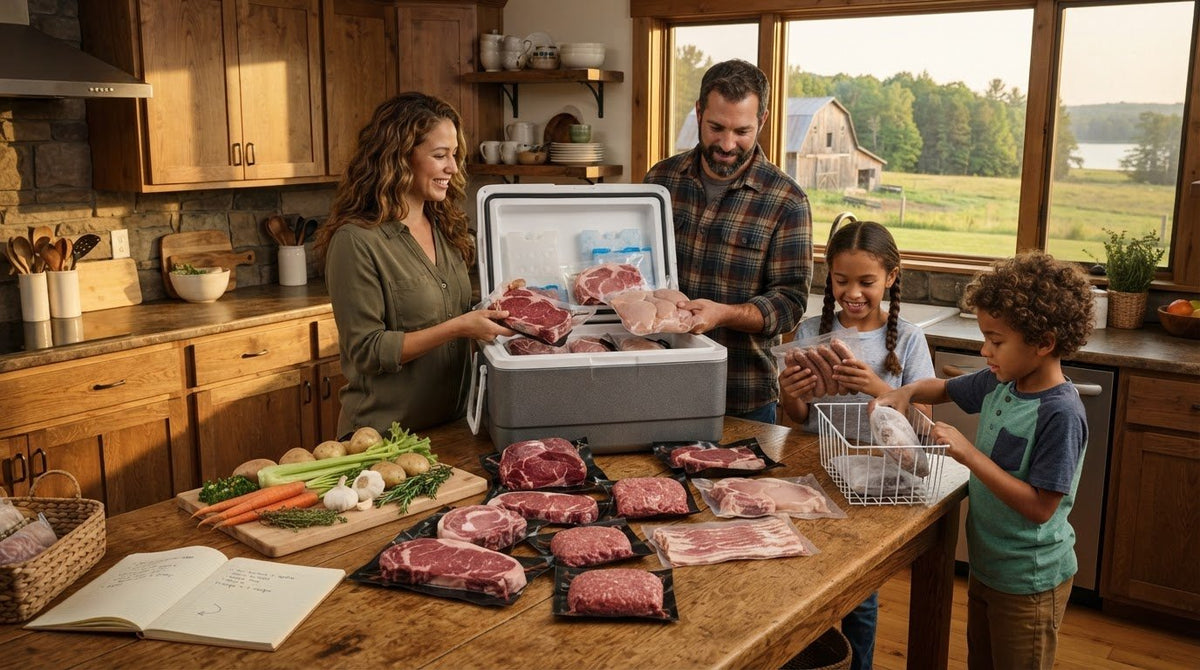
Organizing a Chest Freezer for Bulk Meat: A Practical System
A chest freezer can hold plenty of meat and still leave you guessing at dinnertime. If newer packages keep burying the cuts you meant to use, organizing a chest freezer for bulk meat starts with a simple rule: every package needs a visible place and a readable label. In Northern Michigan, where a well-stocked freezer can make weeknight meals easier, a little order goes a long way.
Digging through frozen packages to find ground beef or a roast wastes time, and older cuts are easy to overlook when there’s no plan for rotating them. A useful system makes it easy to see what you have, reach the right cut, and choose older packages first without turning freezer day into a major project.
This guide walks through sorting meat by cut or meal, grouping packages, labeling them, and keeping a simple inventory. It also explains how to estimate usable freezer space before choosing a bulk order, so what you bring home fits your household and the space you can access.
Key Takeaways
- Organizing a chest freezer for bulk meat starts with a simple routine that makes packages easier to find and older cuts easier to use first.
- Before loading, clear space, group packages, label them, and check that existing packaging and labels are intact.
- Choose a system that fits your household, whether you sort by cut, planned meals, or package date.
- Use a basic freezer map or written inventory to track where packages are stored and update it as you take meat out.
- Measure the space you can actually use, then consider your household size, preferred cuts, and realistic meal frequency before choosing an order.
Why organizing a chest freezer for bulk meat saves time
You reach for ground beef to make supper, but it’s buried beneath newer packages. A quick search turns into lifting bags, shifting boxes, and wondering what else is hidden below. A chest freezer can be a practical way to keep meat on hand, but it works best when you can find what you need without unloading half the contents.
Organizing a chest freezer for bulk meat doesn’t mean making it look perfect. It means identifying packages, storing them where you can retrieve them, and keeping older stock in view so it gets used first. Readable labels and a simple inventory reduce guesswork when you’re planning meals.
What makes a chest freezer harder to manage?
A chest freezer opens from the top, so packages often end up in layers. The newest purchase is easy to reach, while a roast or ground beef beneath it can disappear from view. Mixed cuts, loose packages, and dates that are difficult to read make it harder to know what’s there.
That clutter can build up during ordinary routines. You bring home groceries and place them on top, or pull out a few packages without returning the rest to a consistent order. A few familiar categories and clear dates help prevent the freezer from becoming a pile you have to search every time you need an ingredient.
What should your freezer system help you do?
Keep the goals simple. You should be able to:
- Identify each package without guessing which cut is inside.
- Retrieve it easily without digging through unrelated meat.
- Use older stock first rather than letting it disappear beneath newer purchases.
The best arrangement depends on your household and cooking habits. If you often make quick meals, keep the cuts you use most accessible. If you plan meals ahead, arrange packages to make the ingredients for upcoming dinners easy to find. Freezing is one of several food preservation methods, but this section focuses on organization and inventory, not a full guide to meat-storage safety.
A useful freezer inventory tells you what’s inside, where to find it, and which packages to use next. Use a written list, a simple map, or both. The goal is to make the freezer work for your household, not to create another chore.
How to sort bulk meat before it goes into the chest freezer
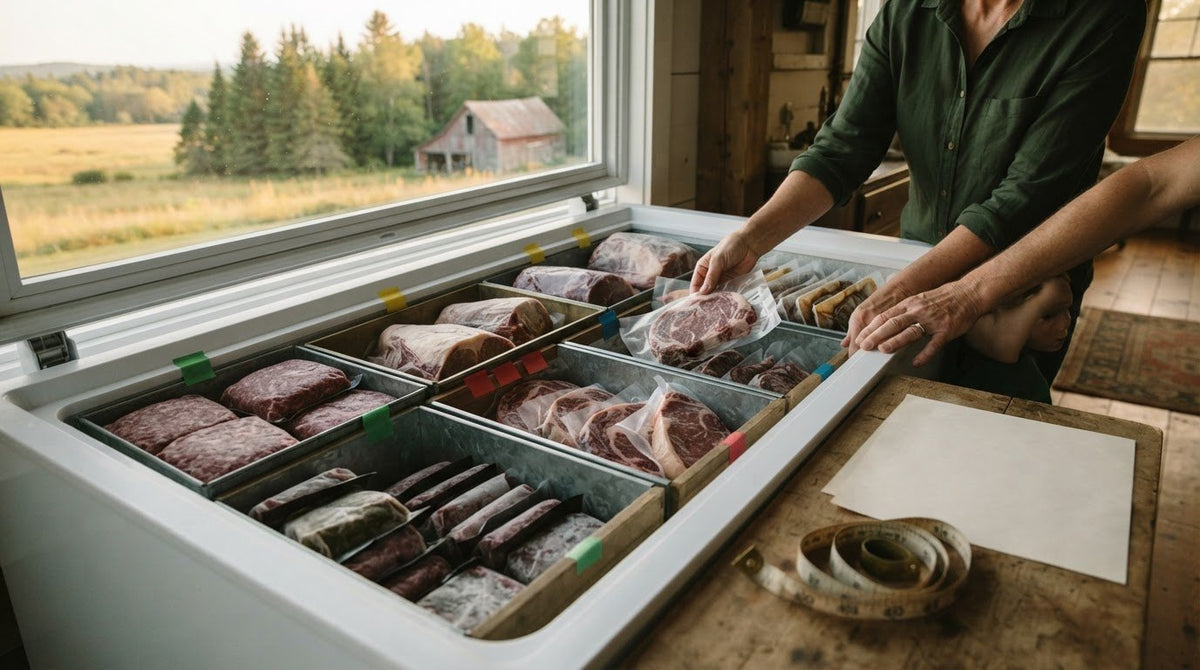
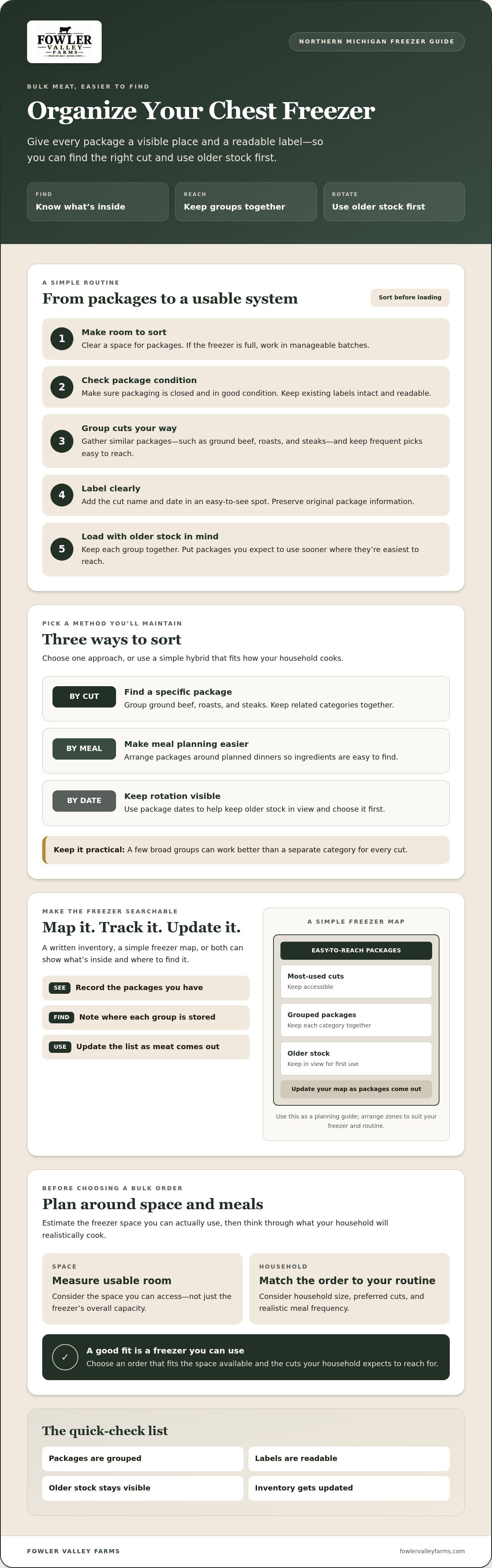
Sorting before loading saves repeated searching later. Clear a space to set packages down, group similar cuts, check and label each package, then load the groups where you can find them again. If the freezer is already full, work in manageable batches rather than leaving packages out while you reorganize.
As you sort, check that packaging is closed and in good condition, and keep any existing labels readable. Those labels may include details you’ll need later, so don’t cover, remove, or write over them. For guidance on handling meat during freezing and thawing, refer to the USDA’s safe freezing and thawing guidelines.
Group packages around the way you cook
Start with categories that match your meals, such as ground beef, roasts, and steaks. Keep the cuts you reach for often easy to access. If space is limited, combine related categories and note what each group contains. Pork and chicken can have their own clearly marked groups, separate from beef, so you can identify the right package at a glance.
You don’t need a separate category for every cut if your household won’t use it. A few broad groups may work better for a small freezer or a household with a short regular menu. Organizing a chest freezer for bulk meat should simplify daily choices, not create a complicated sorting job.
Label packages so the details stay clear
Use a food-safe label or marker on an easy-to-see area. Add the cut name and date while leaving the original package information visible. If the package already has a date, preserve it rather than replacing it with a guess. Marking the same area on each package makes it easier to scan without turning everything over.
Then load deliberately. Keep each group together and put packages you expect to use sooner where they’re easiest to reach. If you’re choosing beef for your freezer, browsing Fowler & Valley Farms beef boxes can help you consider which cuts to make room for.
Which chest-freezer organization system fits your household?
The right system is one you’ll keep using after a grocery run or a new bulk order. Some households want to find a particular cut quickly; others plan dinners ahead and prefer to group packages by meal. Organizing a chest freezer for bulk meat doesn’t require choosing just one method. A simple hybrid can work well if it’s easy to maintain.
| System | Benefit | Trade-off |
|---|---|---|
| By cut | Makes it easy to find ground beef, steaks, or roasts. | Doesn’t show which packages are intended for a planned meal. |
| By meal | Keeps ingredients for planned dinners together, such as a roast dinner or a quick ground-beef meal. | You may need to remember which cuts are in each meal group. |
| By date | Makes older packages easier to spot and use first. | Packages of different cuts may be stored together. |
Should you organize meat by cut or by meal?
Cut-based grouping suits cooks who decide what to make based on what’s available. Keep ground beef together, for instance, so it’s easy to find when you need it for a familiar meal. Meal-based grouping is useful if you plan dinners ahead and want to collect the packages for a particular dish.
A hybrid approach can support both habits: group packages by cut, then place the cuts you plan to use soon in an easy-to-reach area. Add dates to your inventory so older packages don’t get overlooked. The National Center for Home Food Preservation offers safe freezing guidelines for readers looking for preservation guidance alongside their organization plan.
Do freezer bins and dividers make access easier?
Bins or dividers can keep smaller groups together and stop them from spreading across the freezer, but they’re optional. Organizers take up space that could otherwise hold packages, and one that doesn’t fit can make access harder. Measure the usable interior before adding anything, and choose an arrangement you can adjust without a major reset.
Try your system with what you already have before buying organizers. After each shopping trip, put new packages in their assigned groups and update your inventory. If the routine takes only a few minutes and helps you find what you need, it’s a good fit. If it feels fussy, simplify it. For beef box choices, see Fowler & Valley Farms beef boxes.
How to load, map, and rotate meat in a chest freezer
A consistent loading routine keeps your system useful after the first day of organizing. Before adding packages, decide where each group belongs and update your map or inventory as you go. Keep categories together, place frequently used cuts where they’re easiest to access, and avoid building a stack that hides everything underneath.
Where should frequently used packages go?
There’s no single layout for every chest freezer. Put commonly used cuts where you can reach them without moving several other groups. Keep less frequently chosen packages together elsewhere, and use location labels that make sense for your freezer, such as “left side” or “bottom basket.” Follow the freezer manufacturer’s instructions for loading and airflow, since recommended arrangements can vary by model.
When you add new meat, put it with its matching category and arrange the packages so older ones are easiest to take first. This is a household version of first-in, first-out rotation. It helps prevent older packages from being forgotten, but it isn’t a guarantee of food safety or a substitute for checking current storage guidance.
How can you keep an inventory current?
Use a paper list near the freezer or a note on your phone. For each package, record the cut, the date shown on its label, and its location. A simple entry might read “roasts, date on package, left side.” If you move a group, update the location. Cross off or remove an entry as soon as a package comes out.
Dated, visible packages make it easier to spot older meat and choose it before newer stock. That small habit keeps the inventory useful instead of letting it become a list that no longer matches the freezer.
Build the routine around your household. After adding packages, put them in their assigned areas and update the list before closing the lid. Before taking meat out, check the inventory. Organizing a chest freezer for bulk meat works best when the map reflects what’s actually inside, not what you meant to put there.
As you plan what to keep on hand, you can explore Fowler & Valley Farms beef options and think about which cuts fit your usual meals and freezer space.
Plan a bulk-meat order around your freezer and meals
A bulk order should fit the space you can use and the meals your household actually cooks. Before choosing how much meat to order, take stock of the freezer as it is today. Existing frozen food, bins, and the room needed to reach packages all count. Organizing a chest freezer for bulk meat starts before the order arrives, with a clear idea of what can fit without becoming a hard-to-search pile.
How do you know whether a bulk order will fit?
Clear out anything you no longer need, then measure the usable interior space. Note what will stay in the freezer and leave room for the layout you plan to use, including space to lift packages out without shifting everything around. A freezer filled to the brim may hold more, but it can be harder to manage and inventory. Choose an order based on the space you can access, not just the empty area you see at a glance.
Next, consider how often your household cooks at home and how much meat you realistically expect to use. A larger household or one that serves beef often may need a different amount than a smaller household that cooks beef occasionally. Browse beef box options with your freezer space and meal routine in mind, rather than choosing an order before checking either.
How can cut selection match your household routine?
Start with cuts you already know how to prepare and enjoy. Think about what appears on your regular meal plan: ground beef for familiar weeknight dishes, steaks for meals you make often, or roasts if they suit the way your household cooks. Be realistic about how often you’ll use each cut. One that sounds appealing but rarely makes it onto the menu can take up valuable freezer space.
Fowler & Valley Farms offers a Build Your Own Beef Box option for shoppers who want to select cuts around their preferences. Review the available choices and consider what fits your cooking habits. Don’t assume a particular cut or amount is included unless the product details say so. The goal is a manageable order, not the fullest freezer possible.
Once you’ve measured the space and made a short list of preferred cuts, take a look at Fowler & Valley Farms beef options and choose what you’d like to explore. A thoughtful order matched to your meals and freezer is easier to organize and use.
Make Your Freezer Work for Your Household
A chest freezer doesn’t need a perfect arrangement to serve you well. Clear labels, grouped packages, and a simple inventory make it easier to find a cut and use older packages first. Before bringing home more meat, measure the space you can actually use and think about the cuts your household cooks regularly.
That’s the heart of organizing a chest freezer for bulk meat: build a straightforward system you can maintain after each shopping trip. Adjust it as your meals and freezer contents change. A little attention now can make choosing supper simpler later.
Fowler Valley Farms offers individual cuts, beef boxes, and a Build Your Own Beef Box option, along with pork and chicken. For households planning freezer space in Traverse City, Frankfort, Grand Rapids, Leelanau, Kalkaska, Boyne City, Bay City, Midland, Saginaw, Freeland, Clare, Cadillac, Kingsley, Detroit, Chicago, Grand Haven, Muskegon, and Northern Michigan, explore the available meat options and local delivery. Explore Fowler & Valley Farms beef options and choose a next step that suits your household.
Frequently Asked Questions
How do you organize meat in a chest freezer?
Group packages by cut or meal use, then keep each group together in a place you can reach. Put commonly used cuts where they’re easy to retrieve, and use a paper list or phone note to track what’s inside. Organizing a chest freezer for bulk meat doesn’t need a complicated layout. Choose a system that fits your cooking habits and is simple to reset after you add packages.
What is the best way to label and rotate bulk meat?
Keep the original package information visible, and add a readable label with the cut name and date if needed. Use a consistent label position so you can identify packages quickly. For rotation, place newer packages behind or beneath older ones in their category, then update your inventory when meat goes in or comes out. This first-in, first-out habit helps prevent older packages from being overlooked, but it isn’t a food-safety guarantee.
How much meat should you buy for a chest freezer?
Measure the freezer space you can actually use before choosing an order. Account for food already inside and leave room to reach packages without disrupting your layout. Then consider household size, the cuts you enjoy cooking, and how often you realistically serve meat. If you’re near Traverse City, Fowler & Valley Farms offers individual cuts, beef boxes, and a Build Your Own Beef Box option to explore as you plan.