How to Cook Ribeye on the Stove: A Northern Michigan Farmer’s Guide
You don't need a $1,000 grill or a professional kitchen in Traverse City to enjoy a world-class steak. In fact, some of the best meals we've ever shared at our family table started with a heavy cast iron pan and a thick cut of beef right here in Northern Michigan. If you've been struggling with a grey, unappetizing surface or a smoky kitchen, learning how to cook ribeye on the stove is the most reliable way to master your dinner. We raise our cattle to be grain-finished for that deep marbling; we believe that quality deserves a crust that matches the rich flavor inside.
We understand the frustration of overcooking the center while waiting for that elusive sear to develop. It's disappointing to invest in a premium cut from right here in Northern Michigan only to have it turn out tough or uneven. We're sharing the exact method we use to get a steakhouse-quality sear on our grain-finished ribeye right in your own kitchen. You'll learn how to achieve a perfectly medium-rare center and a crispy, mahogany-colored crust without filling your home with smoke. From our farm in Honor to your stovetop in Frankfort or Leelanau County, we want you to have the confidence to cook farm-fresh cuts perfectly every time.
Key Takeaways
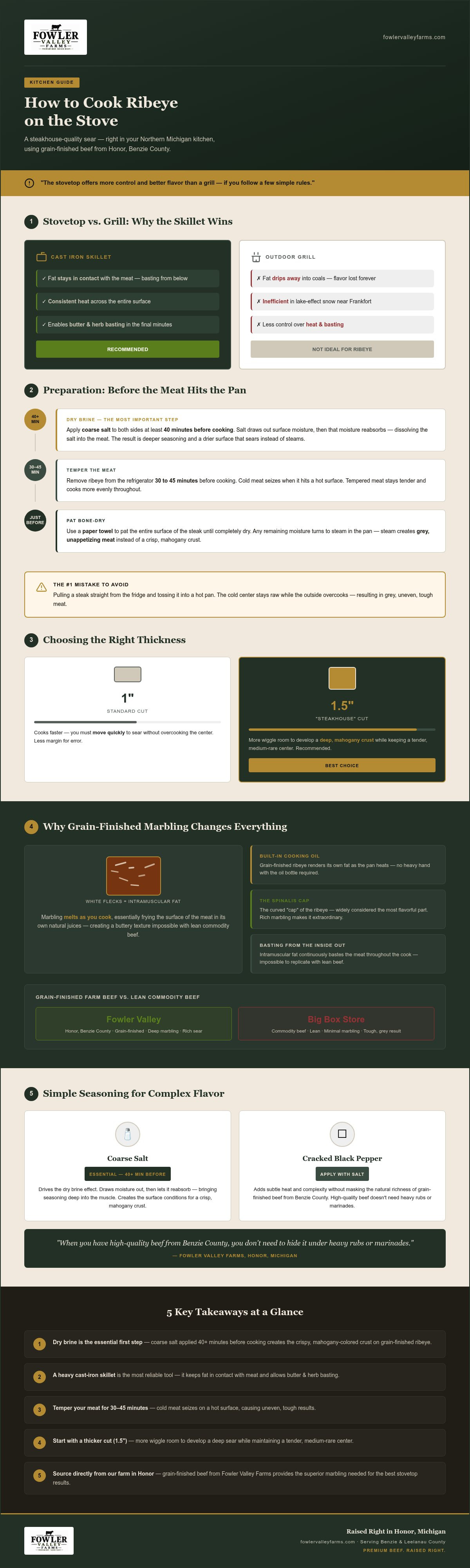
- Understand why a dry brine is the essential first step for achieving a crispy, mahogany-colored crust on your grain-finished ribeye.
- Discover why a heavy cast-iron skillet is the most reliable tool for mimicking a high-end steakhouse right in your Northern Michigan kitchen.
- Master the exact timing and heat control for how to cook ribeye on the stove to avoid a grey surface or an overcooked center.
- Learn why we recommend starting with a thicker cut to ensure you get a deep sear while maintaining a tender, medium-rare finish.
- See how sourcing your beef directly from our farm in Honor ensures the superior marbling needed for the best stove-top results.
Mastering the Skillet Ribeye in Your Northern Michigan Kitchen
You don't need a $500 grill to eat like a king in Traverse City. When the wind picks up off the bay and the temperature drops, the kitchen is often the best place to be. We've spent years figuring out how to cook ribeye on the stove so it rivals any high-end steakhouse. It starts with a heavy pan and the right piece of meat. Most folks think a grill is the only way to get a good steak. We're here to tell you that the stovetop offers more control and better flavor if you follow a few simple rules. It's about working with the meat rather than against it.
Indoor Searing vs. Outdoor Grilling
When the lake-effect snow hits Frankfort, standing over a grill isn't just cold; it's inefficient for this specific cut. A grill grate lets all that beautiful fat drip away into the coals where it's lost forever. In a heavy skillet, the fat stays right where it belongs. It stays in contact with the meat. This is the difference between simply cooking a steak and truly searing it. That intense heat creates a crust that seals in the moisture. We don't worry about the fancy scientific names for it. We just know it's the secret to that rich, savory bite everyone loves. A skillet allows you to:
- Keep the steak in its own natural fats for better flavor.
- Maintain a consistent heat across the entire surface of the meat.
- Baste the steak with butter and herbs in the final minutes.
The Importance of Starting with Quality Beef
A perfect sear requires fat. There's no way around it. Our grain-finished beef is raised specifically to develop the marbling that makes a great sear possible. When you select a ribeye steak, look for those small white flecks throughout the muscle. That's the marbling. It melts as you learn how to cook ribeye on the stove, essentially frying the surface of the meat in its own natural juices. This creates a buttery texture you won't find in lean, commodity beef from a big box store.
You can find these well-marbled cuts when you Build Your Own Beef Box. We take pride in our work here in Honor. We believe that honest stewardship of our cattle leads to a better meal for your family in Benzie County. When you start with a cut that has been raised right, half the work is already done for you. The beef provides the flavor; you just provide the heat.
Choosing and Preparing Your Ribeye for the Stove
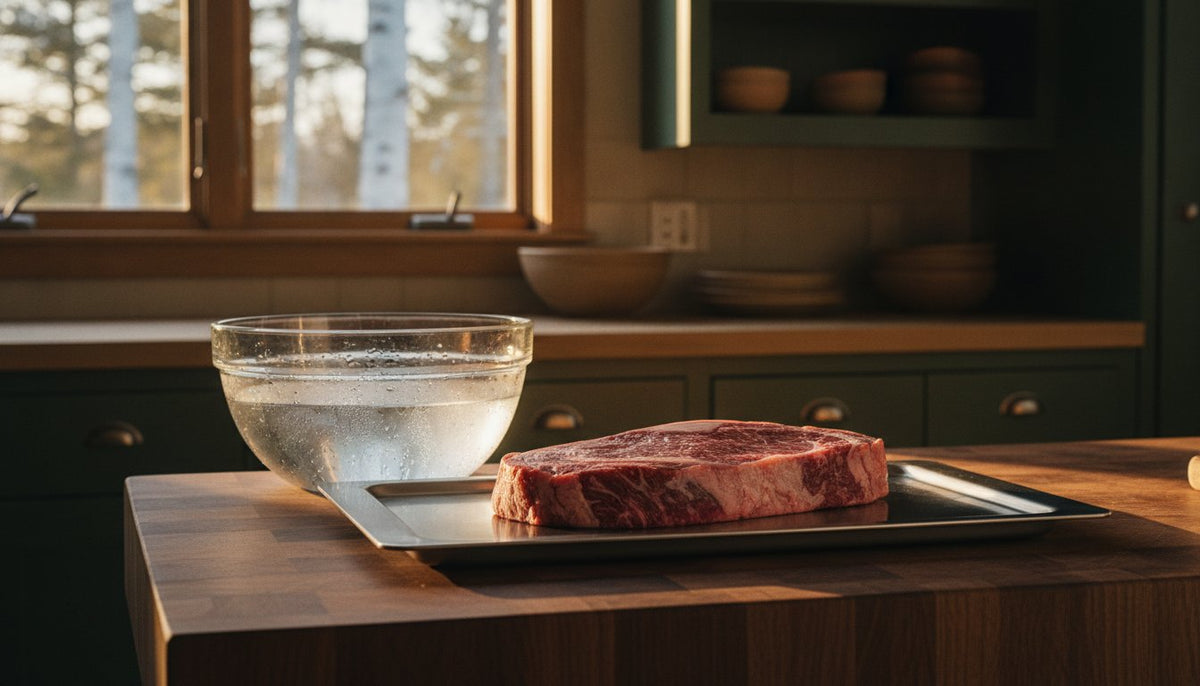
Success starts long before the steak hits the iron. When you're learning how to cook ribeye on the stove, the preparation is just as vital as the heat. Most folks pull a steak straight from the fridge and toss it into a pan. That is a mistake we see often. For a truly even cook, you need to let the meat temper. Take your ribeye out of the refrigerator about 30 to 45 minutes before you plan to cook. This takes the chill off the muscle fibers. Cold meat seizes up when it hits a hot surface; tempered meat stays tender.
Thickness also dictates your strategy. A standard 1-inch cut from our farm in Honor will cook much faster than a 1.5-inch "steakhouse" cut. If your steak is on the thinner side, you have to move quickly to get a sear without overcooking the center. For those thicker cuts, you'll have a bit more wiggle room to develop that deep, mahogany crust we all crave. Regardless of the size, your most important tool is a simple paper towel. Pat the surface of the meat until it is bone-dry. Any moisture left on the surface will turn to steam. Steam creates grey, unappetizing meat rather than a crisp sear.
Grain-Finished Marbling: The Built-In Cooking Oil
One thing that sets our beef apart is the grain-finishing. This process creates intramuscular fat, or marbling, that behaves differently in the pan. Unlike leaner beef that requires a heavy hand with the oil bottle, grain-finished ribeye comes with its own built-in cooking fat. As the pan heats up, this fat renders out and bastes the meat from the inside out. It's especially noticeable in the spinalis, which is the curved "cap" of the ribeye. This is widely considered the most flavorful part of the animal. When you learn more about our individual cuts, you'll see how that marbling is the key to a juicy result.
Simple Seasoning for Complex Flavor
We believe in keeping things simple. When you have high-quality beef from Benzie County, you don't need to hide it under heavy rubs or marinades. We stick to coarse salt and cracked black pepper. The salt is especially important for the "dry brine" effect. If you salt your steak at least 40 minutes before cooking, the salt has time to draw moisture out, dissolve into a brine, and then be reabsorbed into the meat. This seasons the steak all the way through. If you like the flavor of garlic or fresh herbs, wait until the very end of the cooking process to add them. Adding them too early in a high-heat skillet just leads to bitter, burnt aromatics. If you're ready to try this at home, you can order your beef today for local delivery in Leelanau County or Traverse City.
The Best Tools for a Steakhouse Crust
If you want to know how to cook ribeye on the stove properly, you have to start with the right gear. We often call the heavy cast-iron skillet the "honest neighbor" of the kitchen. It doesn't lie to you. It works hard, keeps its heat, and lasts for generations. While some folks in Traverse City might reach for a stainless steel pan, it requires a bit more finesse to prevent sticking. Whatever you do, leave the non-stick pan in the cupboard. Those coatings aren't designed for the high heat we need to get a proper sear on a grain-finished ribeye. They can actually release fumes if they get too hot, and they won't give you that mahogany crust you're looking for.
Your choice of oil matters just as much as the pan. Because we're cooking at high temperatures, you need an oil with a high smoke point. We prefer avocado oil or even beef tallow if you have some on hand. Avoid butter at the start. Butter has milk solids that burn long before the steak is done. Save it for the very end of the process. A good oil ensures the meat sears rather than sticks, creating a barrier that helps develop flavor across the entire surface of the cut. This is how you get that deep, savory finish without a bitter, burnt aftertaste.
Cast Iron: The Farmer’s Choice
A heavy cast-iron pan is the secret to mimicking a professional steakhouse in your own home. The magic is in the heat retention. When you drop a cold steak onto a thin pan, the temperature drops immediately. In a thick cast-iron skillet, the pan holds its energy. This allows for a continuous sear that doesn't stall out. To keep your skillet in top shape, never use soap. Just rinse it with hot water and a stiff brush while it's still warm. Wipe it dry immediately and rub in a tiny bit of oil. A well-seasoned pan is a legacy you can pass down, much like our farm in Honor.
Essential Accessories for Success
Beyond the pan, a few simple tools will make your life easier. We always recommend an instant-read meat thermometer. It's the only way to guarantee a perfect medium-rare every single time without cutting into the meat and losing those juices. You'll also want a pair of long-handled tongs. They give you the control you need to flip a heavy ribeye without getting too close to the heat. Finally, consider a sturdy splash guard. Searing beef is a messy business, and a guard will keep your Leelanau County kitchen clean while you work. These small investments pay off every time you sit down to a perfect dinner.
Step-by-Step: How to Cook Ribeye on the Stove Perfectly
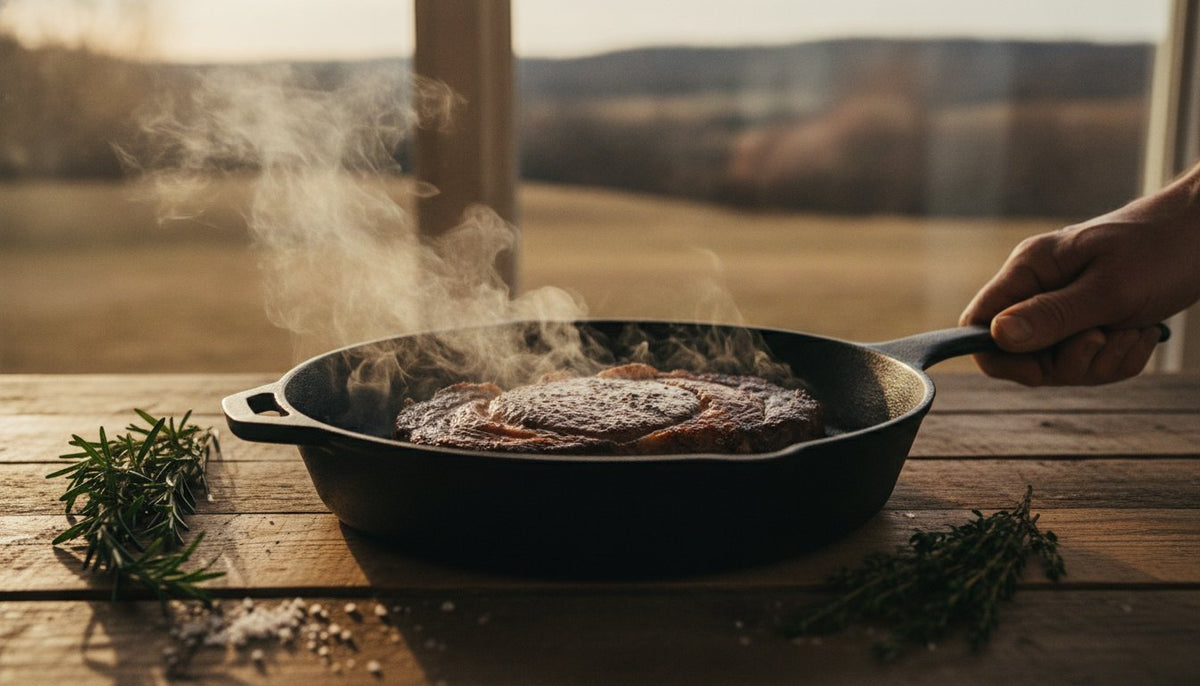
We’ve seen too many good steaks ruined by impatience. When you're ready to learn how to cook ribeye on the stove, you have to trust the process. Start by heating your cast iron over high heat. You’ll know it’s ready when you see the first wisps of smoke rising from the oil. Lay the steak into the pan, laying it away from you to avoid splashes. Now, leave it alone. Don't poke it. Don't move it. You need at least two minutes of undisturbed contact to build that mahogany crust. If the meat resists when you try to lift it, it’s not ready to flip yet.
Once you flip the steak, the real magic begins. This is when we add the aromatics. Drop in a healthy knob of butter, a few smashed garlic cloves, and a sprig of rosemary or thyme. As the butter foams, tilt the pan slightly. Use a large spoon to bathe the steak in that hot, herb-infused fat. This is the secret to a professional finish in your Northern Michigan kitchen. Continue this until your thermometer tells you the meat is ready. Finally, move the steak to a warm plate. Give it ten full minutes to rest. This allows the juices to redistribute so they stay in the meat rather than running all over your cutting board.
The Butter Basting Technique
Adding butter too early is a common mistake. We wait until the steak is flipped because the butter will brown quickly at these temperatures. You want it to reach a nutty, toasted state without burning. This technique adds a layer of richness that grocery store beef simply can't match. Because our beef is grain-finished, it already has a deep flavor profile; the butter and herbs just highlight what’s already there. It’s a simple way to elevate a Tuesday night dinner in Traverse City to something truly special. If you want to start with the best possible ingredients, you can order our premium grain-finished ribeye for your next meal.
Temperature Guide for Ribeye
Time-based instructions are unreliable because every stove in Benzie County is a little different. We always rely on internal temperature. Remember that carry-over cooking is real. The internal temp will continue to rise by about 5 degrees while the meat rests on the counter. Use these targets as your guide:
- Rare: Pull at 115-120°F (Final: 120-125°F)
- Medium-Rare: Pull at 125-130°F (Final: 130-135°F)
- Medium: Pull at 135-140°F (Final: 140-145°F)
The ideal medium-rare pull temp is 130°F to ensure a warm, red center after resting. Mastering how to cook ribeye on the stove means knowing exactly when to pull the pan off the heat.
Sourcing the Best Beef in Northern Michigan
When you're standing in a grocery store aisle in Traverse City, you're looking at beef that has likely traveled hundreds of miles. It's been sitting in warehouses and on trucks before it ever reaches the shelf. At our farm in Honor, we do things differently. We believe that knowing exactly where your food comes from changes the way you feel about the meal you serve your family. When you know the farmer, you know the values behind the work. You know the commitment to quality that makes learning how to cook ribeye on the stove so rewarding.
Our grain-finished ribeye is the result of a process that cannot be rushed. We take the time to ensure superior marbling because we know that's what creates the best possible sear. By buying direct from Fowler & Valley Farms, you're getting meat that is fresher and more flavorful than anything you'll find in a plastic-wrapped tray. It's about more than just a transaction. It's about joining a community that values heritage and transparency. We want you to feel confident in the food you put on your table.
Build Your Own Beef Box: Custom Cuts for Your Skillet
We know that every household has different needs. Some families in Benzie County want a freezer full of ground beef; others want to focus on premium steaks. That's why we created the option to Start building your custom box today. This flexibility allows you to choose exactly what you love. You can stock up on grain-finished ribeye so you're always ready for a last-minute steak night. Having these cuts on hand means you can practice how to cook ribeye on the stove whenever the craving hits, without a trip to the store.
From Our Pasture to Your Front Door
Our family has a multi-generational commitment to this land in Benzie County. We aren't a faceless corporation. We are your neighbors. This transparency is the core of our direct-to-consumer model. We handle everything from the pasture to the final delivery. Our free local delivery service covers a wide area, making it easy for families from Traverse City to Cadillac to get high-quality beef without the hassle. You can Check our delivery schedule for your town to see when we'll be in your neighborhood.
For those who want the ultimate convenience and consistent quality, a Beef Subscription ensures you never run out of the cuts you love most. It's the most reliable way to keep your kitchen stocked with the best Northern Michigan has to offer. We invite you to join the Fowler & Valley Farms community and taste the difference that local stewardship and honest work make on your plate.
Bring Steakhouse Quality to Your Northern Michigan Table
Mastering the art of a perfect steak doesn't require a professional kitchen. It just takes a bit of patience and the right starting point. By focusing on a dry brine and using a heavy cast iron pan, you've learned the most reliable method for how to cook ribeye on the stove. These small steps ensure that every grain-finished cut from our farm reaches its full potential on your plate. You've got the tools and the technique; now you just need the beef.
We take great pride in raising cattle right here in Northern Michigan. Our family is committed to providing the superior marbling that makes these stove-top methods work so well. Whether you're in Frankfort, Traverse City, or Leelanau County, we make it easy to stock your kitchen with our free local delivery. You can Build Your Own Beef Box and get Ribeyes delivered to your door today. We look forward to being a part of your next family dinner and helping you cook with confidence. Your kitchen is ready for something special.
Frequently Asked Questions
How long should a 1-inch ribeye cook on each side?
For a standard 1-inch cut, we generally recommend three to four minutes per side to reach a medium-rare finish. However, since every stove in Traverse City provides different heat levels, we always suggest relying on a meat thermometer rather than a clock. When you are learning how to cook ribeye on the stove, pulling the meat at 130°F ensures a perfect result. This method accounts for the carry-over cooking that happens while your steak rests.
What is the best oil for searing steak indoors?
High-smoke-point oils like avocado oil or beef tallow are the most reliable choices for indoor searing. We avoid butter or olive oil at the start because they burn at the temperatures needed for a proper crust. In our Benzie County kitchen, we wait until the final flip to add butter for basting. This adds a rich, steakhouse-quality finish to our grain-finished beef without the bitter taste of burnt oil or scorched milk solids.
How do I stop my kitchen from smoking when searing steak?
Controlling smoke starts with choosing the right oil and keeping your pan clean. If you see heavy, dark smoke, your heat is likely too high for the oil you've chosen. Using a splash guard and turning on your vent in Frankfort can also help manage the air. A small amount of wispy smoke is a good sign that you're successfully mastering how to cook ribeye on the stove, but it shouldn't be enough to trigger your smoke detector.