The Best Way to Thaw Frozen Steak Quickly Without Losing Quality
It is five o’clock on a Tuesday in Traverse City, and you just realized the grain-finished ribeyes you planned for dinner are still sitting rock-solid in the freezer. We have all been there. You want that perfect sear, but you did not pull the meat out this morning before heading out toward Honor or Frankfort. Finding the best way to thaw frozen steak quickly is about more than just saving time; it is about protecting the quality of the beef we worked hard to raise for you. You should not have to choose between a safe meal and a delicious one just because the day got away from you.
We understand the worry that comes with rushing the process. Nobody wants to ruin a premium cut with a microwave or risk bacteria growth by leaving it on the counter. In this guide, we will show you how to get your steak ready for the grill in under an hour while keeping the marbling and texture exactly as it should be. We will walk through the cold-water submersion method and a few simple kitchen tricks to ensure your family sits down to a safe, farm-fresh dinner tonight.
Key Takeaways
- Avoid leaving your grain-finished ribeyes on the counter in Honor or Frankfort. Keeping beef out of the 40°F to 140°F danger zone is essential for a safe family dinner.
- Submerging vacuum-sealed beef in a cold water bath is the best way to thaw frozen steak quickly; it often takes less than an hour for a single cut.
- Learn how to use a heavy aluminum or stainless steel tray as a natural heat sink to safely speed up the thawing process using basic physics.
- Steer clear of the "hot water trap" that ruins the texture of premium Northern Michigan beef and creates unnecessary safety risks.
- Discover why our vacuum-sealed packaging from the Fowler Valley Farms 10 lb or 15 lb boxes is the ideal partner for these rapid defrosting methods.
Understanding Steak Thawing: Safety First for Your Northern Michigan Dinner
We have all had those days where the sun is setting over Lake Michigan and we realize the main course is still a block of ice. Leaving a grain-finished ribeye on the kitchen counter while you run into Frankfort or Honor might seem like a simple solution. It is a gamble we never recommend. Thawing meat at room temperature is the definition of reckless handling. It puts your family at risk and compromises the quality of the beef we worked so hard to raise for you. There is a fine line between finding the best way to thaw frozen steak quickly and taking shortcuts that ruin a premium meal.
The Science of the Danger Zone
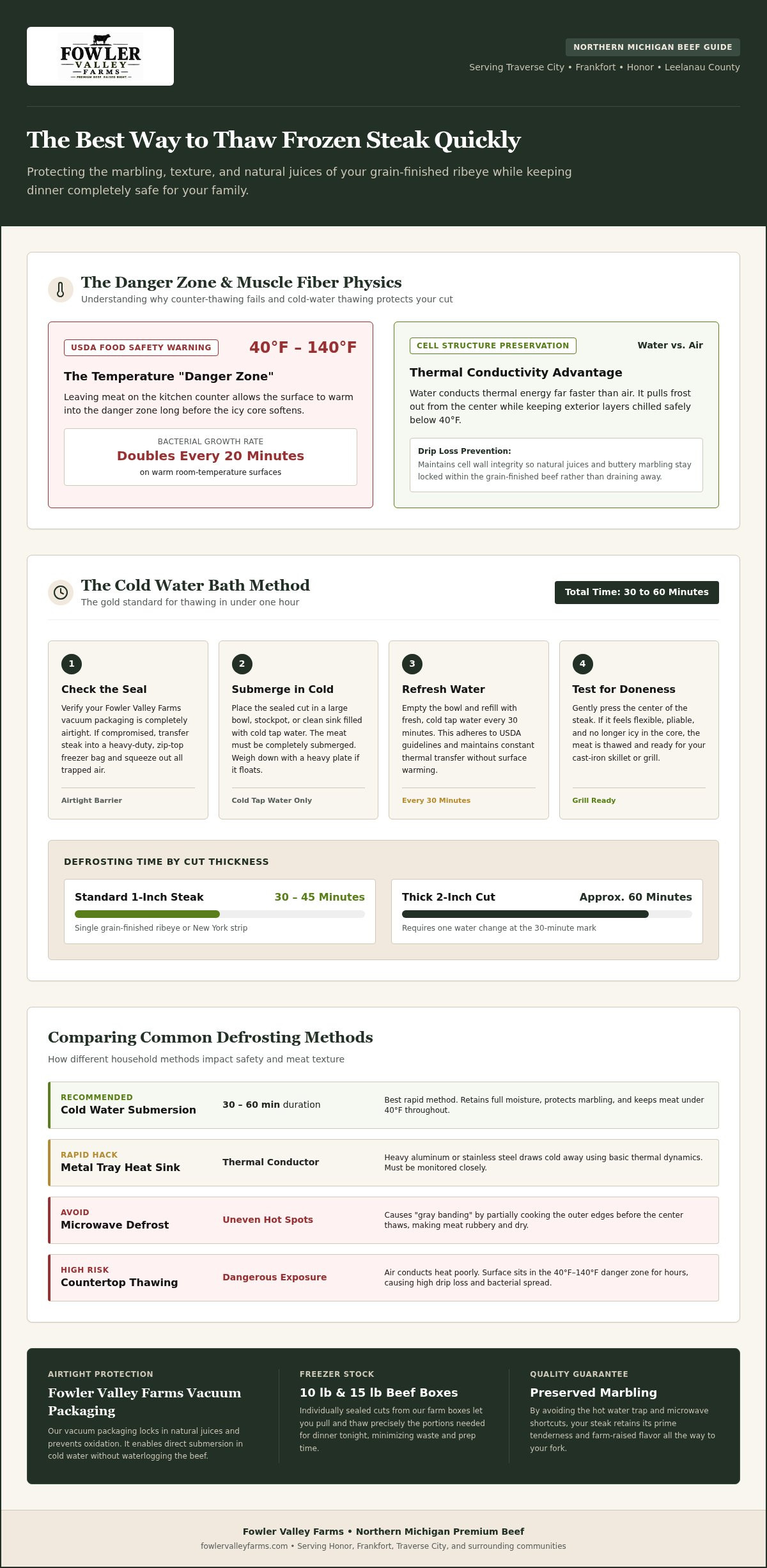
The USDA defines the temperature danger zone as the temperature range between 40°F and 140°F where bacteria multiply most rapidly. Air is a notoriously poor conductor of heat. When a thick steak sits on a counter in a warm Leelanau County kitchen, the outside edges reach room temperature long before the icy center begins to soften. This creates a window of time where surface bacteria can thrive and double in number every twenty minutes. By the time the middle is ready for the grill, the exterior may have been sitting in that danger zone for hours. We prioritize safety because a great dinner should never come with a side of worry.
Preserving Marbling and Texture
Improper thawing does more than just invite bacteria; it physically damages the meat. When steak thaws too slowly in warm air or too fast in a microwave, you deal with significant drip loss. This is the moisture that leaks out of the muscle fibers, taking the flavor and tenderness with it. A grain-finished ribeye relies on its marbling for that buttery mouthfeel. If the cell walls are damaged by uneven temperature shifts, the steak becomes tough and dry regardless of how well you sear it.
Our vacuum-sealed packaging at Fowler Valley Farms provides a distinct advantage here. It acts as a protective barrier that prevents oxidation and keeps the natural juices pressed against the meat. This airtight seal is what allows us to use more effective, water-based methods to defrost your dinner without waterlogging the beef. You can achieve a fast thaw without the reckless side effects if you work with the physics of the meat rather than against them.
The Cold Water Bath: How to Thaw Steak in Under an Hour
Submerging your meat in a cold bath is the best way to thaw frozen steak quickly because water is a much more efficient heat conductor than air. While air thaws the surface of a grain-finished ribeye too fast, cold water draws the frost out of the center while keeping the exterior safely chilled. This method is the gold standard for Northern Michigan families who need dinner on the table without sacrificing the quality of their beef. It works because it provides a consistent, stable environment that protects the integrity of the muscle fibers. If you are stocking up with our beef boxes, you likely have several vacuum-sealed cuts ready for this exact process.
Step-by-Step Cold Water Method
To do this right, follow these simple steps to ensure your dinner remains safe and delicious. We recommend using a large stockpot or a clean kitchen sink for the best results.
- Check the seal: Ensure your Fowler Valley Farms steak is still in its original, leak-proof vacuum packaging. If the seal has been compromised, place it in a heavy-duty, zip-top freezer bag and squeeze out all the air.
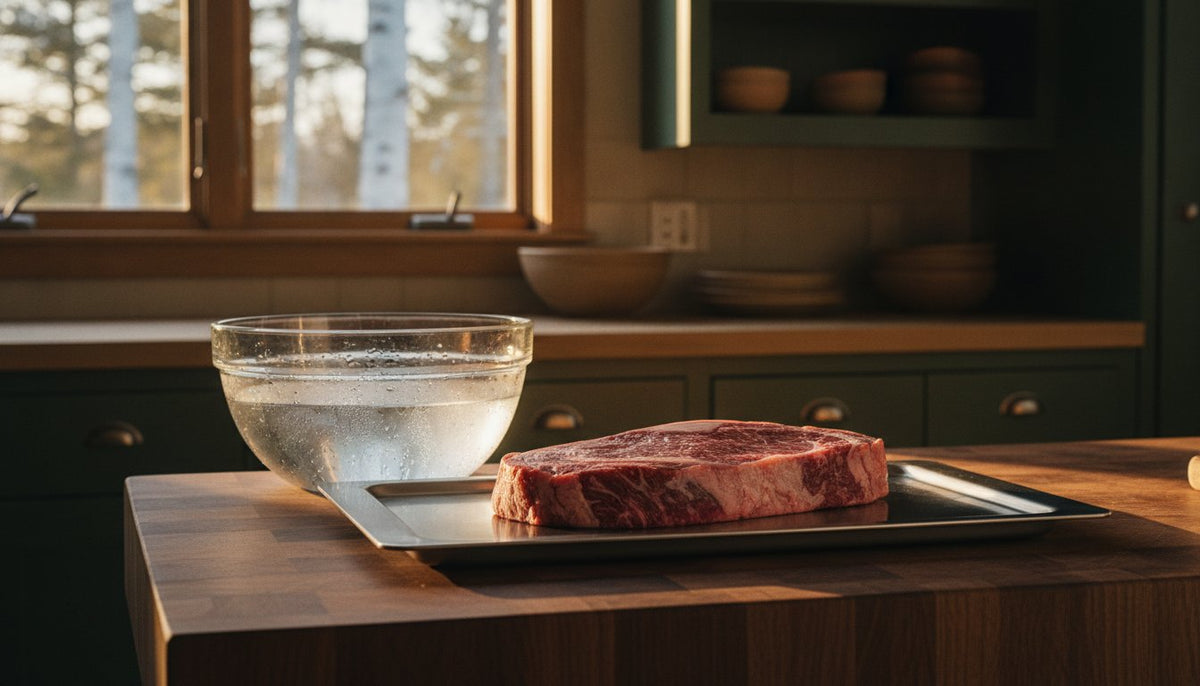
- Submerge: Place the steak in a large bowl and fill it with cold tap water. The meat must be completely submerged to thaw evenly. You might need to weigh it down with a heavy plate if it tries to float.
- Refresh the water: Every 30 minutes, empty the bowl and refill it with fresh, cold tap water. This keeps the temperature consistent and follows USDA safe defrosting guidelines.
- Test for doneness: Most 1-inch steaks will thaw in 30 to 45 minutes. Thicker 2-inch cuts may take closer to an hour. Gently press the center; if it feels flexible and no longer icy, it is ready for the grill.
Why Cold Water Beats the Microwave
It is tempting to hit the defrost button on the microwave when you are in a rush. Don't do it. Microwaves create "hot spots" that start cooking the edges of your New York Strip before the middle even begins to soften. This results in "gray banding," where the perimeter of your steak becomes tough and rubbery. A cold water bath preserves the fat cap and the delicate marbling that makes our beef stand out. When you take the time to learn how to store bulk beef properly, you want to make sure your thawing method respects the craftsmanship that went into raising that animal. Once thawed via this method, cook the meat immediately to ensure the best flavor and safety for your family.
The Metal Tray 'Heat Sink' Method and Other Rapid Hacks
If you don't want to monitor a water bath or your kitchen sink is busy with dinner prep, you can use basic physics to your advantage. Most people reach for a wooden cutting board, but wood is actually an insulator that keeps the cold trapped inside the meat. To find the best way to thaw frozen steak quickly without using water, look for your heavy aluminum cookie sheets or stainless steel pans. These materials act as a "heat sink," pulling the chill out of the beef and into the surrounding air much faster than plastic or wood ever could. This is a reliable trick when you are working with flat, individual cuts from our beef boxes.
How the Metal Heat Sink Works
Thermal conductivity is just a fancy way of saying some materials move heat better than others. Metal is a superior conductor that pulls ambient heat into the frozen steak while drawing the cold away. For the best results, we recommend the 'Sandwich' Technique. Place one heavy aluminum tray upside down on your counter. Lay your vacuum-sealed grain-finished ribeye flat on the surface, and then place a second heavy metal pan or a cast-iron skillet directly on top of the steak. By increasing the surface area of metal in contact with the meat, you create a highway for heat to travel.
This method works best for steaks that are an inch thick or less. It is a great hands-off option while you are busy chopping vegetables or setting the table. However, it is not a one-size-fits-all solution. For larger roasts or thick-cut tenderloins, this method takes too long and risks the meat entering the danger zone. In those cases, you should stick to the Michigan State University Extension recommendations for cold water thawing to stay safe.
Thawing Time Comparison Table
The time it takes to get your beef ready for the sear depends heavily on your environment. A drafty kitchen in Leelanau County during January will thaw meat slower than a sun-filled room in Traverse City during July. Use this table as a general guide for a standard one-inch steak.
| Thawing Method | Estimated Time | Best For |
|---|---|---|
| Refrigerator | 24 Hours | Planning ahead; thick roasts |
| Cold Water Bath | 45 - 60 Minutes | Maximum speed and safety |
| Metal Tray 'Heat Sink' | 60 - 90 Minutes | Hands-off rapid thawing |
While the metal tray method is a clever hack, it is still second to the cold water bath for pure speed. We always suggest keeping a few individual cuts on hand so you can choose the method that fits your schedule. No matter which you pick, ensuring the meat is fully thawed before it hits the cast iron is the best way to thaw frozen steak quickly while maintaining that perfect, edge-to-edge pink center.
Avoiding Common Thawing Mistakes That Ruin Premium Beef
Speeding up the process shouldn't mean sacrificing the integrity of your meal. We see it often; a beautiful grain-finished ribeye pulled from the freezer with the best intentions, only to be ruined by a few common errors. While we have shared the best way to thaw frozen steak quickly through water baths and metal trays, knowing what to avoid is just as vital for your Northern Michigan dinner table. A mistake in the kitchen can turn a high-quality cut into a disappointing experience for your family in Traverse City or Frankfort.
The Problem with Hot Water
It is tempting to turn the tap to hot when you are in a rush. This is the "hot water trap," and it is the biggest mistake you can make. Hot water starts to par-cook the exterior of a delicate filet mignon or strip steak while the center is still frozen solid. This creates that unappealing "gray band" of overcooked, rubbery meat just under the surface. By the time you sear it in your cast iron, the outside is already tough while the middle struggles to reach the right temperature. Beyond the texture, warm water puts the meat's surface directly into the danger zone, inviting bacteria to grow before the steak ever hits the heat.
Refreezing: A Quality Killer
Once you have used a rapid-thaw method, you must commit to the cook. Refreezing a steak that was thawed quickly is a sure way to destroy its quality. Every time beef freezes, ice crystals form and pierce the cell walls of the muscle. When you thaw it, those cells leak moisture, a process known as drip loss. If you thaw, refreeze, and thaw again, you are essentially squeezing the juice out of the beef. You will end up with a dry, flavorless result that no amount of seasoning can save. We recommend cooking your beef immediately once it reaches that 40°F mark to ensure the marbling stays where it belongs. For more tips on handling your order, check our FAQ local beef delivery page.
Thawing without protection is another pitfall that ruins the hard work of a grain-finished finish. If you take the steak out of our vacuum-sealed packaging and put it directly in water, you will water-log the muscle fibers. This dilutes the rich flavor of the beef and makes it impossible to get a decent crust. Always keep the seal intact to protect your investment. If you want to ensure your freezer is always stocked with cuts that are easy to thaw safely, Build Your Own Beef Box today and choose the specific steaks your family loves most.
From Freezer to Fork: Managing Your Fowler Valley Farms Stock
Managing a deep freezer full of beef is a skill every Northern Michigan household eventually masters. Whether you live in Traverse City or out toward Frankfort, being prepared for a last-minute dinner is about having the right stock on hand. We coordinate our delivery schedule to ensure families in Benzie and Leelanau County always have a reliable supply of grain-finished beef. When your freezer is stocked with our 10 lb or 15 lb boxes, you don't have to stress about a trip to the store when plans change unexpectedly.
Our vacuum-sealing is the secret weapon for any busy cook. Because we remove all the air at the peak of freshness, our packaging is perfectly suited for the rapid methods we have discussed. This airtight seal is why the cold water bath remains the best way to thaw frozen steak quickly. The heat transfer is immediate; the meat stays protected, and you never have to worry about the "water-logging" that ruins grocery store cuts wrapped in plastic and styrofoam.
Stocking for Success in Northern Michigan
A well-managed freezer is a mix of convenience and variety. Having a range of cuts like ribeyes, roasts, and ground beef makes it easy to choose a meal based on how much time you actually have. Thinner steaks are the heroes of the weeknight, while larger roasts are better saved for when you can plan a day ahead. The Putt family takes great pride in handling the heavy lifting of sourcing and delivery so you can focus on the cooking. We believe that when you know exactly where your beef comes from, the meal simply tastes better.
Building Your Perfect Box
The transition from "emergency thawing" to "intentional meal planning" starts with knowing what your family eats most. You can use our Box Builder to customize your order with the specific cuts that fit your lifestyle. If you find yourself needing a fast dinner often, stocking up on thinner steaks like sirloin or minute steaks is a smart move. They respond beautifully to the best way to thaw frozen steak quickly, getting you from freezer to cast iron in record time.
To make sure your freezer is never empty, consider a beef subscription. It is a simple way to keep your kitchen running smoothly regardless of the season. Knowing your farmer means knowing that every cut in your freezer was raised with care and integrity. It turns a simple Tuesday night dinner into a connection with the land and the community we all share here in Northern Michigan.
Get Your Grain-Finished Beef Ready for the Grill Tonight
Finding the best way to thaw frozen steak quickly doesn't have to be a gamble with your dinner. We have shown you how a simple cold water bath or a heavy metal tray can save your evening while protecting the marbling of our family-raised beef. Our vacuum-sealed packaging is specifically designed to handle these rapid methods without letting a drop of flavor escape. You shouldn't have to sacrifice quality just because you forgot to pull a ribeye out of the freezer this morning.
By keeping your freezer stocked with our 10 lb or 15 lb boxes, you always have a safe, delicious meal within reach. We handle the heavy lifting with free local delivery to Traverse City and Benzie County, bringing farm-fresh meat straight to your door. Build Your Own Beef Box for local delivery in Northern Michigan and choose the cuts that make your weeknight meals easy. We are proud to be your neighbor and your farmer. Happy cooking.
Frequently Asked Questions
Can I cook a steak while it's still partially frozen?
Yes, you can cook a steak that is still icy, but we don't suggest it for the best results. A partially frozen cut takes about 50 percent longer to cook and often ends up with a tough exterior and a raw middle. If you are grilling out in Leelanau County, take the extra 30 minutes to finish the thaw in cold water. It ensures the marbling melts evenly across the entire cut.
How long can a thawed steak stay in the fridge before it goes bad?
Once your steak is fully thawed in the refrigerator, it can stay there safely for three to five days. However, if you used the best way to thaw frozen steak quickly by using the cold water bath, you should cook it immediately. Because the meat has been warmed slightly during the rapid thaw, it won't stay fresh as long as a cut that spent 24 hours in a 38°F fridge in Traverse City.
Can I use these rapid methods for a large frozen roast?
We recommend these quick methods only for individual steaks like a grain-finished ribeye or sirloin. Larger roasts or briskets are too thick for a cold water bath to work safely. By the time the center of a five-pound roast thaws, the outside has likely been sitting in the danger zone for far too long. If you are in Honor or Frankfort, plan on two days in the fridge for those bigger cuts.