How to Store Bulk Beef: A Northern Michigan Guide to Freezer Freshness
Key Takeaways
- Calculate your storage needs using the 35 pounds per cubic foot rule to ensure your order fits perfectly in your chest freezer or kitchen unit.
- Master the best wrapping techniques for how to store bulk beef to prevent freezer burn and keep your grain-finished cuts tasting fresh for over a year.
- Use the "First In, First Out" method and color-coded bins to keep your meat organized so you never lose a steak to the bottom of the freezer.
- Protect your investment during rural Northern Michigan power outages with the "Penny Test" and other simple monitoring tricks.
- Discover why starting with high-quality beef and local delivery from our farm makes the transition from pasture to plate seamless and worry-free.
Calculating Your Freezer Space: Will Your Bulk Beef Fit?
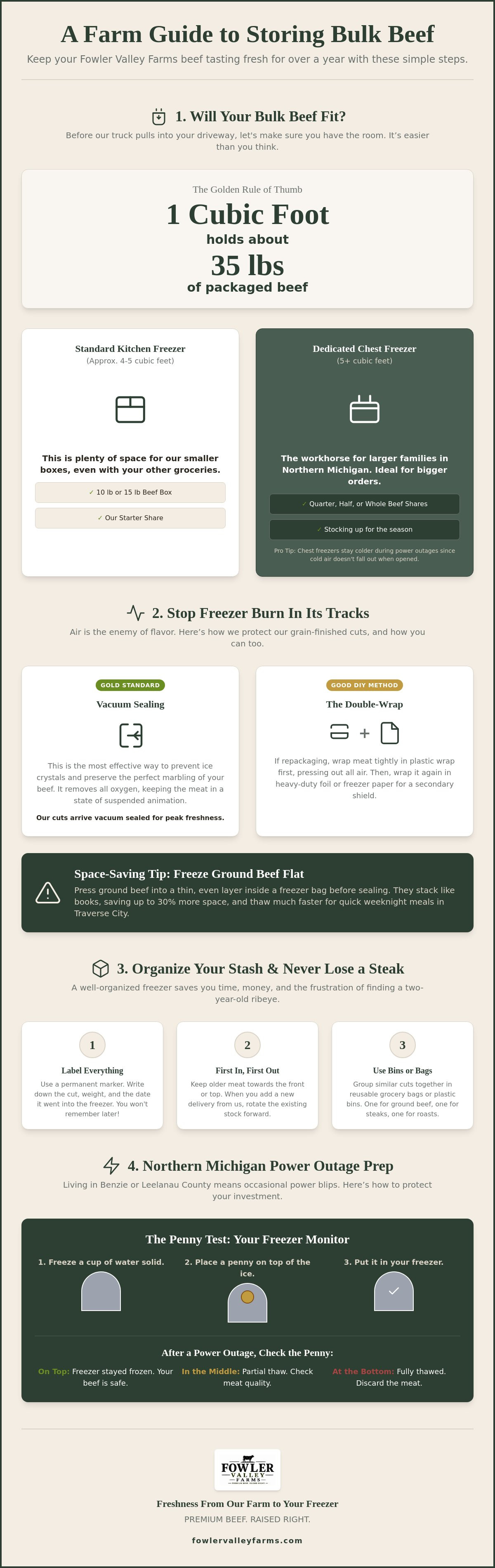
Planning for a delivery shouldn't feel like a high school math test. We find that most folks in Benzie County worry about space before they even place an order. The standard rule of thumb is that one cubic foot of freezer space will hold about 35 pounds of packaged meat. If you're looking at our beef boxes, you probably have more room than you think. A standard refrigerator freezer usually has about 4 to 5 cubic feet of space. That's plenty of room for a few of our 10 lb or 15 lb boxes, even with your frozen veggies and ice cream in there.
Before our truck pulls into your driveway in Frankfort or Honor, we always recommend a quick freezer audit. Clear out those half-empty bags of ice and the mystery containers from last year. This makes room for the good stuff. When you understand how to store bulk beef properly, you realize that tight packing is actually your friend. It keeps the cold air from circulating too much around individual packages. This helps prevent what freezer burn is, which is a process where air dries out your grain-finished ribeye and ruins the texture.
Space Requirements by Order Size
If you're starting with a Starter Share, you only need a small corner of your kitchen freezer. To help you visualize it, a 15 lb beef box is roughly the size of two large shoe boxes. If you're stepping up to a custom 25 lb order, you'll need about three-quarters of a cubic foot. We suggest stacking your flat ground beef packages at the bottom. Save the top for odd-shaped cuts like bone-in roasts or brisket. This keeps the heavier items from crushing your steaks and ensures you aren't leaving awkward gaps that waste cold air.
Choosing the Right Freezer for Northern Michigan Homes
For those in Leelanau County who want to keep a larger inventory, a dedicated unit is a wise move. Chest freezers are the workhorses of Northern Michigan basements and garages. They stay colder during those occasional power blips because the cold air doesn't fall out when you open the lid. However, we know they can become black holes where a steak might disappear for months. Upright freezers make it easier to see your grain-finished ribeyes at a glance, but they are more prone to temperature swings. No matter which you choose, our local delivery service in Traverse City ensures your beef arrives frozen and ready to be tucked away.
Prepping Your Meat: Wrapping Techniques to Stop Freezer Burn
We don't just raise cattle; we raise quality. When you invest in a beef box, you're getting grain-finished cuts that deserve the best protection. Air is the enemy of flavor. When oxygen hits the surface of your meat, it causes dehydration and oxidation. This ruins the rich, buttery taste of a ribeye. We flash-freeze our cuts at peak freshness before they ever leave the farm. This process locks in moisture, but how you handle the meat once it reaches your kitchen in Traverse City or Frankfort matters just as much. Understanding how to store bulk beef correctly starts with a solid moisture barrier.
The Vacuum Sealing Gold Standard
Removing oxygen is the best way to preserve the marbling in your beef. Vacuum sealing is the most effective barrier against ice crystal formation. It keeps the meat in a state of suspended animation by pulling the packaging tight against every curve of the cut. According to experts at MSU Extension, storing beef safely depends largely on maintaining this airtight environment. When your order arrives, give each package a quick squeeze. If the plastic feels loose or has lost its seal, plan to eat that cut first. If you want a consistent supply of perfectly sealed cuts delivered to your door, our beef subscriptions make it easy to keep your freezer stocked without the extra prep work.
If you're repackaging individual cuts and don't own a vacuum sealer, don't just toss them into a standard zip-top bag. Use the double-wrap method. Wrap the meat tightly in plastic wrap first, pressing out every bubble of air. Then, wrap it again in heavy-duty aluminum foil or freezer-grade butcher paper. This creates a secondary shield against the dry air of your Benzie County pantry freezer. It isn't as foolproof as a vacuum seal, but it works well for shorter-term storage.
Portioning for Success
Efficient storage means thinking about how you actually cook for your family. We recommend freezing your ground beef flat. Press the meat into a thin, even layer inside the bag before sealing. This allows you to stack the packages like books on a shelf, which saves about 30% more space than bulky rounds. Flat packages also thaw faster and more evenly when you're ready for a quick weeknight meal. Always label your packages with a permanent marker. Write down the name of the cut, the weight, and the date it was tucked away. You might think you'll remember which roast is which, but after three months, a chuck roast and a brisket can look surprisingly similar. For the best experience, start with high-quality meat from Fowler Valley Farms and follow these simple steps to protect your investment.
Organizing Your Stash: Never Lose a Steak Again
There is nothing more frustrating than finding a perfectly good grain-finished ribeye at the bottom of your chest freezer two years too late. It's a waste of the investment you made for your family. We believe that knowing how to store bulk beef includes a solid plan for organization. A chaotic freezer leads to freezer burn because you're constantly digging through piles, letting in warm air and shifting packages around. To keep your inventory manageable, we recommend the "First In, First Out" (FIFO) method. When your new order arrives in Honor or Frankfort, move the older packages to the top and put the fresh ones at the bottom. This simple rotation ensures you’re always eating the meat at its peak quality.
Using a dry-erase board on the freezer lid is a game changer for many of our neighbors in Benzie County. It allows you to see exactly what you have without opening the lid and letting the cold air escape. We also suggest using color-coded plastic bins for different proteins. Use red bins for beef, blue for chicken, and green for pork. This way, you can pull out the entire beef bin to find your dinner instead of rummaging through a frozen mountain. If you're just starting out, learning How to Build Your Own Beef Box can help you keep your initial inventory at a size that fits your lifestyle.
Creating a Meat Inventory System
Keep your tracking system simple so you actually use it. A clipboard or a phone app works, but you need three essential columns: Cut, Date, and Quantity. This is especially helpful if you have a beef subscription. It prevents you from overstocking on ground beef when you really wanted more roasts for the winter. We've found that families who track their stash are much more likely to try new recipes because they know exactly what they have on hand. For those doing their own packaging, using proper wrapping techniques before labeling makes the inventory process much smoother and more accurate.
Zoning Your Freezer
Freezers have specific temperature zones that you should use to your advantage. The door is the worst place for your best meat. It experiences the most temperature swings every time you grab an ice cube or a frozen snack. Keep your "Quick Meals" like ground beef and patties near the top or front for easy access during busy weeknights. Save the very bottom for your premium roast beef cuts. The temperature at the bottom of a chest freezer is the most stable. This protects those larger, more expensive roasts during the months they spend tucked away in your basement or garage.
Northern Michigan Preservation: Protecting Your Investment
Living in rural spots like Leelanau or Kalkaska means you're used to the occasional power flicker. When a heavy lake-effect snow hits or a summer storm rolls through, your first thought shouldn't be about your food spoiling. We believe that understanding how to store bulk beef includes a plan for when the lights go out. A full chest freezer acts like a massive block of ice. It will typically keep its temperature for about 48 hours if you keep the lid closed. A half-full freezer only gives you about 24 hours of safety. Every time you peek inside to check on your grain-finished ribeyes, you let out that precious cold air and shorten your window of protection.
One simple trick we use on the farm is the "Penny Test." Freeze a small cup of water until it is solid. Place a penny on top of the ice and keep it in your freezer. If you ever come home after a storm and find that penny at the bottom of the cup, you know your meat reached a dangerous temperature and refroze. If the penny is still on top, your investment is safe. For the best quality, your freezer should always be set to 0°F (-18°C). Keeping it any warmer, even if it is still below freezing, can significantly shorten the lifespan of your beef. If you want to ensure you are starting with the highest quality product that handles storage well, consider our Northern Michigan beef boxes.
Emergency Power Outage Protocol
If the power stays out for more than two days, you will need a backup plan. Dry ice is a great option if you can find it in Traverse City, but always handle it with thick gloves. If the meat still has ice crystals on it when the power returns, it is generally safe to refreeze. If it is completely thawed but still feels cold, like it just came out of the refrigerator, it is time to fire up the grill and host an emergency neighborhood BBQ. It is always better to share the harvest with friends in Benzie County than to let it go to waste.
Maintaining Your Freezer Equipment
Manual-defrost freezers are the gold standard for long-term storage. You should plan to defrost them about once a year or whenever the ice buildup gets more than a quarter-inch thick. While auto-defrost units are convenient, their heating cycles can actually increase the risk of freezer burn by slightly warming the surface of the meat packages. Check your door seals regularly by closing the lid on a dollar bill. If you can pull the bill out easily, your seal is leaking and wasting energy. Proper maintenance is a key part of how to store bulk beef for the long haul.
The Fowler Valley Way: Freshness from Our Farm to Your Freezer
We take deep pride in the cattle we raise at Fowler Valley Farms. For us, the job doesn't end when the beef is processed. It ends when your family sits down to a meal that tastes exactly like it came from the farm that morning. You've learned the technical side of how to store bulk beef; now you need a product that's worthy of that effort. Grain-finished beef has a specific marbling profile that holds up beautifully in long-term storage, provided the cold chain is never broken. We handle that responsibility with the same quiet confidence we bring to every other part of our work; this dedication to maintaining freshness is a standard shared by other specialized food providers like Shift 2 Fresh that focus on delivering high-quality ingredients.
Why Our Packaging Matters
We don't cut corners on the wrap. Our heavy-duty vacuum sealing process is designed to be a rugged, airtight barrier that stands up to months in a chest freezer. This isn't the thin plastic you find at a grocery store. It is a professional-grade shield against the dry air that causes spoilage. Whether we are delivering to a porch in Frankfort or making our regular delivery runs down to Grand Rapids, we maintain a strict cold chain. The meat stays frozen from our farm to your doorstep. This commitment to quality and transparency ensures that every individual cut, from the smallest steak to the largest roast, remains pristine. When you start with meat that has been handled this carefully, learning how to store bulk beef becomes a much simpler task.
Ready to Stock Up?
If you're working with a smaller kitchen freezer in Traverse City or a townhome in Leelanau County, you might not have room for a half-cow. That is why we designed the Build Your Own Beef Box. It allows you to get the benefits of bulk buying without the need for a massive industrial freezer. You can choose a one-time box to fill a gap in your pantry or set up a recurring beef subscription to ensure you never run out. We want to be more than just a supplier; we want to be your partner in feeding your family well. If you ever have specific questions about your freezer space or need advice on a particular cut, the Putt family is only a phone call away. You've done the hard work of sourcing better meat for your home. Now, use these storage steps to protect that investment. Build your custom beef box today and taste the difference that local, grain-finished quality makes.
Bring Farm-Fresh Quality to Your Dinner Table
We've walked through the essentials of how to store bulk beef, from mastering the space math in your chest freezer to protecting your grain-finished ribeyes with heavy-duty vacuum sealing. By setting up a simple inventory system and preparing for Northern Michigan's unpredictable weather, you're doing more than just saving money. You're ensuring your family has access to high-quality, local food all year long. It's about the peace of mind that comes with a well-stocked kitchen and the pride of knowing exactly where your food was raised.
Ready to put these tips into practice? Order Your Custom 15 lb Beef Box for Local Michigan Delivery and let us handle the hard work of raising and prepping the meat for you. We offer free local delivery to Traverse City, Frankfort, and throughout Benzie and Leelanau counties. Every cut is family-raised on our farm and vacuum-sealed to give you the maximum freezer life possible. We're proud to be your neighbors and your farmers. We look forward to seeing you on our next delivery run and helping you fill your freezer with confidence.
Frequently Asked Questions
What is the difference between hanging weight and take-home weight?
When you hear "hanging weight," it refers to the weight of the beef carcass before it is aged and custom-cut. Typically, you'll receive about 60% to 70% of that weight as finished meat for your freezer. We focus on pre-packaged boxes to take the mystery out of the math, so you know exactly how many grain-finished ribeyes and roasts you're getting for your family in Frankfort.
How much does it cost to run a freezer for bulk beef?
When planning how to store bulk beef, many of our neighbors in Benzie County worry about the electric bill. A modern, Energy Star certified chest freezer usually costs about $40 per year to operate, which is roughly 11 cents a day. This small investment is easily offset by the savings and convenience of having a steady supply of local meat ready in your own garage.
What is the best way to thaw my beef once it's been stored?
The safest method is to move your vacuum-sealed package from the freezer to the refrigerator 24 hours before you plan to cook. For a quick meal in Honor or Traverse City, you can submerge the sealed meat in a bowl of cold water for about an hour. Never use hot water or leave it on the counter, as this can compromise the safety and the buttery texture of our grain-finished beef.