Humanely Raised Beef: What It Means and Why Sourcing Matters in 2026
What if the tenderness of your grain-finished ribeye is decided months before it ever hits a hot skillet? Out on our Fowler & Valley Farms pastures in Honor, Michigan, we see that truth every single morning. Authentic humanely raised beef isn't just another supermarket marketing claim. It is a biological reality written directly into the natural marbling, rich color, and fork-tenderness of the meat on your family dinner table.
You've probably stood in the grocery aisle squinting at confusing labels like "natural" or "cage-free," wondering whether the steers ever saw fresh green grass or spent their days standing in crowded commercial feedlots. You shouldn't have to guess how your family's food was raised. In this guide, we'll break down the true standards of low-stress animal husbandry, explain the meat science behind stress-free cattle handling, and show you how simple it is to stock your home freezer with wholesome, farm-direct beef from neighbors you can trust.
Key Takeaways
- Learn why vague grocery stickers like "natural" fall short, and what authentic humanely raised beef actually requires in pasture space and calm handling.
- Discover the biological link between low-stress stockmanship and the tenderness, rich color, and marbling of your steaks.
- See how wide acreage and quiet herd management contrast with the high stocking densities of industrial feedlots.
- Master practical questions to ask local ranchers so you can verify herd living conditions before buying.
- Explore how direct farm sourcing and doorstep delivery in Northern Michigan make stocking your home freezer simple.
What Does Humanely Raised Beef Really Mean Beyond Marketing Labels?
Walk down any grocery meat aisle, and you'll find packages plastered with comforting buzzwords. Yet behind attractive fonts, true standards are often missing. Real humanely raised beef isn't defined by a marketing department. It is an everyday commitment to quiet, holistic stewardship that puts cattle welfare ahead of industrial speed.
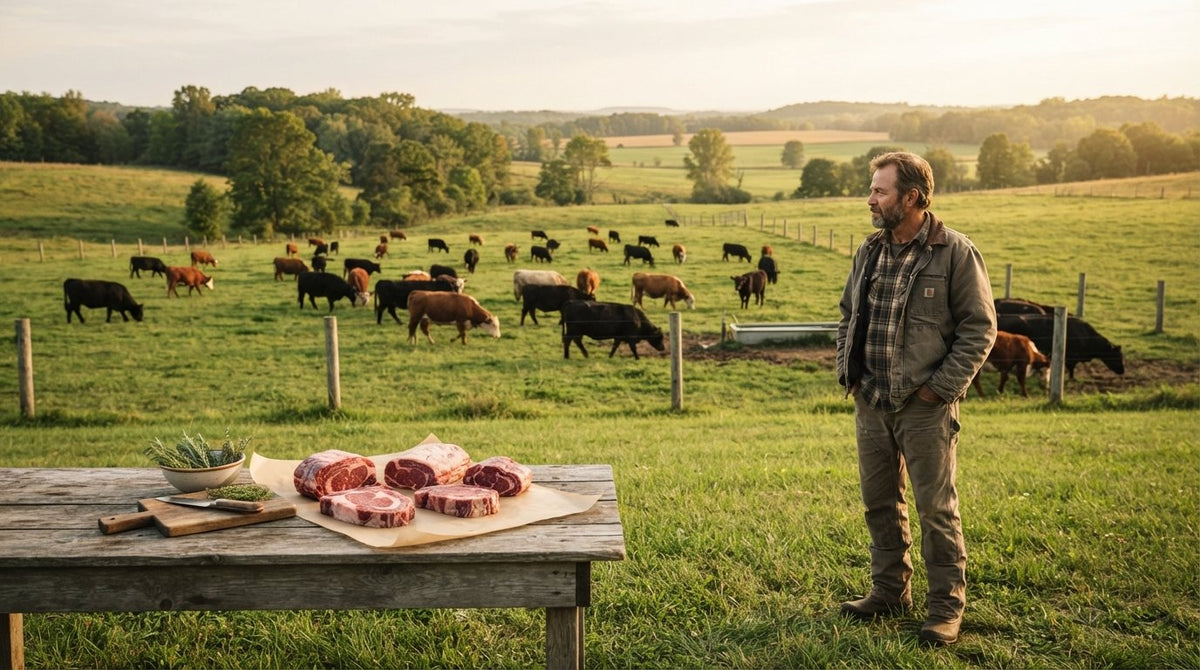
For our family at Fowler & Valley Farms, raising cattle in Honor, Michigan means working with the animals' natural instincts. Cattle are herd animals. They need room to move, clean water to drink, quality forage, and sturdy shelter when winter lake-effect storms push across Benzie County. When cattle live without fear, crowding, or constant disruption, their natural immune systems stay strong. That quiet life changes everything.
Decoding Supermarket Packaging Claims and Third-Party Certifications
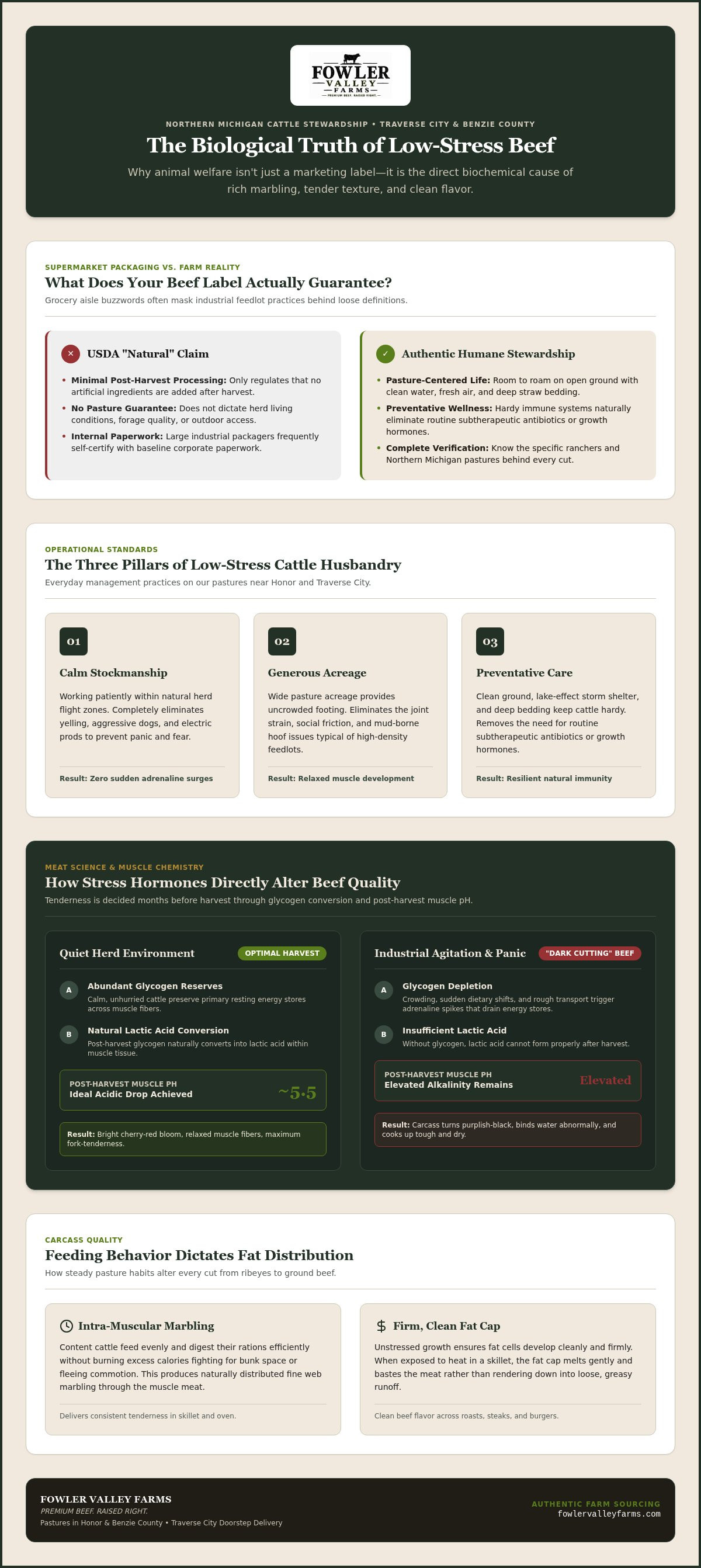
Grocery packaging creates plenty of confusion. For instance, the USDA definition for "natural" only means the fresh meat is minimally processed with no artificial ingredients added after harvest. It says absolutely nothing about how the animal lived, what it ate, or whether it ever touched green grass.
While federal legislation like the Humane Slaughter Act sets baseline handling rules at harvest facilities, it leaves daily farm life unregulated. Big packagers often self-certify with internal paperwork. That leaves families guessing. You can't verify an animal's quality of life through a gold foil sticker. The surest way to trust your beef is knowing the folks who manage the pasture, a principle at the heart of our farm philosophy.
The Core Pillars of Low-Stress Cattle Husbandry
Authentic stewardship requires intentional, daily practices that protect herd well-being from birth to harvest:
- Low-stress handling: Working calmly within the herd's natural flight zones, without yelling, aggressive dogs, or electric prods.
- Generous space: Wide pasture access that prevents joint strain, social friction, and mud-borne hoof issues common in crowded yards.
- Preventative wellness: Clean ground, fresh air, and deep straw bedding keep cattle hardy, eliminating any need for routine subtherapeutic antibiotics or growth hormones.
When you prioritize quiet handling and clean Northern Michigan ground, cattle stay healthy on their own. It takes patience, but good stewardship never takes shortcuts.
How Low-Stress Animal Care Directly Impacts Beef Flavor and Quality
Most folks assume beef tenderness comes entirely from how a steak is aged or cooked. The truth starts much earlier. Animal welfare directly dictates meat chemistry. When cattle experience steady, peaceful days on open pasture, their muscles develop cleanly. That quiet environment is what separates authentic humanely raised beef from industrial commodity meat.
Stress changes meat on a cellular level. In commercial feedlots, cattle face crowded pens, sudden dietary shifts, and rough transport. Those conditions trigger sustained spikes in cortisol and adrenaline. In contrast, unhurried herd life produces relaxed muscle fibers, healthy fat distribution, and a clean, rich beef flavor you can savor in every bite.
The Science of Stress Hormones and Meat Tenderness
Resting cattle maintain energy stores in their muscles called glycogen. After harvest, this glycogen naturally converts into lactic acid, lowering muscle pH to an ideal range around 5.5. That drop creates tender meat with a bright cherry-red bloom. When animals face panic or exhaustion, adrenaline depletes those glycogen reserves below critical thresholds.
Without sufficient glycogen, muscle pH stays elevated. The result is what processors call "dark cutting" beef, which turns purplish-black, binds water abnormally, and cooks up tough and dry. Current FSIS animal-raising labeling guidelines encourage clear documentation for animal care claims precisely because everyday handling drives carcass quality. Calm stockmanship isn't just about kindness. It guarantees a grain-finished ribeye cooks up tender every single time.
Nutritional Density and Marbling in Calm, Healthy Herds
Content cattle feed evenly and digest their rations efficiently. Because our animals aren't burning calories running from agitation or fighting for space at crowded feed bunks, they develop consistent intra-muscular marbling naturally. That quiet growth produces a firm, clean fat cap that melts gently under heat rather than rendering off into greasy runoff.
You can taste the difference across every cut. From a slow-simmered pot roast to simple weeknight smash burgers, healthy herd fat carries deep, honest flavor without the mineral bitterness found in stressed livestock. If you want to experience the culinary difference low-stress handling makes, exploring our tender grain-finished cuts is an easy place to start for your family table.
Commercial Feedlots vs. Family Farm Stewardship: The Operational Contrast
Most supermarket meat originates in massive industrial yards designed for maximum throughput. Large concentrated animal feeding operations often hold tens of thousands of head in tight dirt pens. In those facilities, speed and volume take precedence over individual animal welfare. Producing authentic humanely raised beef requires a completely different relationship with livestock and land.
On an independent family farm, operations are built around the natural biological needs of cattle. Herds move through manageable acreage, resting on clean sod rather than packed manure. Understanding these daily operational realities makes it easy to see why true stewardship cannot happen on an industrial scale.
| Operational Practice | Commercial Feedlot Model | Independent Family Farm Care |
|---|---|---|
| Living Environment | High-density dirt and concrete pens with limited shelter | Open pastures, natural windbreaks, and clean bedding |
| Herd Movement | Restricted movement to speed up weight gain | Daily room to walk, graze naturally, and herd without panic |
| Health Management | Routine preventative antibiotics to curb pen illnesses | Natural immune defense supported by clean air and fresh water |
| Growth Strategy | Frequent synthetic growth promoters and implants | Steady, unhurried grain finishing without added growth hormones |
Living Conditions: Confinement Pens Compared to Open Michigan Pastures
Industrial yards cram hundreds of cattle into single pens where muddy runoff and concrete aprons strain hooves and joints. That physical confinement disrupts normal hierarchy, causing constant skirmishes among animals. Across Benzie County and Leelanau County, our pastures give cattle room to spread out. When animals maintain their natural social bonds in open air, herd anxiety disappears.
Preventative Health: Antibiotic Overuse vs. Natural Herd Vitality
Crowded feedlots create ideal conditions for respiratory illness, which is why commercial systems rely heavily on subtherapeutic antibiotics mixed directly into daily feed rations. That pharmaceutical crutch masks the symptoms of overcrowding. Clean environments eliminate that crutch entirely.
When cattle graze sweet grass and drink clean water, natural immunity stays high. We never use artificial growth hormones to rush weight gain, nor do we feed preventative antibiotics. Research from Penn State Extension shows how animal care affects meat quality from the pasture to harvest. Taking the unhurried path preserves herd health and protects the integrity of every cut.
How to Source Authentically Humane Beef in Northern Michigan and Beyond
Supermarket supply chains mask cattle origins behind layers of distributors and packagers. Bypassing that system is the only way to know how your meat lived. When you buy farm-direct, you cut out anonymous auction houses and multi-state transit trucks. You shake the hand of the grower, keep your food dollars in your region, and bring home genuine humanely raised beef you can trust completely.
Building a localized food web creates genuine food security for families across Grand Traverse County, Frankfort, and down toward Grand Rapids. Knowing where your protein comes from means you aren't vulnerable to national supply disruptions or sudden grocery shortages.
Key Questions Every Conscientious Meat Buyer Should Ask
Transparent growers welcome curious questions. Before committing your food budget to any producer, listen carefully to how they describe their daily operations:
- "Where are the animals born, raised, and finished?" Authentic family operations handle cattle locally rather than shipping weaned calves across multiple states to commercial feed yards.
- "What do the animals eat during Northern Michigan winters?" Look for high-energy stored hay, clean water heated against freezing, and balanced grain rations for unhurried finishing.
- "What shelter is provided during heavy weather?" Steers need dry ground, deep bedding pack, and sturdy windbreaks when cold winds push inland from Lake Michigan.
For more details on navigating grocery store wording, check our practical guide on Farm Direct vs Grocery Store Meat.
Choosing Between Individual Cuts, Curated Bundles, and Custom Shares
Stocking your home freezer takes the stress out of daily meal planning. A dedicated chest freezer gives you peace of mind, but a standard kitchen freezer has plenty of space for family meat shares. One cubic foot of freezer space easily holds about thirty to thirty-five pounds of cut, vacuum-sealed beef.
If you're new to buying farm-direct meat, you don't have to jump straight into a full side of beef. Curated boxes let you sample everyday staples like ground beef alongside premium steaks. For households that want complete control over their weeknight dinners without unwanted roasts, you can build your own beef box to select the exact cuts your family loves best.
Stock Your Freezer with Fowler & Valley Farms Humanely Raised Beef
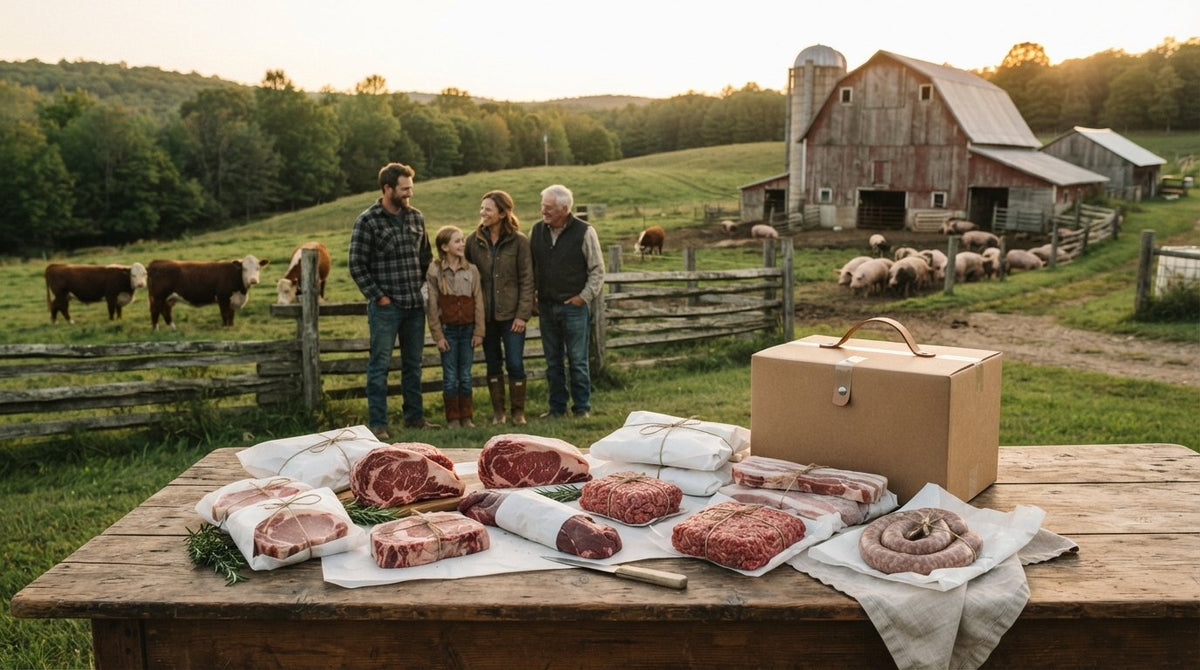
At Fowler & Valley Farms, our work is deeply personal. We're a multi-generational family operation run by the Putt family near Honor, Michigan. Every day, our cattle graze open ground under the watchful eyes of folks who care about animal well-being. We give them the time, wide acreage, and calm environment they need to thrive. That steady patience yields exceptionally tender, humanely raised beef you can feel good about serving at your dinner table.
You shouldn't have to wonder what went into your food or compromise on quality. By keeping our operation transparent and grounded in Northern Michigan values, we provide clean, wholesome meat directly from our pastures to your kitchen.
Build Your Own Beef Box with the Cuts Your Family Loves
Every household cooks differently. Some folks love grilling thick grain-finished ribeyes on weekend evenings. Others go through pounds of lean ground beef making quick weeknight meals for hungry kids. We don't believe in forcing you into rigid packages filled with cuts your family won't eat.
Using our interactive Build Your Own Beef Box tool, you hand-pick the exact steaks, savory pot roasts, and burger packages you need. If you prefer curated simplicity, our 10 lb and 15 lb boxes make ordering effortless. For folks wanting an easy introduction to farm-direct meat, our Starter Share fits neatly inside standard kitchen freezer compartments without crowding out everyday groceries.
Convenient Home Delivery Across Northern Michigan and West Michigan
Getting honest food shouldn't require complicated errands. We run dependable, hands-on delivery routes right to your front door across Benzie County, Leelanau County, Frankfort, and Traverse City, reaching down into Cadillac and Grand Rapids.
We pack every order with care so your meat arrives solid, cold, and ready for the freezer. To see our regular route schedules and drop-off details, check our Local Delivery FAQ page. If you want consistent peace of mind, our flexible Beef Subscriptions keep your home regularly stocked with wholesome farm meat all year long.
Take the Guesswork Out of Your Family's Dinner Table
Knowing how your cattle were raised changes the way you feed your household. You don't have to rely on confusing grocery aisle claims or settle for industrial feedlot meat. Choosing genuine humanely raised beef ensures cattle live calmly on open pasture with clean water and zero artificial growth hormones. That quiet stewardship protects the natural marbling, rich color, and tenderness of every cut you cook.
At Fowler & Valley Farms, the Putt family stands behind every step of our Northern Michigan cattle operation. We take pride in packing dependable doorstep deliveries for neighbors across Frankfort, Traverse City, and down through Grand Rapids. Whether you begin with a simple Starter Share or stock up for winter with our custom curated cuts, feeding your family well is simple. Order your custom box of humanely raised beef today and taste what patient, honest farming brings to your home.
Frequently Asked Questions
What is the difference between humanely raised beef and regular grocery store beef?
Conventional supermarket beef almost always comes from large industrial feedlots that prioritize fast weight gain over animal welfare, whereas authentic humanely raised beef centers on low-stress herd handling, open pasture, and natural movement. Our steers are raised with space, quiet stockmanship, and zero added growth hormones. That gentle life preserves muscle glycogen, resulting in clean marbling and reliably tender steaks on your table.
How do Northern Michigan winters affect cattle raised outdoors?
Cattle naturally grow heavy winter coats, but lake-effect winds coming off Lake Michigan across Benzie and Leelanau counties require attentive daily care. We provide solid windbreaks, deep beds of clean straw, and heated water troughs that never freeze over. Increasing their daily rations of high-energy hay and balanced finishing grains keeps the herd warm, thriving, and calm through sub-zero winter temperatures.
Where does Fowler Valley Farms deliver meat orders in Michigan?
We provide hands-on local delivery directly to doorsteps across Northern Michigan, including Traverse City, Honor, Frankfort, and surrounding Benzie County communities. Our regular delivery routes also travel south to Cadillac, Grand Rapids, and Grand Haven, as well as eastward toward Midland and Detroit. Every box arrives frozen solid, packed with care, and ready for your kitchen freezer.