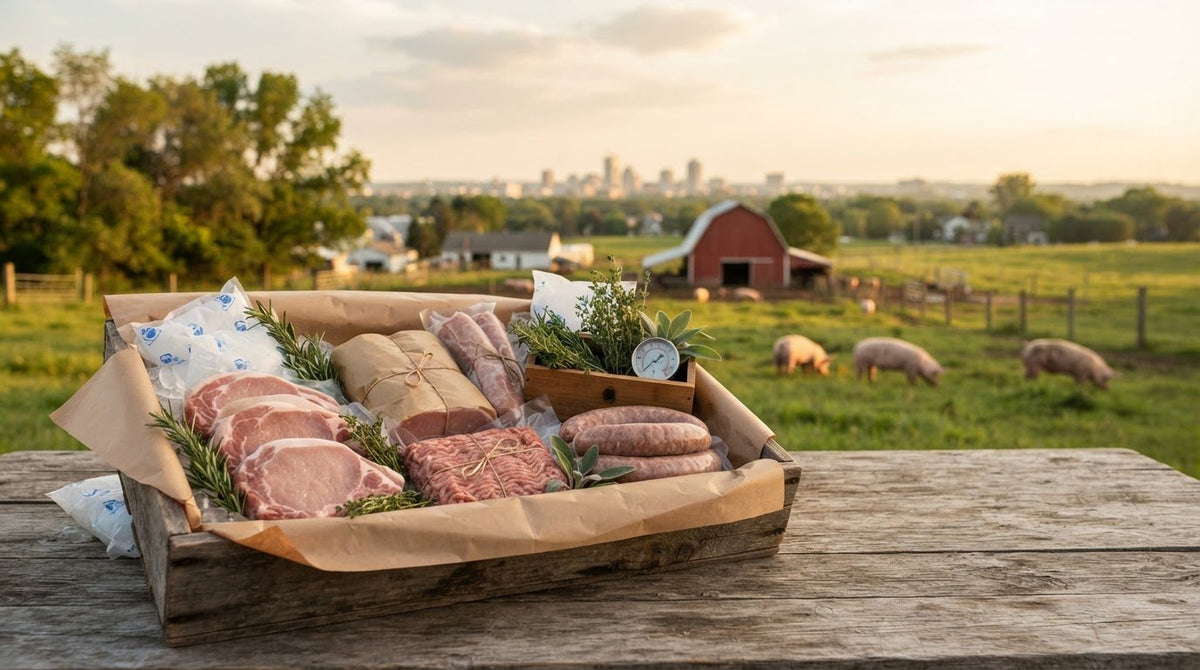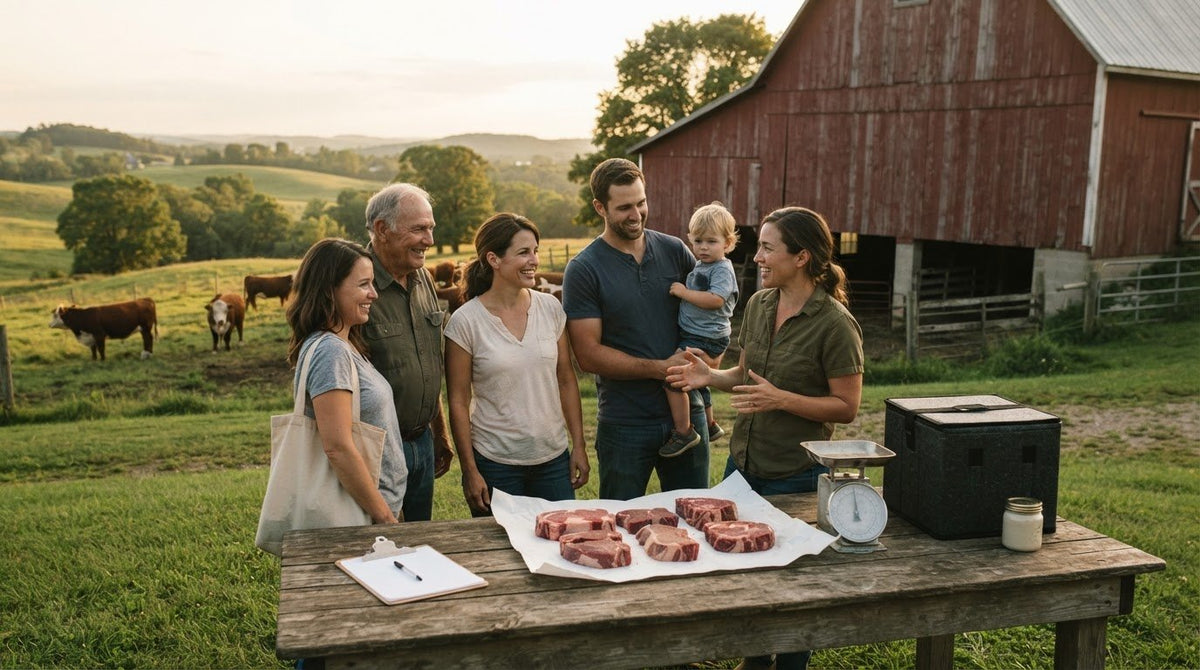
Know Your Farmer Beef: Questions to Ask Before You Buy
What if a useful sign of good sourcing is a farmer’s willingness to answer your questions? Choosing know your farmer beef means looking beyond broad claims to learn who raised or supplied the cattle, how the beef was produced, and where it was processed. Ask for details you can understand and check rather than relying on a label alone.
For shoppers in Northern Michigan and nearby communities, buying direct can bring you closer to the people behind your food. But a farm name on a package doesn’t explain every step, and terms such as “natural” or “grass-fed” may not tell you exactly what they mean in practice.
This guide covers questions to ask about sourcing, feed and finishing, processing, and labels. You’ll learn how to compare answers and what to confirm before choosing cuts or a box. We’ll also look at practical ways to explore beef boxes and individual cuts from Fowler & Valley Farms, a family-owned and operated farm.
Key Takeaways
- Know your farmer beef starts with understanding who produced or supplied the beef, not relying on a broad label alone.
- Ask who raised the cattle, where the beef comes from, and who processed it. Follow up when details about feed, finishing, or animal care are unclear.
- Compare sourcing claims by looking for specific answers and confirming them directly with the producer.
- Before choosing cuts or a box, consider your household’s needs, freezer space, and delivery options.
- Fowler Valley Farms offers individual cuts, beef boxes, custom-built boxes, subscriptions, and local delivery. Confirm current product availability and delivery coverage for your address.
What “Know Your Farmer Beef” Means for Northern Michigan Shoppers
Know your farmer beef means taking time to understand who produced or supplied the beef you’re buying. It doesn’t mean every farm follows the same practices. Instead, it gives you a way to ask about the people and steps behind your food, from the farm’s role in production to where the beef was processed.
A broad label may sound reassuring, but it can’t answer every sourcing question. Look for specific information: who raised or supplied the cattle, where they came from, and where the beef was processed. If a detail hasn’t been confirmed, treat it as a question to ask, not a fact to assume.
Farmer transparency means giving shoppers clear answers about the farm’s role and the beef’s path, and being honest about what still needs confirmation. A direct answer is more useful than polished marketing language.
What information should a farm be able to explain?
Start with the basics. Ask who operates the farm, what role it has in producing or supplying the beef, where the cattle came from, and where processing took place. You can also ask how the producer describes feed, finishing, and animal care. The answers should describe the farm’s actual practices, not assumptions based on a label.
Fowler Valley Farms is owned and operated by the Putt family across multiple generations, and sells meat directly to consumers. Confirm specific details about cattle raising, feed, finishing, animal care, and processing with us rather than inferring them. If an answer needs checking, a clear response that says so is more useful than a guess.
Why local sourcing questions matter in Northern Michigan
For shoppers around Traverse City, Frankfort, and Leelanau County, “local” can describe different parts of the beef’s journey. Ask what the farm means by the term and whether it refers to where the beef was produced, processed, or sold. The Local food movement offers wider context on why people value closer connections between food producers and consumers, but a label alone won’t explain a particular product’s sourcing.
Location matters practically, too. Before placing an order, confirm whether delivery is currently available at your address. Don’t assume coverage based on a nearby town. Shoppers in Traverse City, Frankfort, Grand Rapids, Leelanau, Kalkaska, Boyne City, Bay City, Midland, Saginaw, Freeland, Clare, Cadillac, Kingsley, Detroit, Chicago, Grand Haven, Muskegon, and elsewhere in Northern Michigan should check their specific address. For more background on finding direct-from-farm options, see our guide to Michigan farm meat sourcing. You can also review the beef selection while keeping any unanswered sourcing questions in hand.
Questions to Ask a Northern Michigan Beef Farmer Before You Buy
A useful conversation doesn’t need to feel like an interview. Start with the basics, then follow up wherever an answer leaves you unsure. The point of know your farmer beef isn’t to expect every farm to use the same methods. It’s to understand what this producer does and how the beef reaches your table.
Questions about the farm, cattle, and sourcing
- What is your role in producing or sourcing this beef? The seller may raise the cattle, work with another farm, or handle another part of the process. Ask them to explain their role plainly.
- Where are the cattle raised, and where is the beef processed? Ask for locations or a clear description of each step. For Fowler Valley Farms, confirm details about cattle raising, feed, finishing, animal care, and processing directly with us before relying on them.
- What do you mean by terms such as “grass-fed,” “local,” or “natural”? Ask what the specific term means for that farm and whether the producer can explain it beyond the label.
- How can I follow up if I have more questions? A direct conversation with the producer can help distinguish confirmed details from information that still needs checking.
Specific, consistent answers give shoppers a sounder basis for assessing transparency than broad claims alone. If a farmer needs to check a detail, they can say so instead of guessing.
Questions about cuts, handling, and buying
Once you understand the beef’s path, ask what’s available for your household and how to plan your order. These questions can help:
- Which individual cuts and purchase formats are currently available?
- How is the beef packaged, and how should I store it before use?
- What delivery or pickup options are available, and how can I confirm whether my address is covered?
- Who should I contact if I need clarification before ordering?
Details about current cuts, packaging, storage, and delivery can change, so confirm them before buying. You can learn more about the Putt family’s farm background in our farm background. Michigan State University also outlines broader Benefits of buying local, including supporting local economies.
To see what we offer while considering these questions, visit Fowler Valley Farms.
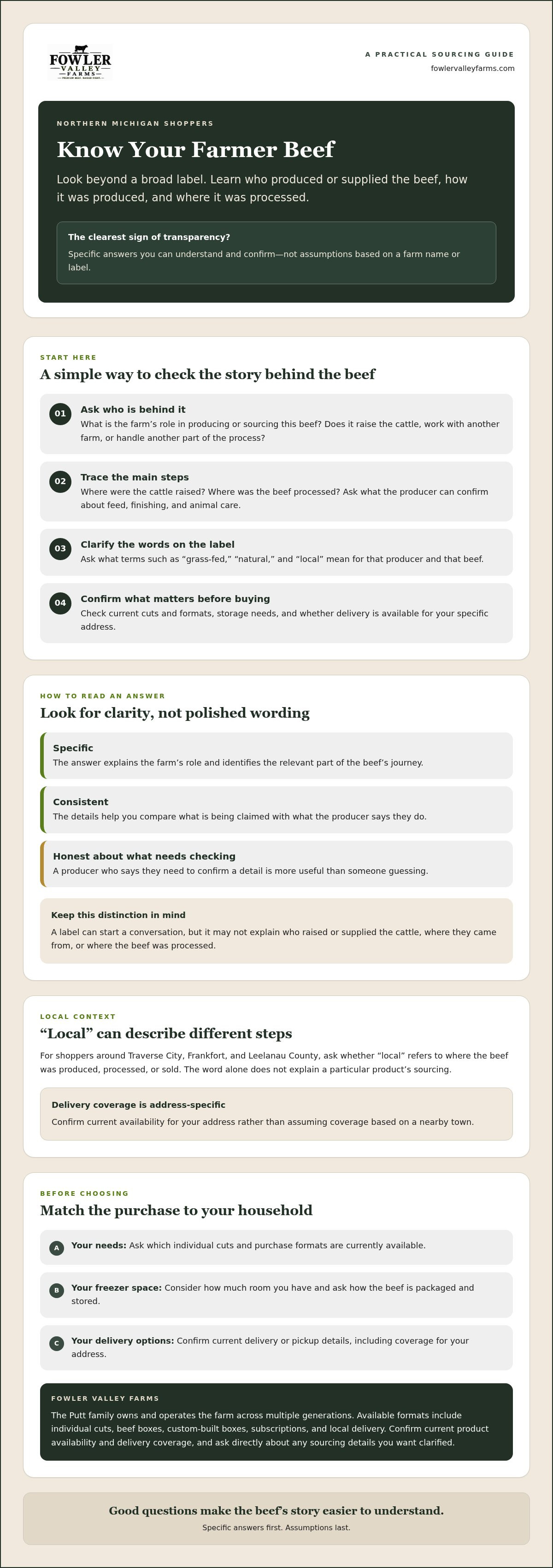
How to Judge Beef Sourcing Claims Without Guesswork
A farm-direct relationship gives you a chance to ask questions. It doesn’t, by itself, guarantee a particular feed program, animal-care approach, or production method. Treat each claim as something to understand and confirm, not as something proven by the word “local” or by buying directly from a farm.
Compare answers that describe the same part of the beef’s journey. Ask who raised the cattle, where they were raised, and who processed the beef. If an answer is broad, ask for a plain-language explanation. The examples below are neutral illustrations, not claims about Fowler Valley Farms or any specific producer.
What clear answers sound like
A specific answer names a person, place, step, or practice. A vague one relies on a broad label without explaining what it means. Use the follow-up column to keep the conversation practical.
| Specific answer | Vague answer | Useful follow-up question |
|---|---|---|
| “The cattle were raised at a farm in a named county.” | “It’s local beef.” | “Which farm or county do you mean?” |
| “The cattle’s diet included forage, and the farm can explain the finishing period.” | “They’re raised naturally.” | “What does ‘naturally’ mean in your practice? What did they eat?” |
| “The beef was processed at a named facility.” | “It’s farm-to-table.” | “Where was it processed, and what role does your farm have in that step?” |
A producer’s description is useful, but it isn’t automatically independent verification or certification. If a farm mentions a certification, ask which one and what it covers. Don’t treat a stated practice as certified unless you can confirm that separately.
How to follow up on broad or unclear claims
Ask the producer to explain unfamiliar terms in everyday language. Try, “What does that look like on your farm?” or “Can you tell me where that step happens?” If the answer remains unclear, note what’s confirmed and what isn’t. That’s a fair way to assess a claim without judging a farm on details you haven’t verified.
Compare like with like: feed claims against feed details, location claims against named places, and processing claims against information about the processor. Slogans don’t make those comparisons possible. For another angle on purchasing choices, read our guide to farm-direct and grocery-store meat differences.
If you’re looking for farms to contact, the USDA’s USDA Local Food Directories can help you find local food sources. Then bring your questions to the producer. That’s the practical heart of know your farmer beef.
Choosing Farm-Direct Beef Cuts and Delivery for Your Household
Once you’ve asked about sourcing, make the order fit your household. Estimate how much beef you’ll use, choose a buying format, check your freezer space, then confirm delivery details. This keeps your choice grounded in meals you actually make and the storage space you have.
Individual cuts, beef boxes, and subscriptions
Each format suits a different kind of planning. Individual cuts can work well if you want to choose particular options or buy for a specific meal. A beef box may offer variety in one purchase, while a subscription may suit a routine that includes recurring orders. No format is automatically right for every household.
Think about what you cook and how much room you have to store it. If you’re unsure, start by checking the current selection of available beef cuts. For box-specific planning ideas, use a separate farm-direct beef box guide as you compare what a box might mean for your household. Confirm current cuts, box contents, and subscription details with the farm before ordering.
Planning for storage and local delivery
Before choosing a larger order, check your freezer space and consider how quickly your household uses beef. Ask how the product is packaged and stored, and follow the producer’s guidance for handling it after delivery. Planning ahead can help you avoid ordering more than you can comfortably store.
Northern Michigan seasons can shape household routines, from summer plans around Traverse City and Frankfort to winter weather that makes errands less predictable. That context can help with planning, but it doesn’t establish a farm’s delivery schedule. Confirm current delivery coverage, timing, and order details directly with the producer. If you’re in Traverse City, Frankfort, or another nearby community, check that your specific address is eligible before placing an order.
Choosing know your farmer beef also means getting the practical details clear. We offer individual cuts, beef boxes, custom-built boxes, subscriptions, and local delivery. Confirm availability and delivery coverage before ordering. Explore Fowler Valley Farms beef options and consider which format fits your household.
Getting to Know Fowler Valley Farms and Taking a Practical Next Step
Knowing who’s behind your beef can make the next decision simpler. Fowler Valley Farms is owned and operated by the Putt family across multiple generations. We sell meat directly to consumers, with several ways to choose beef for your household.
What shoppers can explore with Fowler Valley Farms
Our beef options include individual cuts, beef boxes, custom-built boxes, and subscriptions for customers who prefer recurring purchases. The right format depends on what you cook, how much you plan to buy, and what you can store. Product selection can change, so check current availability before deciding.
We’re a family-owned and operated farm, and you can ask us directly about sourcing. If you want details about where cattle were raised, what they were fed, how they were finished, how they were cared for, or where the beef was processed, please ask. Those specifics should come from a clear, current answer, not an assumption based on the farm’s name or a label.
A low-pressure next step for Northern Michigan shoppers
Start by looking at the available beef options and considering which format suits your household. If local delivery is part of your plan, confirm that your address is currently covered before placing an order. Fowler Valley Farms offers local delivery, but coverage for a particular community or address should be checked directly.
That’s the practical side of know your farmer beef: learn who’s supplying your food, ask about details that matter to you, then choose at your own pace. You don’t need every answer before starting a conversation.
Explore Fowler Valley Farms and reach out with your sourcing questions before choosing the beef that fits your table.
Make Your Next Beef Purchase with Confidence
Knowing your farmer starts with a simple habit: ask who produced or supplied the beef, where it came from, and which details you can verify. Broad labels may prompt questions, but a clear conversation with the producer gives you a better basis for choosing. That’s the heart of know your farmer beef.
Your next step can be practical, too. Consider how much beef your household uses, whether individual cuts, a beef box, or a subscription fits your routine, and how much freezer space you have. If you’re in Northern Michigan or a nearby community, confirm delivery eligibility for your address before ordering.
Fowler Valley Farms is owned and operated by the Putt family across multiple generations. We offer individual cuts, beef boxes, custom-built boxes, subscriptions, and local delivery. We welcome direct questions about sourcing. Check current product availability and delivery details before choosing.
Explore Fowler Valley Farms and its beef options. A few thoughtful questions can help you find an option that feels right for your table.
Frequently Asked Questions
How can I know where my beef comes from?
Ask the seller who produced or sourced the beef, where the cattle were raised, and where the beef was processed. If you hear a broad answer such as “local,” ask which place or part of the process that describes. Details vary by farm, so confirm them directly rather than relying on a label alone. In Northern Michigan, check whether the producer currently serves your community before ordering.
What questions should I ask a local beef farmer?
Ask what role the farm has in producing or sourcing the beef, where the cattle were raised, and where processing took place. You can also ask which cuts and order formats are available, how the beef is packaged, and which options suit your household. You don’t need technical farming terms. Ask for plain-language explanations, write down the answers, and follow up on any claim that remains unclear. Don’t assume practices or certifications without confirmation.
Is buying beef directly from a farmer right for my household?
It depends on the cuts you prefer, your freezer space, and how your household cooks and uses beef. Individual cuts may suit shoppers choosing specific options; a beef box or recurring purchases may fit different routines. Start by understanding the farm’s sourcing answers and checking which formats are currently available. If you’re near Traverse City, Frankfort, or another Northern Michigan community, confirm delivery coverage for your address directly with the producer before ordering.
Ready to compare options for your household? Explore beef boxes and subscriptions, and check current availability before choosing.