Easy Holiday Roast Recipe: A Simple Beef Roast for a Special Meal
Holiday dinner doesn’t need a complicated centerpiece. An easy holiday roast recipe can keep the meal special and the work manageable, even when Northern Michigan snow is falling and the sides still need tending.
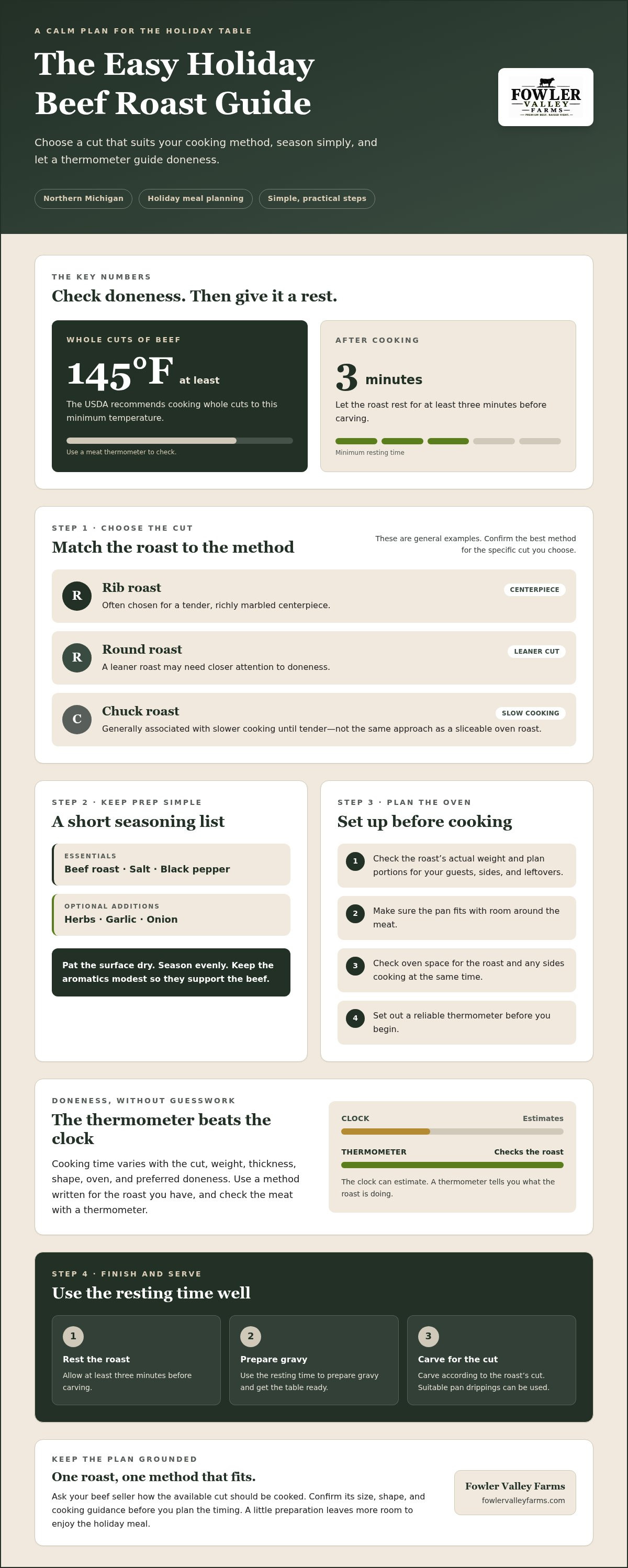
It’s understandable to wonder which roast to choose, how to keep it from drying out, and when to put the potatoes in the oven. Start by matching the cut to the cooking method, then use a meat thermometer to check doneness instead of relying on time alone. The USDA recommends cooking whole cuts of beef to at least 145°F and letting them rest for at least three minutes before carving.
This guide covers choosing a roast, seasoning it simply, checking its temperature, and planning the rest around gravy and holiday sides. Because cuts vary in shape and cooking needs, confirm the method for the roast you buy rather than assuming one timing works for every cut. A little preparation makes serving easier, and leftovers can help with the next day’s meal.
Key Takeaways
- Build an easy holiday roast recipe around a cut that suits your cooking method and the meal you’re planning.
- Use a practical prep plan to keep seasoning straightforward and leave room for holiday sides.
- Use the roast’s resting time to prepare gravy and get the table ready.
- Make use of suitable pan drippings and carve the roast according to its cut.
- Explore farm-direct beef options from Fowler & Valley Farms, a family-owned, multigenerational Northern Michigan farm.
What Makes an Easy Holiday Beef Roast Recipe Work?
On a December evening in Traverse City, the windows are frosted, coats are piled by the door, and family is gathering around the table. The roast shouldn’t demand your attention every minute. An easy holiday roast recipe starts with a cut suited to your cooking method, simple seasoning, and a thermometer for checking doneness. With those choices settled, you can plan the rest of dinner without guessing.
Roasting uses dry heat in the oven, but cooking time varies. The cut, weight, thickness, shape, oven, and preferred doneness all affect how long a roast takes. The practical approach is to choose a method for the specific cut, follow its instructions, and use a thermometer to check the meat. For a foundational explanation of the roasting method, see the overview on Wikipedia.
Choose a Roast That Fits Your Holiday Table
Beef roasts vary in tenderness, fat, shape, and response to heat. A rib roast is often selected for a tender, richly marbled centerpiece, while a leaner round roast may need closer attention to doneness. Chuck roast is generally associated with slower cooking until tender, rather than the same approach used for a sliceable oven roast. These are general examples, so confirm the best method for the particular cut you’re considering.
Ask your butcher or beef seller what cut is available, how it should be cooked, and whether its size and shape suit your recipe. If you’re considering farm-direct beef, you can browse Fowler Valley Farms beef and confirm current roast-cut availability and cooking suitability before choosing.
Plan the Meal Before the Oven Goes On
Check the roast’s actual weight before planning the meal. Then consider how many people you’re serving, what else will be on the table, and whether you’d like leftovers. A menu with several substantial sides may call for a different portion plan than one built mostly around the roast.
Check that your roasting pan fits the meat with room around it, and that your oven has space for the roast and any sides that need to cook at the same time. Set out a reliable thermometer before you begin. A thermometer tells you what the roast is doing; the clock can only estimate.
Easy Holiday Roast Recipe: Simple Ingredients and Prep
A good roast doesn’t need a long ingredient list. Salt and black pepper bring out the beef’s flavor. Herbs add a savory note, while garlic or onion can lend aroma as the roast cooks. Keep the additions modest so they support the beef rather than cover it.
Simple ingredient plan: Choose a beef roast and follow a cooking method suited to its cut and weight. Season with salt and black pepper, adding herbs, garlic, or onion if you like. Exact quantities and cooking times depend on the roast you select, so use a recipe tested for that cut rather than guessing at amounts or timing. Use the package weight and your serving plans to work out portions.
Gather the Roast, Seasoning, and Aromatics
Choose the roast for the method you plan to use, and confirm that the cut is suited to it. Chuck roast, for example, has its own characteristics and cooking guidance; the Chuck Roast reference explains the cut and its suggested approaches. Don’t assume every roast can follow the same oven timing or instructions.
- Essentials: Beef roast, salt, and black pepper.
- Optional: Dried or fresh herbs, garlic, or onion, chosen to suit your meal.
Once you’ve chosen the cut, use its weight and the recipe’s instructions to set your ingredient amounts and cooking plan. Follow the recipe for any prep steps, including whether to let the roast sit out briefly before cooking. Avoid applying a room-temperature instruction from a different recipe without checking that it suits your roast.
Season Ahead Without Adding Fussy Steps
Before seasoning, pat the roast’s surface dry with paper towels. This helps the seasoning adhere. Apply salt and pepper evenly over the outside, turning the roast so you don’t miss the sides. Add herbs or aromatics according to the recipe, or leave them out for a simpler flavor.
The right time to salt can depend on the cut and cooking method. Follow the instructions selected for your roast rather than assuming it needs to be salted a set time in advance. Salt, pepper, and a light hand with aromatics are enough to keep roast seasoning simple.
For farm-direct beef, you can browse the Fowler Valley Farms beef selection and confirm which cuts are available and how they’re best cooked before choosing one for your holiday meal.
How to Roast Beef Evenly and Know When It Is Done
Roast cut and shape affect how heat moves through the meat, so there isn’t one oven setting or timing that suits every beef roast. Use a recipe written for the cut and weight you’re cooking. The steps below help you follow that method and check the roast carefully.
Follow the Roast Method, Not a Rigid Clock
- Preheat the oven to the temperature specified in the recipe for your cut and roast size.
- Set the roast in the pan as the recipe directs. If it calls for a rack, center the meat on the rack and keep it clear of the pan’s sides.
- Roast according to the method, treating the recipe’s time range as a planning guide rather than a promise. Oven behavior, roast thickness, shape, and starting temperature can affect cooking time.
- Begin checking at the time specified by the recipe. Insert an instant-read thermometer into the thickest part of the meat. Avoid bone, which can give a misleading reading.
- Check more than one spot if the roast is irregular in shape. Use the lowest reliable reading to guide your next step, and return the roast to the oven if needed.
A clock can estimate; a thermometer checks the roast itself.
For food safety, the USDA recommends cooking whole cuts of beef to at least 145°F and resting them for at least three minutes before carving. That is the minimum safe temperature guidance, not a promise of a particular level of doneness or a substitute for the recipe’s instructions. A preference for a different doneness should not be confused with the USDA safety recommendation.
Rest the Roast Before Carving
Once the roast reaches the temperature specified by your recipe and meets the safety guidance, transfer it to a carving board. Rest it for the recipe’s recommended interval, ensuring it rests at least three minutes under USDA guidance. Use the pause to finish sides and gravy, and to get the table ready.
Tent the roast loosely with foil if the recipe calls for it. Leave space around the meat rather than sealing it tightly. Then carve as directed for the cut. Going straight from oven to knife can make serving less tidy, while a planned rest gives you room to bring the meal together.
That’s the steady approach behind an easy holiday roast recipe: use a method suited to the cut, check the thickest part with a thermometer, and allow time to rest before serving.
Finish the Holiday Roast with Gravy, Carving, and a Calm Serving Plan
Once the roast is out of the oven, the pan can help bring dinner together. Gravy quantities and the roast’s resting interval depend on the recipe and roast size, so follow the measurements and instructions you’re using. This sequence helps you make the most of the time before serving.
Make Simple Gravy from the Roasting Pan
Set the hot pan on a stable surface and handle it with oven mitts. If the drippings are badly burnt, don’t scrape those bits into the gravy; they can bring a bitter taste. Otherwise, pour the drippings into a heat-safe container, separate excess fat, and keep the flavorful juices. Use the recipe’s amount of fat and flour, whisking them together over heat before gradually adding the specified liquid and reserved drippings.
Stir as the gravy heats so it thickens evenly and doesn’t develop lumps. If it’s thicker than you like, loosen it with a little more of the recipe’s liquid. If it’s thin, follow the recipe’s method for adjusting the thickener. Keep the gravy hot for serving, and use clean utensils rather than returning a used tasting spoon to the pan.
Carve and Serve Without Rushing
While the roast rests for the interval in its recipe, finish the gravy and bring out sides that are ready to serve. Roasted potatoes, green beans, or a simple salad can round out the meal without taking over the oven at the last minute. Set out the carving board, serving platter, and gravy boat before the resting time is over.
Look for the direction of the muscle fibers, called the grain. For a cut served in slices, position your knife across those fibers and carve against the grain. Shorter fibers are generally easier to chew. The grain may be less obvious on some roasts, so follow cut-specific carving advice when available. Use a sharp knife and steady strokes.
That pause between oven and table is useful time, not lost time. It gives you room to finish sides, settle the gravy, and serve the roast neatly. For a holiday meal in Traverse City or beyond, that’s the calm finish an easy holiday roast recipe should leave you with.
If you’re planning a beef-centered meal, explore beef options from Fowler Valley Farms.
Choose Beef for an Easy Holiday Roast in Northern Michigan
A holiday roast may be headed for a table in Traverse City, a home near Frankfort, or a gathering elsewhere in Northern Michigan. Wherever you’re cooking, choose beef by matching the cut to your recipe, not by guessing from a name alone. Check the cut and package weight before planning oven time, portions, and sides. This easy holiday roast recipe works best when you have those details in hand.
Know What You Are Buying Before Choosing a Roast
Different cuts suit different cooking methods, and roast size affects both timing and how much you’ll serve. Before ordering, ask what cut is available, its weight, and whether it suits the recipe’s oven method. If you’re unsure, check with the seller or butcher rather than assuming one roast can be swapped for another without changing the instructions.
Fowler Valley Farms is a family-owned, multigenerational, direct-to-consumer farm operated by the Putt family. Beef is available as individual cuts and in beef boxes, but a particular roast cut may not always be available. You can view the Fowler Valley Farms beef collection and confirm current options and cooking suitability before planning your holiday meal. Beef boxes are another way to shop; check their contents and available choices before deciding whether they fit your recipe.
Once you know the cut and weight, you can follow the recipe’s method to plan cooking and resting time, then coordinate potatoes, vegetables, and gravy around it. Checking those details early can help you avoid a last-minute change of plans.
Make the Next Step Simple
Readers planning holiday meals in Traverse City, Frankfort, Grand Rapids, Leelanau, Kalkaska, Boyne City, Bay City, Midland, Saginaw, Freeland, Clare, Cadillac, Kingsley, Detroit, Chicago, Grand Haven, Muskegon, and elsewhere in Northern Michigan can check whether local delivery is available for their address. Confirm eligibility before placing an order rather than assuming every town or home is covered.
Keep your shopping list grounded in the meal: a cut that suits your cooking method, a weight that works for your table, and enough time to prepare it without rushing. Then build the rest of the menu around what you’ve confirmed is available.
Planning a roast for the holidays? Explore beef from Fowler Valley Farms, and confirm the cut and weight that work for your table.
Bring a Calm, Welcoming Roast to the Table
A memorable holiday meal doesn’t need a complicated centerpiece. Choose a cut suited to your cooking method, check doneness with a thermometer, and leave room for resting, gravy, and carving before dinner. That’s the steady foundation of an easy holiday roast recipe, whether you’re hosting in Traverse City or gathering somewhere else.
Fowler Valley Farms is owned and operated by the Putt family across multiple generations. Beef is offered as individual cuts and in beef boxes, but confirm current roast-cut availability and suitability before planning your meal. Local delivery is available; check whether your address is eligible.
As you set your holiday table, let the plan do its work. Explore beef cuts from Fowler Valley Farms and take the next step toward a warm meal shared with the people you love.
Frequently Asked Questions
What is the easiest beef roast to make for a holiday dinner?
The easiest roast is one suited to a straightforward oven method and your serving plans. Ask your butcher or seller which cut you’re considering, how it should be cooked, and what size is available. A tender roast intended for oven roasting may be simpler to manage than a cut that needs slow braising. Match the recipe to the cut rather than assuming every beef roast cooks the same way.
How do I know when a beef roast is done?
Check the thickest part with a meat thermometer, avoiding bone if the roast contains one. The USDA recommends cooking whole cuts of beef to at least 145°F and resting them for at least three minutes. That’s the safety recommendation; personal preferences for doneness may differ. For an easy holiday roast recipe, use a method suited to your cut and weight, and treat cooking time as an estimate, not the doneness test.
Should I cover a beef roast while it cooks?
For an oven-roasted beef recipe intended to brown the outside, leave the roast uncovered unless the recipe for that cut says otherwise. Covering changes how heat and moisture move around the meat, so follow the method you’re using rather than switching midway through. After cooking, if the recipe calls for resting under foil, tent it loosely. A loose cover helps keep the roast warm without trapping as much steam against its surface.
How long should a roast rest before carving?
Rest the roast for the interval specified by a recipe suited to its cut and size. The USDA advises resting whole cuts of beef for at least three minutes after they reach the recommended minimum internal temperature. During the pause, loosely tent the meat if directed, then use the time to finish gravy or set out sides. Resting also gives you a moment to prepare the carving board and serving platter.
Can I prepare a holiday beef roast the day before?
You can do some of the preparation ahead, such as checking your pan and thermometer, measuring seasonings, and preparing side dishes according to their instructions. Whether to salt the roast in advance depends on the cut and recipe, so follow guidance for that roast. Cooking the roast a day ahead changes how you’ll need to store and reheat it; use reliable food-safety guidance for those steps rather than guessing.
What should I serve with an easy holiday roast?
Choose sides that fit your oven space and can be finished while the roast rests. Roasted potatoes, green beans, a simple salad, or bread make a familiar spread without requiring an elaborate menu. If you’re making gravy from suitable pan drippings, plan for the time it needs on the stovetop. For a holiday table in Traverse City or elsewhere, a few well-timed sides can make serving feel easier.
Can I order a beef roast from a Northern Michigan farm?
Some Northern Michigan farms sell beef directly to customers, but confirm that a roast cut is currently available before planning your meal. Fowler Valley Farms, owned and operated by the Putt family across multiple generations, offers individual beef cuts and beef boxes. Ask about the available cut, weight, and cooking suitability. Local delivery is offered; check whether your address is eligible before placing an order.