What to Cook with Beef Shank: 5 Comforting Meal Ideas
Beef shank rewards patience, not fuss. If you’re wondering what to cook with beef shank, start with the kind of meal you want: a rich braise for Sunday supper or a hearty soup after a day outdoors around Traverse City. The cut can seem intimidating, especially if you’re choosing between bone-in and boneless or worrying the meat will turn tough. Its connective tissue needs time to soften, so slow, moist cooking is the way to get tender meat and a flavorful cooking liquid.
At Fowler & Valley Farms, we believe a good meal starts with choosing thoughtfully and giving the ingredients time. Beef shank suits that steady kind of cooking. Bone-in shank can bring depth to a pot, while either style can make a warming meal when cooked gently.
Here, we’ll share five comforting ideas, from braises to soups and stews, plus practical guidance for matching each one to your time and equipment. We’ll also suggest simple sides to help you plan supper, whether you’re cooking in Northern Michigan or gathering family around the table.
Key Takeaways
- Choose what to cook with beef shank by starting with the meal you want: a plated braise, a hearty soup, or a one-pot stew.
- Beef shank comes from the leg and is often sold bone-in. Its connective tissue makes slow, moist cooking a good fit.
- Match your recipe to the time and equipment you have, including a covered pot and enough cooking liquid for braising.
- Compare a classic braise, osso buco-style shank, soup, and stew to find a dish that suits your serving plan.
- Plan simple sides around your chosen shank dish, and choose beef thoughtfully for a comforting Northern Michigan meal.
What to Cook with Beef Shank: Start with the Cut
In Northern Michigan, a pot of beef shank slowly cooking suits the kind of supper that brings everyone in from a cold day. Shank comes from the leg, a hardworking part of the animal, and is often sold bone-in. That use of the muscle gives the meat a firm texture, so a quick sear alone won’t make it tender. It needs time in a moist cooking environment.
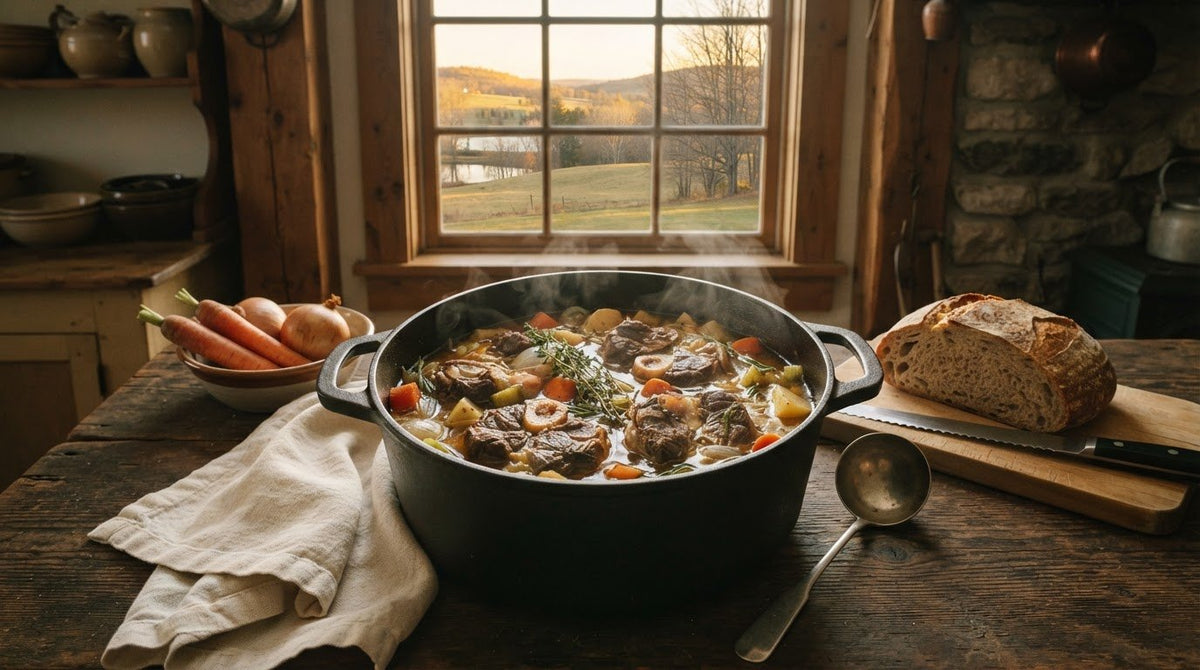
Beef shank is made for slow cooking: steady, moist heat helps turn a firm leg cut into tender meat and a savory, full-bodied cooking liquid. The beef shank is used in traditional braises and soups for just this reason. Rather than rushing the process, choose a dish that lets the meat soften at its own pace. The goal is meat that yields easily when tested, surrounded by broth or sauce with depth.
Why beef shank works in long-cooked dishes
Shank contains connective tissue that softens as it cooks slowly in liquid. With enough time at a gentle heat, that tissue breaks down and adds body to the pot. Keep the shank partly or fully surrounded by liquid, depending on the recipe, and maintain a low simmer rather than a hard boil. For a braise, onion, carrot, herbs, and broth can become a rich sauce. In soup, the cooking liquid becomes the base for vegetables, grains, or beans.
Let texture guide you, not the clock alone. The amount and shape of the meat, along with the cooking method, affect how long it takes to become tender. Follow the recipe’s directions, then check the meat as it cooks. If it still feels firm when pierced, give it more time. That patient finish is what makes the cut rewarding.
Bone-in or boneless: what changes in the pot?
Both bone-in and boneless shank can work in a braise, soup, or stew. Bone-in pieces make a generous presentation at the table, but the bone takes up space in the pot and each serving needs to account for it. Boneless pieces are easier to portion into bowls or shred into a stew. Either way, choose a pot that fits the cut without crowding it, so the liquid can reach the meat and cook it evenly.
Recipes may call for a particular cut or preparation, such as tying a piece to help it hold its shape. Follow those cut-specific directions instead of assuming every shank is interchangeable. When we plan a comforting meal at home, we also think about where the beef comes from. Fowler Valley Farms is a family-owned, direct-to-consumer farm, and our beef offerings are one place to explore as you plan a Northern Michigan supper.
How to Cook Beef Shank: Match the Method to Your Meal
Choose the cooking method by picturing supper at the table. A braise suits a plated main with sauce and sides. Soup or stew makes a filling one-pot meal. Each takes patience. Slow cooking gives this firm cut the conditions it needs to become tender. If you need a quicker meal, choose a different cut rather than rushing the shank.
- For a plated main: Braise the shank gently in a covered pot, then serve it with its cooking liquid.
- For a one-pot meal: Let it simmer with vegetables in a soup or stew.
- For a smoky finish: Use a smoking method only with a recipe designed for shank and the equipment it requires.
Beef shank’s firm texture calls for slow, moist cooking, which gives it time to become tender while enriching the liquid around it. That’s the steady principle behind a Dutch oven braise, a slow-cooker meal, and a pot of soup. Pick the method that fits the meal you want, then follow a recipe written for that method.
Braising and Dutch oven meals
If your recipe calls for browning, sear the shank before adding liquid. This builds flavor in the pot, but browning isn’t required for every dish. Add the liquid and aromatics listed in the recipe, cover the pot, and cook gently until the meat is tender. Spoon the finished cooking liquid over the shank, or use it as the base for a simple sauce.
A Dutch oven is handy because it can move from browning to covered cooking in the same pot. Keep the heat gentle and use the recipe’s directions for how much liquid to add. The aim is a slow-cooked main with meat and sauce ready to serve together, not a pot left to boil hard.
Soup, stew, and slow-cooker ideas
For a one-pot supper, let the shank deepen a broth with vegetables such as carrots, onions, and potatoes. Soup can stay broth-forward, while stew is heartier and more concentrated. Recipes vary on when to add vegetables, so follow their sequence to keep them from becoming overly soft while the beef cooks.
A slow cooker suits a day when you want the meal to cook steadily without tending a pot on the stove. Use a tested recipe with directions for that appliance and cut. The same goes for a pressure cooker: follow an appliance-specific recipe for liquid, cooking, and releasing pressure.
When smoking makes sense
Smoking is a separate route, not simply another kind of braise. It calls for suitable smoking equipment and a recipe written for beef shank, including guidance for managing the cooking process. Choose it when you want that method and have the time and tools for it. For tender, spoonable meat in broth or sauce, braising, soup, or stew is the more direct fit.
As you plan the meal, you can explore our beef offerings and choose a cut with your recipe in mind.
Beef Shank Recipe Ideas: Braise, Soup, or Osso Buco-Style?
If you’re deciding what to cook with beef shank, think first about how you want to serve it. A braise makes the meat the centerpiece, while soup and stew turn it into a one-pot meal. Osso buco-style cooking offers a slower, more formal presentation with vegetables and cooking liquid. There’s no single right choice. Match the dish to your appetite, recipe, and the kind of supper you want to put on the table.
| Dish | Cooking approach | Best fit |
|---|---|---|
| Classic braise | Cook the shank gently in a covered pot with liquid and seasonings. | A plated main served with its sauce or cooking liquid. |
| Osso buco-style shank | Slow-braise shank with vegetables, following a recipe suited to the cut. | A centerpiece meal with a deliberate, sit-down feel. |
| Hearty soup | Simmer shank in broth, then build the soup with vegetables and other additions. | A spoonable, broth-led meal. |
| Stew | Cook shank with vegetables in a thicker, more substantial liquid. | A filling one-pot supper. |
“Osso buco-style” describes a preparation, not a guarantee about how a shank has been cut. Many recipes for this style call for cross-cut pieces, but the name alone doesn’t tell you the shape or portioning of the meat you have. Read the recipe’s cut directions before you begin, and choose one that matches your shank.
When to choose a braise or osso buco-style dish
Choose a braise when you want tender meat served with the liquid it cooked in. Spoon the savory sauce over each serving, then add a simple side such as mashed potatoes, polenta, or crusty bread. Osso buco-style cooking is also a slow braise, often prepared with vegetables and served as a composed main. It suits a meal where you want the shank to stay central rather than disappear into soup.
When soup or stew makes more sense
Soup is the better fit if you want a lighter, broth-led bowl. Stew suits a thicker meal with vegetables in every serving. The recipe determines whether to cook the shank whole or portion it before it goes in the pot. Follow its directions so the meat, liquid, and vegetables finish with the texture the dish calls for.
Use the comparison as a starting point, not a ranking. A braise can feel right for a shared table; soup may be just the thing for a quiet evening. If you want fork-tender meat served in generous pieces, choose a recipe that keeps the shank intact. If you’d rather ladle dinner into bowls, pick a soup or stew recipe that explains how to portion the meat and when to add vegetables. The best dish fits your serving plan and gives the shank time to cook gently.
Choose a Beef Shank Dish by Time, Equipment, and Serving Plan
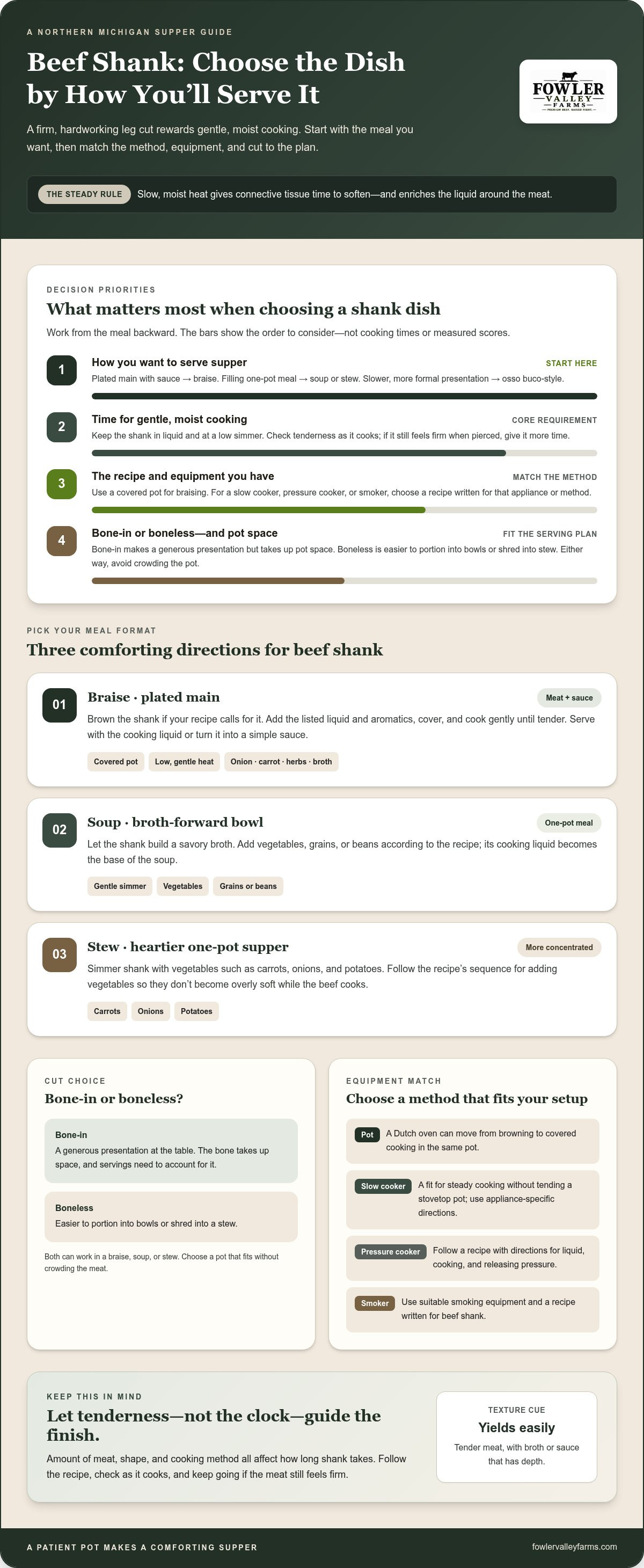
To decide what to cook with beef shank, start with the meal you want to serve, then work backward from your cookware and schedule. The cut rewards planning, but you don’t need an elaborate setup. A recipe that fits the pot you own and the time you can give it is more useful than one that sounds impressive but doesn’t suit your day.
- Choose the meal style. Pick a plated braise if you want the shank served as the main event. Choose soup or stew for a one-pot supper. Decide whether you want broth to ladle into bowls or a thicker dish that eats more like a complete meal.
- Check your equipment. A Dutch oven recipe needs a pot that can be covered and used as directed. A slow-cooker recipe should be written for that appliance. Make sure your pot has room for the meat, liquid, and vegetables called for.
- Select a recipe that fits. Read its cut and appliance directions before you start. Don’t assume you can swap cooking methods or convert times and temperatures between an oven, slow cooker, and pressure cooker without tested guidance.
- Plan the serving. Decide whether you’ll serve the shank whole, portion it, or pull the meat into the dish. Then choose sides and make room in your schedule for the full cooking process.
Pick the recipe around your cookware
For a Dutch oven braise, use an oven-safe covered pot and follow the recipe’s directions for adding cooking liquid. The meat should cook gently in a covered environment, not dry out in an uncovered pot. If a slow cooker better fits your household’s routine, choose a recipe developed for it and follow its instructions from preparation through serving.
Keep appliance changes simple: don’t transfer a recipe’s oven temperature or cook time directly to another cooker. Each method handles heat differently, and a tested recipe accounts for that. If you have a pressure cooker, use directions written for your type of appliance rather than adapting a stovetop or oven recipe by guesswork. Let the recipe guide you.
Build the rest of the meal around the shank
A rich braise pairs well with a plain starch and a vegetable. Mashed potatoes, rice, or crusty bread can soak up the cooking liquid, while roasted carrots or a crisp green salad add contrast. For soup, set bread on the table and let people add herbs or other toppings to their bowls. Keep extras flexible, especially if the soup already has vegetables, beans, or grains.
On a cold Northern Michigan evening, a covered pot of braise or stew makes a warming supper. You can also choose a recipe that lets you prepare parts of the meal ahead, such as chopping vegetables earlier in the day, while keeping the cooking itself on the recipe’s schedule. Build in time for the shank to become tender rather than counting on a fixed finish time.
As you settle on a recipe and plan the table, explore beef from Fowler Valley Farms, a family-owned, direct-to-consumer farm.
Make Beef Shank Supper Your Own with Farm-Direct Beef
Once you’ve chosen between a braise, soup, or stew, keep the cooking grounded. Beef shank has a deep, savory character, so a short list of supporting ingredients is often enough. Onion, carrot, celery, garlic, herbs, and broth can build flavor without crowding the meat. Follow your recipe’s directions, then taste the cooking liquid near the end and adjust the seasoning to suit the finished dish.
Keep the cooking simple and the ingredients useful
For a braise, use aromatics to give the liquid a good foundation. In soup or stew, let vegetables complement the beef rather than compete with it. Vary the herbs or add beans, grains, or other vegetables when the recipe allows, but keep the shank and its cooking liquid at the heart of the meal.
Don’t pour that liquid away after serving. Spoon it over the meat at the table, or save it as a flavorful base for another meal, such as soup or gravy. If you have leftover meat, plan how you’ll use it: shredded shank can be folded into a bowl of broth or served over a simple starch. Let the recipe guide how much liquid and seasoning to reserve so the leftovers suit their next use.
That kind of practical planning is part of choosing what to cook with beef shank. The method, sides, and leftovers all shape the meal. A pot of braised shank can become a generous supper with mashed potatoes and a green vegetable; soup can stand on its own with bread alongside. Keep the menu simple and let the slow-cooked beef provide the substance.
Connect the recipe to a local farm relationship
Here in Northern Michigan, from Traverse City and Frankfort to Leelanau County and Kalkaska, we know a good meal often begins with thoughtful choices at home. Fowler Valley Farms is a family-owned, direct-to-consumer farm operated by the Putt family for generations. Choosing beef with a recipe in mind helps you plan for the cut, cooking method, and serving style you want, without assuming every recipe calls for the same form of shank.
We provide local delivery for customers in communities including Boyne City, Grand Rapids, Bay City, Midland, Saginaw, Freeland, Clare, Cadillac, Kingsley, Detroit, Chicago, Grand Haven, and Muskegon. As you consider where your beef comes from, take time to learn about the farm behind it and how it connects with your table. Our family farm story offers a closer look at Fowler Valley Farms. For home cooking, explore our beef selection and plan a meal around the cuts and dishes that suit your household. Start with the recipe you’re looking forward to making, then build a simple, satisfying supper around it.
Put a Slow-Cooked Supper on Your Table
Let your next meal start with a small plan: choose a recipe you’re looking forward to, set aside time for it, and decide what would make the table feel complete. That’s a good way to answer what to cook with beef shank without turning supper into a project. Keep the menu simple, make room for the cooking process, and let the meal be something you share at an unhurried pace.
For Northern Michigan evenings, a pot that simmers while the day winds down can make home feel especially welcoming. Once you’ve picked your recipe, carry that same thoughtfulness into the beef you choose for future meals. Explore Fowler Valley Farms and browse our Build Your Own Beef Box, beef boxes, and individual cuts for your next farm-direct meal.
Choose the dish that suits your household, gather what you need, and enjoy the time around the table. A good supper is well within reach.
Frequently Asked Questions
What is the best way to cook beef shank?
A dependable way to cook beef shank is to braise it gently in a covered pot with the liquid and seasonings your recipe calls for. For a bowl meal, choose soup or stew instead. If you’re deciding what to cook with beef shank, match the recipe to how you want to serve it. Check tenderness near the end and continue cooking if the meat still resists a fork.
Can you cook beef shank in a slow cooker?
Yes, beef shank can be cooked in a slow cooker using a recipe written for that appliance. Follow its guidance on preparation, liquid, and when to add ingredients such as vegetables. Don’t transfer oven or stovetop timing directly to a slow cooker. Check the meat for tenderness as the recipe directs, and allow more cooking time if it hasn’t reached the texture you want.
Is beef shank good for soup?
Yes, beef shank works well in a hearty soup cooked according to a recipe suited to the cut. Keep the broth clear and add vegetables, or make the bowl more substantial with additions the recipe allows. Soup is broth-led and easy to ladle, while stew has a thicker, more concentrated consistency. Follow the recipe for how to prepare the shank and build the pot.
What can I serve with braised beef shank?
Braised beef shank pairs well with mashed potatoes, polenta, crusty bread, or vegetables. The cooking liquid can go on the plate alongside the meat, so a simple starch is useful for soaking it up. Choose sides that suit your meal: a single vegetable keeps the plate straightforward, while a fresh salad brings a lighter contrast. No one pairing is essential.
Do you have to brown beef shank before slow cooking?
No, browning isn’t a universal requirement. It’s useful when the recipe calls for it, adding a browned surface and flavor to the cooking base before the meat cooks slowly. Some recipes may direct you to place the shank straight into the cooker. Follow the tested method you’re using, including its browning step, rather than adding or skipping preparation based on a different recipe.
Can beef shank be cooked from frozen?
Don’t improvise a cooking method or timing for frozen shank. Safe handling depends on the appliance and recipe. For slow cookers, USDA food-safety guidance advises thawing meat before cooking. Follow authoritative food-safety directions and a recipe written for your chosen method; don’t rely on an untested time or temperature for frozen beef.