Grain Fed Meat: How Raising Methods Shape Beef Quality
What if grain-fed meat isn’t the whole story of how cattle are raised? In the United States, cattle in grain-finished systems may receive antibiotics or growth hormones, but that possibility alone doesn’t tell you how a particular animal was raised. Looking beyond the label helps you understand the practices behind your beef.
It’s reasonable to want clear answers about your food. In Northern Michigan, where pasture and farming are part of daily life, this guide explains grain finishing, what labels can and can’t tell you, and how production choices relate to marbling and tenderness.
You’ll also learn how USDA grades and aging relate to beef quality, helping you weigh the tradeoffs and understand the raising method behind each cut.
Key Takeaways
- Learn what pasture-raised and grain-finished mean, and how those terms relate to questions about antibiotics and hormones.
- See how finishing methods can shape marbling and flavor, and why grade, aging, and cut all matter when judging beef quality.
- Find out whether free Friday delivery reaches your home in Traverse City, Frankfort, Benzie, Leelanau, or nearby communities.
- Compare beef boxes and subscription options to find a practical fit for your household and freezer.
- Get simple guidance for receiving frozen beef and keeping it ready for meals at home.
How Our Beef Is Raised and Processed
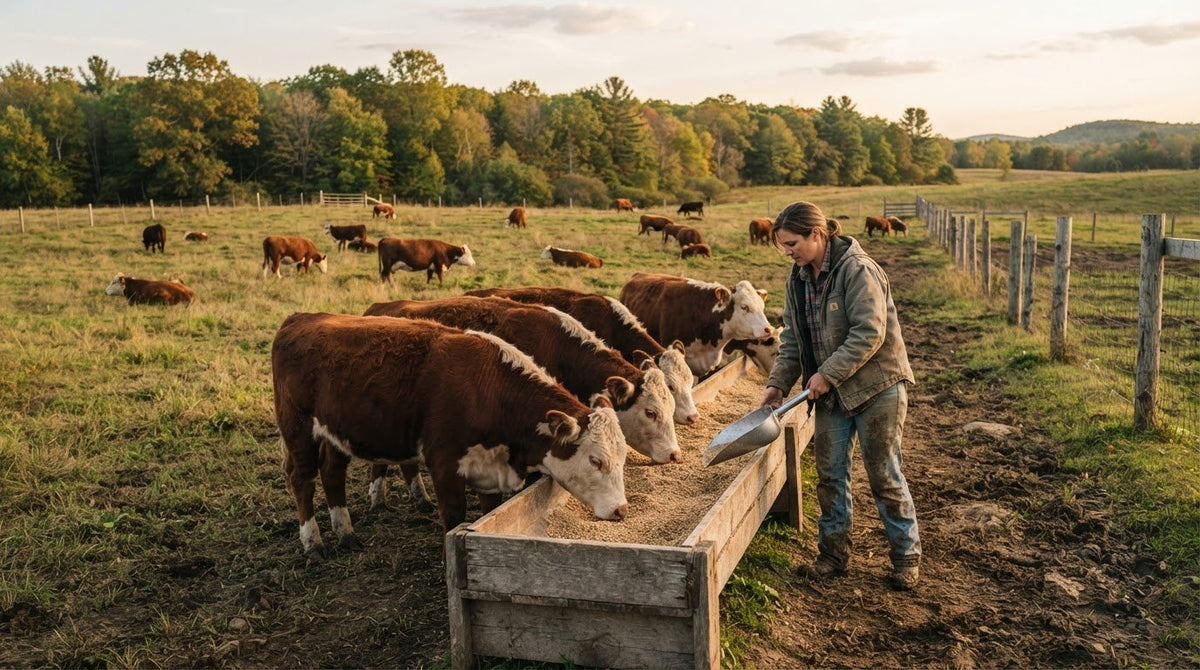
At Fowler & Valley Farms, cattle are pasture-raised and grain-finished, then processed at a local USDA-inspected processor. That describes our raising method, though it doesn’t answer every question about feed, medication, or care.
Cattle Diets by Finishing Method
Grass-finished cattle eat grass and other forage throughout their lives, while grain-finished cattle receive grain during the finishing stage. Our cattle are pasture-raised before grain finishing. The distinction matters: “grain-finished” describes a stage of the diet, not the full raising method. The label alone doesn’t reveal every detail of a farm’s practices.
Labels can help distinguish terms, but they are not interchangeable. Look for wording such as “grain-finished,” “grass-fed,” or “grass-finished,” then consider what the producer says about the cattle’s full diet. “Organic” describes a separate production standard, not whether beef is grain- or grass-finished. According to the U.S. Department of Agriculture, USDA organic cattle must be fed grain and forage that are 100% organic.
Cattle Welfare and Confinement
Confinement describes how much time cattle spend in enclosed or limited spaces, not what they eat. Our cattle are pasture-raised before grain finishing, so time on pasture is part of their raising method. A grain-finished label alone doesn’t explain housing or daily care; those depend on the producer’s practices.
Cattle are ruminants with four stomach compartments: the rumen, reticulum, omasum, and abomasum. Their digestion is adapted to forage, including grass and hay. Diet changes therefore matter. Finishing method describes feed, but doesn’t replace the need to understand the full ration and raising system.
Antibiotics and hormones are separate questions from finishing method. Grain-finished cattle in the United States are sometimes given antibiotics or growth hormones, which are permitted in the country. That doesn’t establish what happened with an individual animal. Our beef is processed at a local USDA-inspected processor, but processing information alone doesn’t reveal an animal’s medication history. USDA organic cattle may not be given antibiotics or growth hormones.
There is no single price comparison for grain-finished and grass-finished beef across the United States. Retail cost depends on the cut, producer, region, and selling format. Finishing method alone doesn’t determine what a shopper pays.
Environmental effects also depend on the production system. Grain production uses land and other resources, while cattle and manure contribute to emissions. Pasture management has its own land impacts, so “grain-fed” or “grass-finished” alone cannot capture a farm’s full footprint.
Eating grain-fed meat does not, by itself, identify a specific health risk. The label describes a feeding method; it doesn’t tell you about medication history or how beef was handled and prepared. The useful distinction for buyers is between the raising method and the separate details of a particular product.
What Grain-Finished Beef Means for Flavor and Cuts
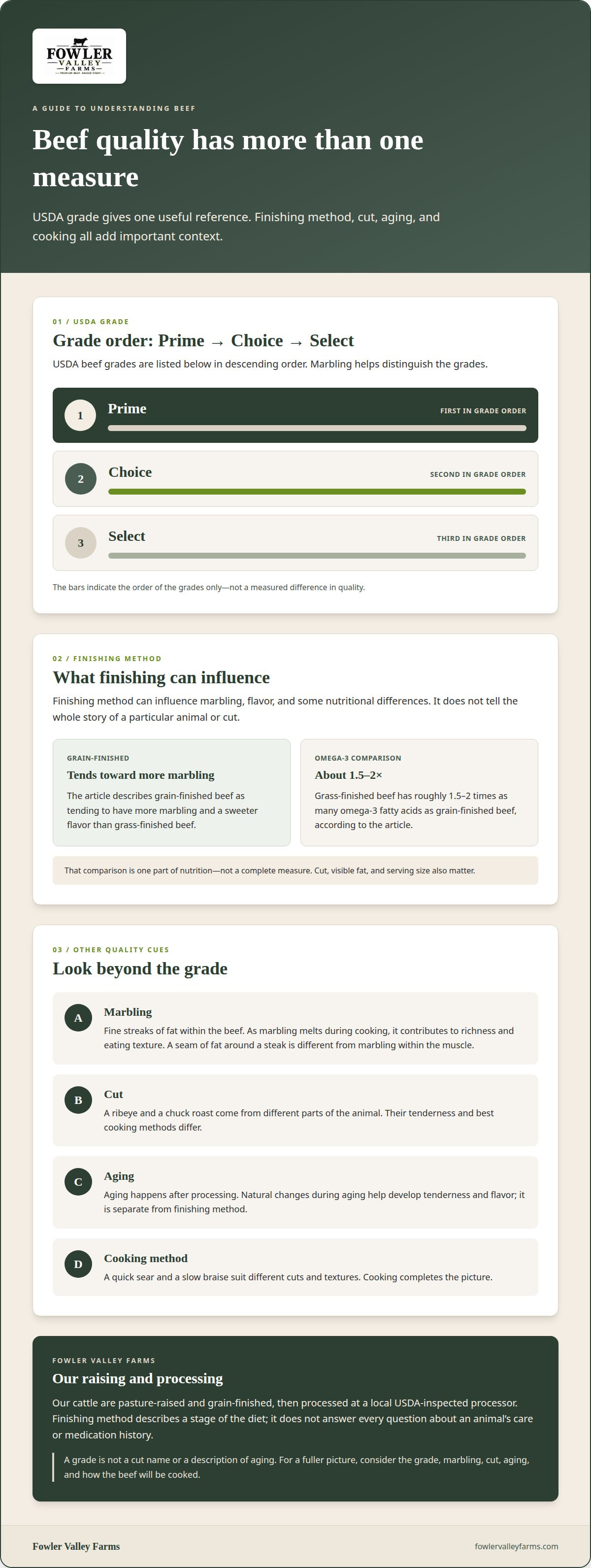
Finishing method can influence marbling, flavor, and some nutritional differences, but it doesn’t determine every measure of quality. Grain finishing tends to produce beef with more marbling and a sweeter flavor than grass finishing.
Nutritional Differences Between Finishing Methods
Finishing method can affect a beef cut’s fat profile, so it may matter when you compare nutrition. Grass-finished beef has roughly 1.5-2 times as many omega-3 fatty acids as grain-finished beef. The difference is one part of the comparison, not a complete measure of nutritional value. Cut, visible fat, and serving size also shape what ends up on your plate.
Nutrients and Omega-3 Fatty Acids
Omega-3 fatty acids are one specific nutritional difference often discussed between finishing methods. The comparison is about relative amounts, not whether one type of beef has no omega-3s. A ribeye and a leaner cut also differ in their fat content. For a useful comparison, consider both the cut and its finishing method instead of relying on one label alone.
Nutrition isn’t the only reason to choose a particular cut. A lean steak makes a different meal from a well-marbled ribeye, even when both come from grain-finished cattle. Cooking method matters, too: a quick sear and a slow braise suit different cuts and textures.
Marbling, Fat, and Beef Taste
Marbling is the fine streaks of fat within a cut of beef. Grain-finished cattle tend to produce beef with more marbling and a sweeter taste than grass-finished cattle. As the fat melts during cooking, it contributes to the meat’s richness and eating texture. That’s why marbling can matter to someone choosing a steak for a hot skillet or grill.
USDA beef grades give shoppers another reference point. In descending order, the grades are Prime, Choice, and Select. Marbling helps distinguish these grades, but grade isn’t a cut name or a description of aging. A ribeye and a chuck roast come from different parts of the animal, so their tenderness and best cooking methods differ.
Grain Feeding and Meat Marbling
Grain finishing tends to support more marbling, which can influence tenderness, juiciness, and flavor. It doesn’t mean every steak will have the same fat pattern. Muscle, cut, and individual animal all affect what you see. A visible seam of fat around a steak is different from marbling within the muscle.
Aging is a separate step after processing, not another name for grain finishing. Natural changes during aging help develop tenderness and flavor. The cut and aging method shape the result, while cooking completes the picture. A naturally tender steak, for example, calls for different treatment than a firm roast suited to slow cooking.
Where We Deliver Beef in Northern Michigan
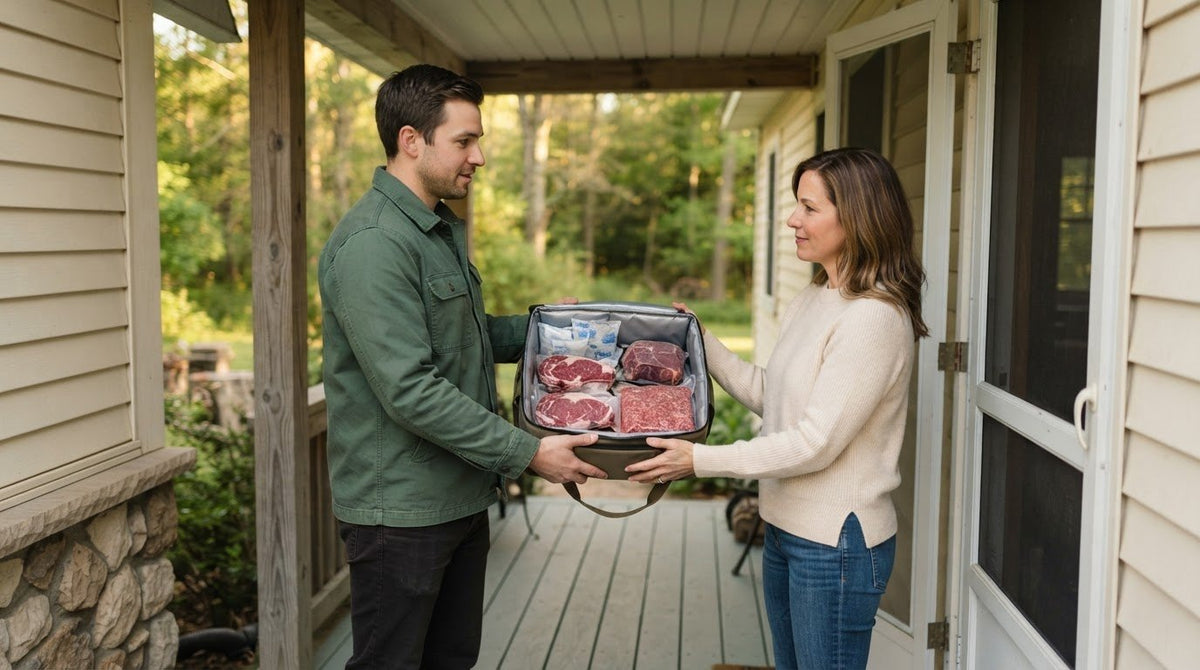
Our local delivery serves homes across Benzie, Leelanau, and Grand Traverse counties, including customers in and around Honor, Frankfort, and Traverse City. Local delivery is free on Fridays.
For Friday delivery, place your order by Thursday. The deadline gives us time to prepare the weekly route and your beef for delivery. Whether you’re planning weekend meals or stocking the freezer for a busy week, ordering by Thursday keeps the Friday schedule in view. Local delivery is free within the service area.
Honor customers can also choose Saturday pickup in town, a separate option from Friday home delivery. Pickup suits households that prefer to collect an order or expect to be near Honor on Saturday. The distinction is simple: Friday is the local delivery day, while Saturday is pickup day in Honor.
Local service follows the listed counties, not a promise of delivery to every nearby town beyond them. Traverse City is in Grand Traverse County, while Frankfort and Honor are in Benzie County. Leelanau County is also included. If you’re outside those counties, nationwide shipping is the other way to receive an order. For additional details about the local route, see our local beef delivery details.
Local Delivery and Nationwide Shipping
Local delivery and nationwide shipping follow different schedules. Friday local delivery serves Benzie, Leelanau, and Grand Traverse counties, with Thursday as the ordering deadline. Saturday pickup is available in Honor. Nationwide orders ship Monday and Tuesday, packed frozen in insulated boxes with ice packs. Shipping is free on nationwide orders of $200 or more, while Michigan local orders of $150 or more qualify for free shipping.
Shipping thresholds apply to shipping, not to the free Friday local delivery described above. For a household in Traverse City, Frankfort, or elsewhere in the three counties, the local option means a Friday route rather than a parcel shipment. Customers beyond Northern Michigan can use nationwide shipping. Orders ship Monday or Tuesday; overnight arrival isn’t promised, so plan around the shipping schedule rather than a specific delivery date.
A little planning makes the options clear. Order by Thursday for Friday local delivery, or choose Saturday pickup in Honor. If your address is outside Benzie, Leelanau, and Grand Traverse counties, use nationwide shipping. Choose based on where you live and whether you prefer Friday delivery, Honor pickup, or a frozen shipment to your address.
Which Beef Box Should You Choose?
Fowler Valley Farms offers several ways to choose beef, from set boxes to a Build Your Own Beef Box. The right fit depends on how often you cook beef, which cuts you prefer, and how much freezer space you have. Start with your kitchen routine, not a particular box size.
A set box is a straightforward starting point. Our Welcome Box is $79, and beef boxes are available in 10 lb and 15 lb options. Think about who will share the meals and whether you want a smaller mix to try or more beef ready for regular cooking. Your usual recipes can help guide the choice. Burgers and weeknight meals call for different cuts than a household that often cooks roasts or steaks.
If you already know the cuts you reach for, our beef box options let you shop by box rather than assemble each meal separately. For more say in what goes into your order, the Build Your Own Beef Box lets you select individual cuts. That can suit a household with clear favorites, or one that wants to shape a freezer selection around its own cooking habits.
Beef Subscriptions are another option for households that want recurring orders instead of deciding from scratch each time. Subscribe & Save offers 10% off. Consider whether a steady supply fits your routine before choosing a recurring option. A subscription is most useful when beef is already part of your regular meal planning. A one-time box may make more sense if you’re still learning which cuts your household enjoys.
Freezer space matters, too. It’s easier to choose a box when you know where it will go and how soon you’ll use the cuts. If space is limited, a smaller box may be simpler to manage. If you cook beef often and have room to store it, a larger option can stock more meals at once. You can also select specific cuts with a Build Your Own Beef Box instead of taking a set assortment.
Delivery method can also shape your order. Local households can choose delivery, while customers outside the local service area can use nationwide shipping. Shipping thresholds differ by order location and method, so consider them as you decide what to buy. Match your order to how you want to receive it and the space available for storage.
There’s no single box that suits every kitchen. Start with your household’s favorite meals, available freezer space, and whether you prefer a set assortment, selected cuts, or recurring orders. If you’d like help choosing, contact Fowler Valley Farms.
How to Keep Your Beef Frozen and Ready to Use
Once your beef is home, put the packages in your freezer and arrange them so each cut is easy to find. Make room before bringing an order home, especially if you’re storing a full box. A clear shelf or bin for beef keeps packages together and prevents them from disappearing among other frozen foods.
Group similar cuts together: ground beef in one spot, steaks in another, and roasts together. Then you can find what suits the meal without moving every package. If your freezer has drawers, use one for cuts you plan to cook soon. A simple arrangement saves time on busy evenings.
Keep an inventory nearby. List the cuts as you put them away, then cross each one off when you use it. A note on the freezer door, a kitchen list, or a phone reminder all work. The goal is simple: know what’s on hand before choosing a meal or adding more to the freezer.
Use older packages first. Put newer beef behind what’s already stored, so the earlier packages stay easiest to reach. If you sort by cut, keep older packages at the front of each group. This first-in, first-out habit helps you use your supply steadily instead of discovering an overlooked package later.
Organize with meals in mind. Keep ground beef ready for burgers or skillet dinners, and make roasts easy to spot when you have time for a slower meal. Check your freezer list when planning dinner. Moving a package to the refrigerator ahead of cooking gives it time to thaw without a last-minute scramble.
Thaw beef in the refrigerator, using a dish or plate to catch moisture. Choose the package to suit your meal, since a thick roast and a thinner steak need different amounts of time. If plans change, keep the remaining frozen cuts organized and update your inventory when you put a package back or use another one.
Avoid piling packages in an unmarked stack. When cuts are visible and grouped, it’s easier to rotate them and match each one to a recipe. If freezer space is tight, organize what you already have before bringing more beef home. A little planning keeps meals within reach and helps you use every cut thoughtfully.
Choosing grain-fed meat is one part of deciding what belongs in your kitchen. Let the meals you enjoy guide your choice: pick familiar cuts for everyday cooking, or use the Build Your Own Beef Box to tailor a selection to your household. Beef Subscriptions can suit a routine that calls for a steady supply, while Local Delivery offers convenience for nearby households in Northern Michigan.
The choice doesn’t need to be complicated. Start with the cuts you like to cook, your freezer space, and how you want to receive your beef. A thoughtfully chosen first box can help you learn what works for your table, one meal at a time.
When you’re ready to choose, explore our beef boxes and find a fit for your kitchen.
Frequently Asked Questions
Which Tastes Better?
Neither style tastes better to everyone. Grain-finished beef tends to have more marbling and a sweeter, milder flavor, while grass-finished beef can taste leaner and more pronounced. The cut and cooking method matter, too. A quickly cooked, marbled steak may suit someone who enjoys richness; a leaner cut may appeal to a different palate. Your own preference is the best guide.
What Does Grain Finishing Mean?
Grain fed meat comes from cattle whose diet includes grain, often during the finishing stage before harvest. The term describes feed, not every part of the animal’s life or how it was housed. Cattle, for example, may graze on pasture before receiving grain. “Grain-finished” can describe that stage more clearly than a broad feeding label.
How Are Cattle Finished on Grain?
In this system, cattle may graze before their diet shifts toward grain for finishing. Grain fed meat reflects that feeding stage, but the phrase doesn’t explain the animal’s earlier diet, living conditions, or handling. Those details vary by production system. Compare the full raising method rather than assuming one label describes every step from pasture to processing.
How Does Grain-Finished Beef Compare With Grass-Finished Beef Nutritionally?
Grass-finished beef has roughly 1.5-2 times as many omega-3 fatty acids as grain-finished beef. That comparison concerns one nutrient group, not the whole nutritional profile of a meal. The cut you choose also affects its fat content. For instance, comparing a lean cut with a richly marbled steak can matter as much as comparing finishing methods.
What Are the Differences in Taste and Texture?
Grain-finished beef tends to have more marbling and a sweeter flavor, while grass-finished beef is often leaner and more pronounced in flavor. Those differences can affect a cut’s texture and taste after cooking. A richly marbled steak may seem juicier, while a leaner steak benefits from careful cooking to avoid drying out. Cut and preparation still count.
What Animal Welfare Concerns Should Buyers Consider?
Concerns often focus on confinement and whether cattle have access to pasture, space, and suitable feed. Finishing method alone doesn’t describe those conditions: cattle may graze before finishing, while some systems keep them confined for much of their lives. Raising practices provide a fuller picture than feed labels alone. Animal care depends on how each farm manages its cattle.
Are Antibiotics or Hormones Used in U.S. Grain-Finished Beef Production?
Antibiotics and growth hormones may be used in some U.S. grain-finished cattle systems, but the feeding method doesn’t mean every animal receives them. These are separate production details. USDA organic cattle may not be given antibiotics or growth hormones, and organic status doesn’t indicate whether beef is grain-finished or grass-finished. Feed method and medication practices are distinct questions.