Pasture-Raised, Grain-Finished Beef in Michigan
Pasture-raised cattle can be grain-finished, too. In Northern Michigan, pasture-raised, grain-finished beef comes from cattle raised on pasture and finished on grain, a distinction that matters if you want to understand how your beef was raised and what “grain-finished” means at the table.
It’s reasonable to want more than a label when choosing beef for your household. This guide explains how pasture raising and grain finishing work, what to consider about animal care, and how this approach differs from grass-finished beef. It also covers cuts, ground beef, and ordering beef boxes for shoppers in Traverse City and across Northern Michigan.
Key Takeaways
- Learn what pasture-raised and grain-finished mean, and how grain finishing fits into the cattle’s raising process.
- Compare individual cuts, ground beef, and box options to find a mix that suits your meals and freezer space.
- See how local delivery works for Traverse City, Honor, and nearby counties, including the order deadline and Honor pickup option.
- Understand how nationwide orders are shipped frozen and how to handle beef when it arrives.
- Use practical storage habits to keep cuts organized and make weeknight meals easier to plan.
How Pasture-Raised, Grain-Finished Beef Is Raised in Michigan
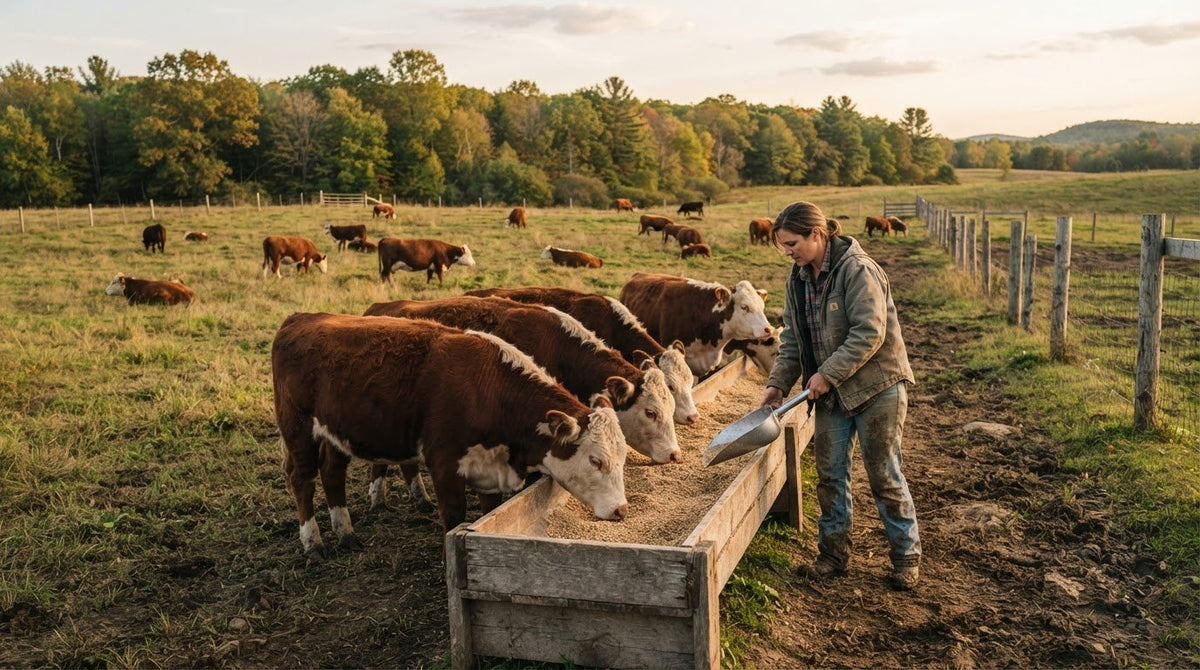
In this system, cattle spend part of their raising period on pasture and are finished on grain. Breed, daily care, finishing practices, and processing are separate details to consider.
Cattle Breeds and Raising Practices
Pasture-based raising describes where cattle graze, not their breed. A breed name alone also won’t tell you what the animals eat or how they’re finished. Look for descriptions that distinguish pasture access from the later grain-finishing stage. A farm may, for example, explain its pasture setting, finishing practices, and processing separately.
Pasture access is one part of animal care, not a complete account of it. Useful details include how animals reach forage and water, how the farm manages pasture, and what happens during finishing. Practices can differ between farms and across seasons. Clear, specific descriptions help you understand the raising method rather than relying on a broad label.
Grain Finishing
Grain-finished cattle receive grain during the finishing stage. That describes the finishing feed, not the cattle’s entire diet or breed. When comparing descriptions, look for both stages: pasture raising and grain finishing. Details about the finishing process can help explain the raising method.
Pasture conditions change with Michigan’s seasons. Forage growth and weather affect grazing conditions, while a farm’s finishing schedule shapes when cattle are ready for processing. That means availability may follow the farm’s production cycle, rather than a fixed calendar date. Cattle availability by season depends on those factors, so the words “pasture-raised” alone don’t indicate when beef will be ready.
For the beef described here, processing takes place at a local USDA-inspected processor. That is the specific inspection detail available for this beef; it does not establish every rule that may apply to direct farm sales elsewhere. Processing and inspection are distinct from the farm’s raising practices, so consider each part when learning how beef reaches the buyer.
Which farms sell pasture-raised, grain-finished beef in Michigan? Look for farms whose descriptions identify both pasture raising and grain finishing, rather than treating either phrase as a substitute for the other. For Michigan shoppers, the beef selection presents one local source with these practices. Near you, the useful comparison is the farm’s stated raising method and finishing practices.
To assess a label claim, look for separate descriptions of the pasture-raising and grain-finishing stages. Find out what the farm means by “grain-finished” and what the finishing stage involves. A label is a starting point; a clear explanation of the steps makes the claim easier to understand. These details distinguish pasture access from the feed used during finishing.
Beef Cuts, Boxes, and What to Consider When Buying
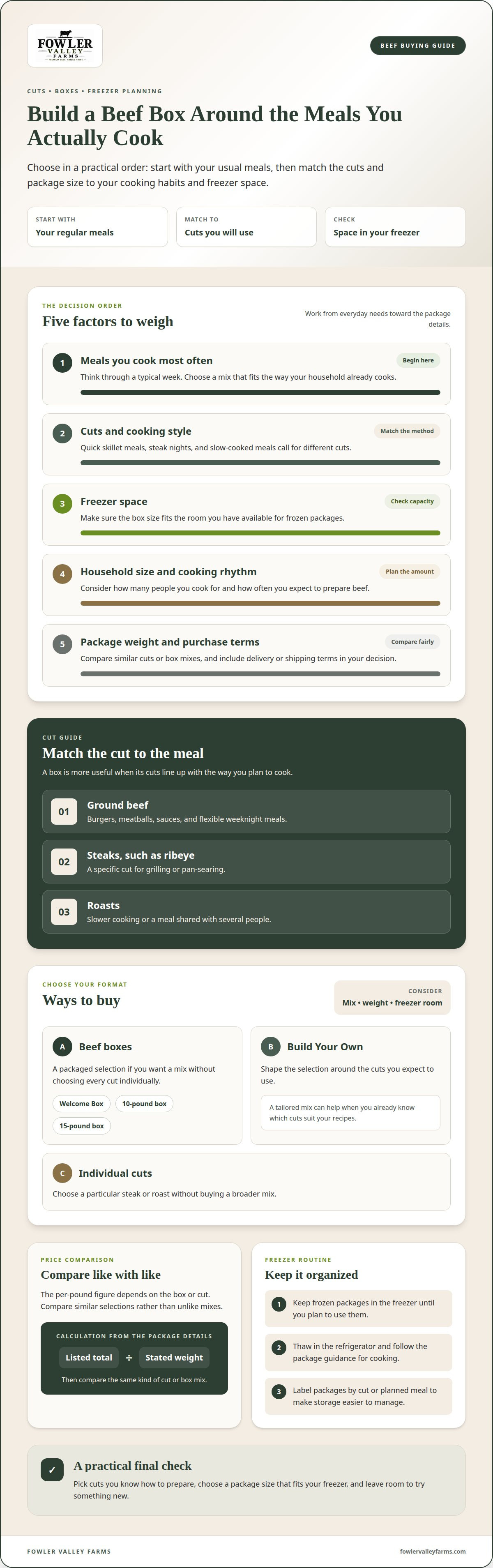
Start with the meals you cook most often. If your household regularly makes burgers, ground beef may be useful; steak nights call for cuts such as ribeye. Roasts suit slower cooking and shared meals. A good mix depends on your recipes, freezer space, and how often you cook each kind of beef.
Ground beef works well for weeknight meals such as burgers, meatballs, and sauces. Steaks and roasts serve different purposes, so consider how you cook before choosing a box. If you mostly make quick skillet meals, a box weighted toward roasts may not suit your routine. Think through a typical week, then choose a mix that makes sense for your table.
Beef boxes are a practical starting point if you want a selection without choosing every cut individually. Options include the Welcome Box, 10-pound and 15-pound boxes, and a Build Your Own box. The beef box options let you compare packaged choices and consider which amount suits your household and freezer space.
For a tailored selection, Fowler & Valley Farms’ Build Your Own Beef Box lets you shape your order around the cuts you expect to use. Individual cuts can suit shoppers who want a particular steak or roast without buying a broader mix. Before deciding, consider how many people you cook for, how much freezer space you have, and which cuts your recipes call for most.
- Choose ground beef for burgers, meatballs, and flexible everyday meals.
- Choose steaks such as ribeye when you want a specific grilling or pan-searing cut.
- Choose roasts when you plan a slower cooking method or a meal for several people.
How much does pasture-raised, grain-finished beef cost per pound in Michigan? The per-pound figure depends on the box or cut. To compare options, divide the listed total by the package’s stated weight, then compare similar selections, such as ground beef with ground beef or one mixed box with another.
Look beyond the total. A box’s cut mix and weight affect how useful it will be for your meals, and delivery or shipping terms affect the overall purchase. Comparing similar selections makes the decision clearer. A ground-beef-focused order, for example, serves different cooking needs than a box containing steaks and roasts.
How should you store, thaw, and cook locally purchased beef? Keep frozen packages in the freezer until you plan to use them, then thaw them in the refrigerator and follow the package guidance for cooking. Labeling packages by cut or planned meal can make freezer storage easier to manage.
Make the choice practical, not complicated. Match the box size to your freezer, select cuts you already know how to prepare, and leave room to try something new. A Welcome Box or 10-pound box can suit a smaller first purchase, while a 15-pound box may fit a household planning more meals ahead.
Beef Delivery in Traverse City, Honor, and Nearby Counties
Fowler Valley Farms offers local beef delivery in Traverse City, Honor, and nearby Northern Michigan communities. Choose local delivery or Saturday pickup in Honor. Nationwide shipping is also available for customers beyond the region.
Friday delivery is free in Benzie, Leelanau, and Grand Traverse counties. This includes Honor and Frankfort in Benzie County and Traverse City in Grand Traverse County. Place your order by Thursday for the Friday route. Delivery gives customers in these counties a practical way to receive beef without traveling to the farm.
Honor also has a Saturday pickup option. It can suit customers who live nearby or are already traveling through Benzie County and prefer to collect their order. This is separate from Friday delivery, so consider which option fits your week. For local delivery details, the local delivery FAQ explains the available arrangements.
In Leelanau County, local delivery is available on Friday, with orders due by Thursday. The same schedule applies in Benzie and Grand Traverse counties. If you live in Frankfort, Honor, or Traverse City, your county determines whether the local route serves your area. Knowing the deadline makes it easier to plan meals for later in the week.
Customers outside the local delivery counties can have orders shipped nationwide. Beef is shipped frozen in insulated boxes with ice packs. Nationwide orders ship Monday and Tuesday. That schedule describes when orders ship, not a guaranteed arrival day. Free nationwide shipping applies to orders of $200 or more. Michigan orders of $150 or more qualify for free shipping within the state.
Delivery and shipping are different ways to receive an order. Local Friday delivery serves Benzie, Leelanau, and Grand Traverse counties, while Saturday pickup is in Honor. Shipping is available nationwide, with orders sent frozen. Choose the option that fits where you live and how you plan to receive your box.
- Traverse City: Friday local delivery in Grand Traverse County.
- Honor: Friday delivery in Benzie County or Saturday pickup.
- Frankfort: Friday local delivery in Benzie County.
- Leelanau County: Friday local delivery.
- Outside the local counties: Nationwide shipping is available.
Beef boxes offer a straightforward way to order for local delivery or shipping. Choose based on the meals you have in mind and the space available at home. For a Friday route, remember the Thursday order deadline. For a shipped order, make room in your freezer for the frozen packages, which arrive in an insulated box with ice packs.
Fowler Valley Farms offers local delivery and shipping, giving Northern Michigan households and customers farther away options for receiving beef. Check the delivery details to choose what fits your location.
Keeping Beef Frozen and Fresh After Delivery
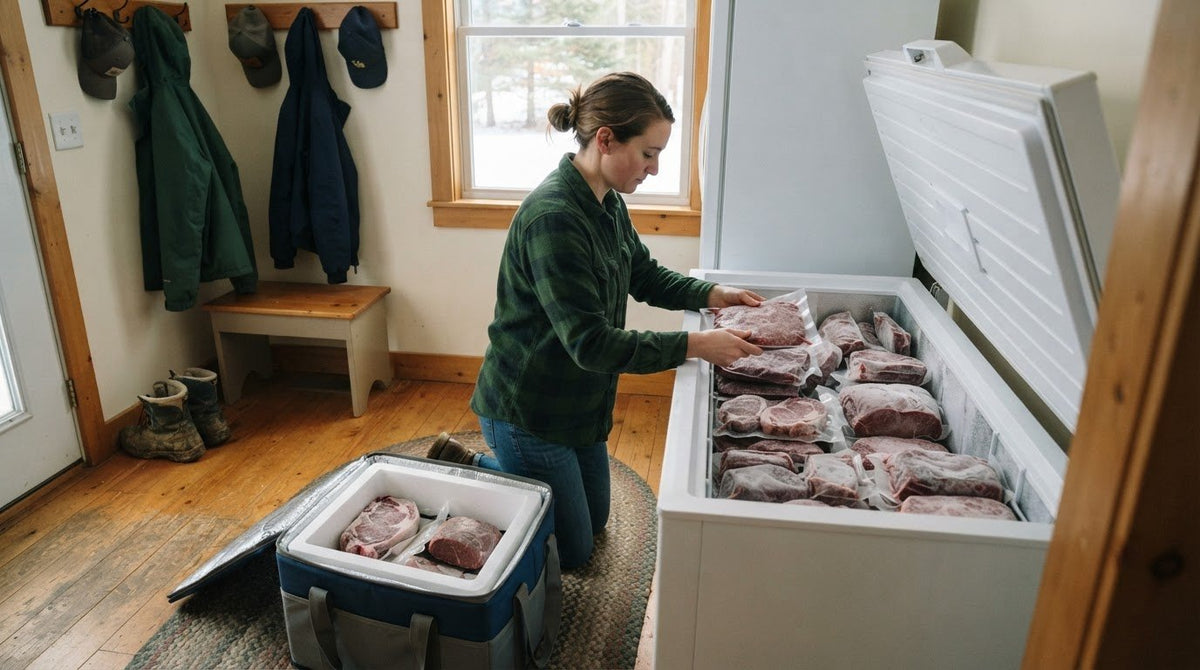
Frozen beef is shipped in an insulated box with ice packs to help keep the packages frozen during transit. Make room in your freezer before the order arrives so you can unpack and store each cut without delay. A clear space saves time, especially when the box contains steaks, roasts, and ground beef.
Sort packages by cut and planned meals. Put the packages you expect to use soon together, then group the rest by type. For example, store ground beef separately from ribeye and other steaks. This makes it easier to find what you need without shifting every package around.
Labels matter when several packages are stacked together. Keep the cut information visible as you organize the freezer. You can also group packages by planned meal, such as burgers or a roast dinner. This simple habit helps you use what you have instead of buying duplicates or forgetting packages behind other food.
If freezer space is limited, arrange packages flat where possible and stack them once firm. Keep the items you’ll use first easy to reach. In a chest freezer, put soon-to-use packages near the top. In an upright freezer, group packages by cut on the same shelf or in the same drawer.
- Make freezer space before delivery so packages can be stored promptly.
- Keep package labels visible and sort beef by cut or planned meal.
- Separate the packages you expect to use soon from longer-term freezer storage.
Plan thawing around the meal. Move the cut you need from the freezer to the refrigerator ahead of cooking, allowing time for it to thaw. A roast and a smaller package of ground beef may need different amounts of planning, so check the package and account for its size. Keeping the package contained during thawing also helps keep the refrigerator orderly.
Once thawed, prepare the beef according to the cut and cooking method. Ribeye suits a quick sear, while a roast calls for slower cooking. Ground beef can go into burgers, meatballs, or a skillet meal. Identify the cut from the package label before choosing a recipe, and follow appropriate cooking guidance for the dish.
If you’re not ready to use a package, leave it frozen and organize the rest of the freezer around it. Avoid leaving thawed beef out while you plan dinner or look for a recipe. Decide on the meal first, then move the package into the refrigerator. This keeps your routine simple and the freezer easier to manage.
Good freezer habits turn a delivery into meals you can plan with confidence. Keep an inventory on a note or household list, updating it as you use packages. Writing down “ground beef,” “ribeye,” or “roast” is enough to track what’s on hand. Visible labels, sensible grouping, and a little meal planning make frozen beef easier to store and use.
Choosing beef for your household also means deciding how to stock your kitchen: with familiar cuts, a flexible mix, or a supply for meals ahead. When comparing pasture-raised, grain-finished beef in Michigan, consider the details behind the label and how you’ll use each cut. Start with what your family cooks most, then choose an option that fits your freezer and routine.
Fowler Valley Farms offers a Build Your Own Beef Box for a custom selection, Beef Subscriptions for recurring orders, and Local Delivery for nearby households. Each option offers a different way to plan for farm-raised beef.
Take the next step at your own pace. A well-chosen box can turn ordinary dinners into meals you look forward to sharing.
Frequently Asked Questions
What cuts and packages do Michigan farms offer?
Options vary by farm, but may include individual cuts, mixed beef boxes, or customizable boxes. Fowler Valley Farms offers individual beef cuts, Beef Boxes, and a Build Your Own Beef Box. Choose individual cuts for a specific recipe or a box for a broader mix across several meals. Review the package details to see what each option contains.
Can I buy Michigan beef by the quarter, half, or whole animal, and what does it cost?
Fowler Valley Farms sells consumer beef packages and individual cuts, rather than quarter-, half-, or whole-animal shares. There is no animal-share price to compare. If you’re planning meals for a household or stocking a freezer, compare the available box sizes and cut selections instead. The right fit depends on your storage space, cooking habits, and whether you prefer specific cuts or a mixed selection.
How does grain-finished beef compare with grass-finished beef in taste and nutrition?
Grain-finished and grass-finished describe different finishing diets, but neither guarantees one exact taste or nutritional profile. Flavor and texture can vary with the cut, preparation, and individual animal. For a practical comparison, cook the same cut using the same method, such as pan-searing two ribeyes, and note the differences you notice. For nutrition, compare reliable product-specific information rather than assuming the finishing label tells the whole story.