Article: How to Choose Beef Cuts and Check for Mold at Home
How to Choose Beef Cuts and Check for Mold at Home
A tenderloin may seem like the natural starting point, but a whole rib section leaves more beef to enjoy after trimming. Understanding what dry aging beef at home involves means choosing a suitable cut and carefully managing refrigerator conditions and surface changes. This guide explains how to select beef, prepare an aging space, and recognize mold concerns before deciding whether home aging suits your kitchen.
Key Takeaways
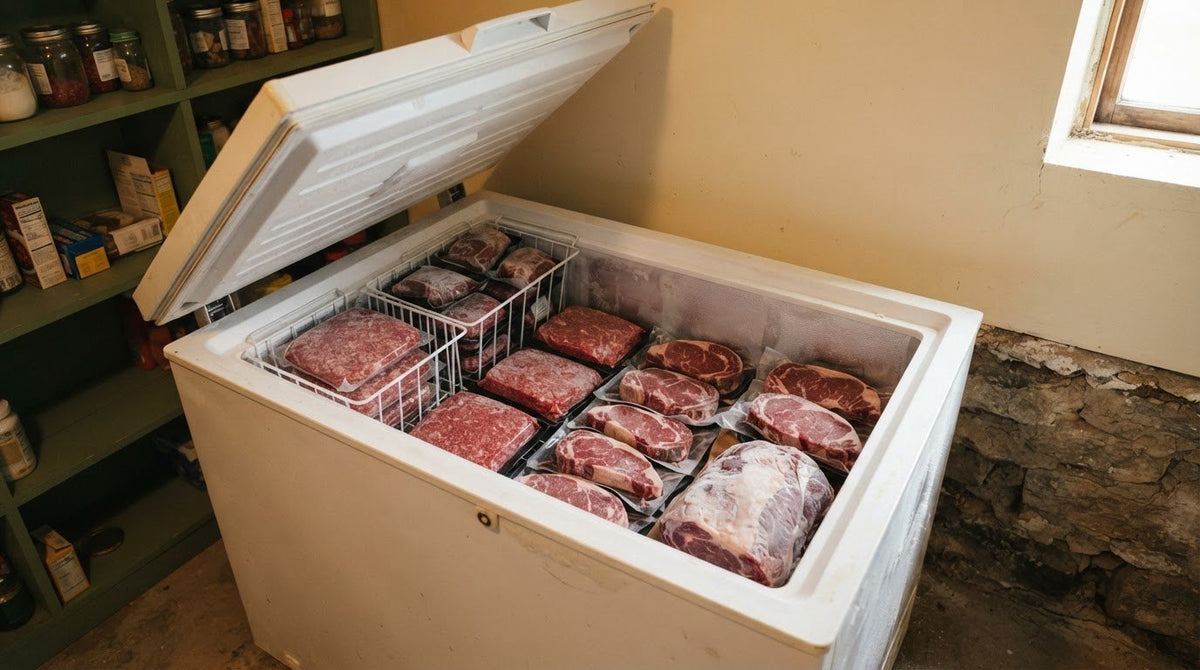
- Learn what pasture-raised, grain-finished beef means and how local USDA-inspected processing fits into its journey to your table.
- Choose between individual cuts, beef boxes, and a Build Your Own box based on how you like to cook and stock your freezer.
- Find out whether Friday delivery reaches your part of Benzie, Leelanau, or Grand Traverse County, and how to plan around the order deadline.
- See how frozen delivery, local pickup, and simple storage choices can help you keep beef ready for future meals.
Where Does Fowler & Valley Farms Beef Come From?
Our beef comes from cattle raised on our family farm in Honor, Benzie County, Michigan. We raise them on pasture and grain-finish them. These terms describe different parts of how the cattle are raised. Pasture-raised refers to their time on pasture, while grain-finished describes the finishing stage. We don’t describe our beef as grass-fed or grass-finished.
That distinction is useful when you’re learning about dry aging at home. Dry aging means holding beef under controlled conditions after processing; it doesn’t describe how the animal was raised or finished. Raising practices tell you about the beef before it reaches your kitchen, while aging is a separate choice made later. Knowing the beef’s origin can help you make an informed decision about what to buy and how to use it.
We have our beef processed at a local USDA-inspected processor. Processing takes place close to home, as one step in the journey from our farm to your table. The processor prepares the beef into the cuts and boxes available to households. Our farm is the source of the cattle and their pasture-raised, grain-finished upbringing.
When choosing beef, think beyond the name of a particular cut. Consider how you usually cook, whether you want a mix of cuts for different meals, and whether you’re buying for your household or planning ahead. These practical questions can guide your choice better than selecting a cut simply because it sounds suited to a special technique. Home dry aging requires careful handling and appropriate conditions, so understand the beef’s source before deciding whether to age it yourself.
For everyday meals, a box can make it easier to bring home a range of beef without choosing every item individually. If you’d rather select the cuts yourself, our beef selection is a natural place to explore the options. Either way, the details you can trace are straightforward: cattle raised on our farm in Honor, pasture-raised and grain-finished, then processed locally at a USDA-inspected processor. We believe that kind of plain accounting matters. It gives you a clearer picture of the beef you’re bringing home, whether you plan to cook it soon or are learning what home aging involves.
Which Beef Cuts and Boxes Can You Choose?
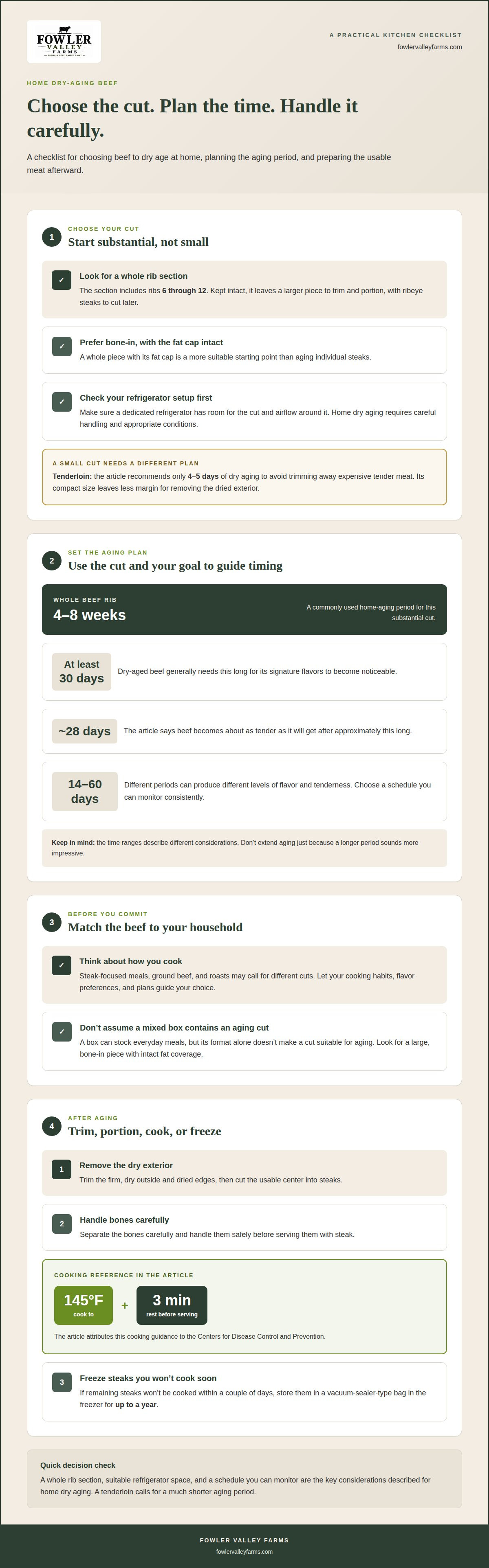
For home dry aging, choose a substantial cut with enough meat left after trimming. A whole rib section is more practical than a small steak. Let your refrigerator space, flavor preferences, and plans for the finished beef guide your choice. A box can stock everyday meals, but its format alone doesn’t make any cut suitable for aging.
- Start with a whole rib section. A whole beef rib section includes ribs six through 12 of the steer. Keeping the section intact gives you a larger piece to trim and portion after aging. It also contains the ribeye, which you can cut into steaks later. A whole, bone-in section with its fat cap intact is a more suitable starting point than separately aging individual steaks. Before choosing one, make sure your dedicated refrigerator has enough room for the cut and airflow around it.
- Match the cut to the time you can manage. A whole beef rib is commonly aged at home for four to eight weeks. Dry-aged beef generally needs at least 30 days for its signature flavors to become noticeable, while beef becomes about as tender as it will get after approximately 28 days. A period of 14 to 60 days can produce different levels of flavor and tenderness. Choose a schedule you can monitor consistently, rather than extending aging simply because a longer period sounds more impressive.
- Keep tenderloin out of a long-aging plan. Tenderloin can be dry aged for only 4-5 days to avoid trimming away expensive tender meat. Its compact size leaves less margin for removing the dry outside after aging. If tenderloin is the cut you prefer, plan around that short period instead of expecting the same flavor development as a whole rib section. The suitable choice depends on the cut’s size and the amount of usable meat you want after trimming.
- Choose a box around your household’s cooking habits. Think about the meals you make before selecting a beef box. A household that regularly cooks steaks may value different cuts than one that mainly prepares ground beef or roasts. If you’re considering aging, don’t assume a mixed box contains a whole subprimal suited to the process. Look for a large, bone-in piece with intact fat coverage. For everyday meals, a range of cuts may be more useful than buying beef solely for an aging experiment.
- Trim, portion, and cook with care. After aging, remove the firm, dry exterior and dried edges, then cut the usable center into steaks. Separate the bones carefully and handle them safely before serving them with steak. The Centers for Disease Control and Prevention says beef should be cooked to 145°F and rested for 3 minutes before serving. If remaining steaks won’t be cooked within a couple of days, store them in a vacuum-sealer-type bag in the freezer for up to a year.
Does Fowler & Valley Farms Deliver to Traverse City, Honor, and Frankfort?
Fowler & Valley Farms offers free Friday local delivery across Benzie, Leelanau, and Grand Traverse counties, including Traverse City, Honor, and Frankfort. Place your order by Thursday for the Friday delivery route. If you’re in Honor, Saturday pickup is another option. These local choices make it easier to plan around your week without a separate trip to collect your beef.
For a Traverse City household, the key detail is the county service area and the Thursday order deadline. Grand Traverse County is included in local delivery, as are Benzie and Leelanau counties. Frankfort and Honor are in Benzie County, while Honor also has the Saturday pickup option. If you live near a county boundary, use the delivery information for the exact local arrangements. Our local beef delivery details explain the practical options for Northern Michigan orders.
Plan how you’ll receive your order before Friday. Choose a time when someone can bring the frozen beef inside and put it away. If you’re in Honor and Saturday pickup suits your schedule better, plan for that option instead. This matters especially if you’re buying beef for your freezer or setting aside cuts for a cooking project. Delivery gets the beef to you; your storage plan determines what happens next.
Michigan buyers may also qualify for free shipping on orders of $150 or more. This is a shipping threshold, separate from the free Friday local delivery service. For nationwide orders, shipping is free on orders of $200 or more. Nationwide orders ship Monday through Tuesday, and the beef travels frozen in insulated boxes with ice packs. That packaging is intended to keep the order frozen in transit, so have freezer space ready when it arrives.
Local delivery suits buyers who want a Friday handoff in the three-county area. Shipping serves customers beyond those counties, while Honor pickup gives local households another option. Choose based on your address, order timing, and ability to receive the beef and put it away promptly. For dry aging, the delivery method doesn’t replace the need for a suitable setup. Keep the beef frozen until you’re ready to prepare it for aging.
Match your order to your calendar: order by Thursday for Friday local delivery, plan around Saturday pickup in Honor, or use shipping for an eligible Michigan or nationwide order. This helps you prepare space for the beef before it arrives. For delivery questions about Traverse City, Honor, Frankfort, or nearby areas, contact Fowler & Valley Farms.
How Should You Store Beef After Delivery?
Put delivered beef in the freezer if you won’t prepare it soon. For home aging, treat refrigerator setup and regular surface checks as essential parts of the process.
-
Prepare a Dedicated Refrigerator
Set aside a dedicated refrigerator for aging rather than using the family fridge for everyday groceries. Clear the interior and place the beef on a clean rack, not directly on a shelf. Keep other foods away from the aging space. A separate fridge makes it easier to control the setup and notice changes around the meat.
-
Set Up Refrigeration and Air Circulation
Position the rack so air can move beneath and around the beef. A rack with holes or slats helps circulation; a low-speed desk fan can gently move air in a dedicated mini fridge. Don’t stack packages or let the cut touch the refrigerator walls. Blocked airflow can create different conditions around the meat.
-
Prepare the Home Refrigerator
Use your regular refrigerator for short-term storage, or move beef to the freezer if you aren’t preparing it soon. Don’t assume an ordinary home refrigerator is suitable for dry aging. An aging setup needs controlled conditions and space around the beef. If the fridge is crowded or opened often, choose frozen storage rather than aging beef at home.
-
Recognize Mold and Surface Changes
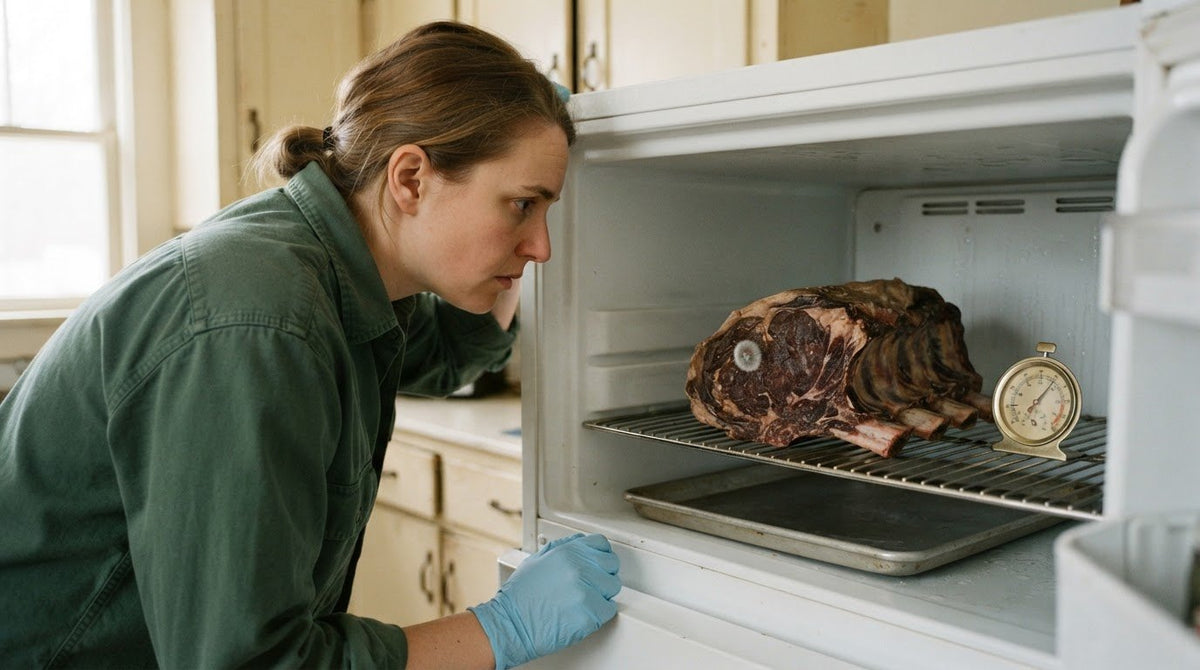
Inspect the meat’s surface and note changes as the aging process continues. By day 21, the outer bark is typically firm and dark. Small white dots may be salts, fat, or mold, so appearance alone can be hard to interpret. Look for changes across the whole cut, and don’t mistake every pale spot for the same thing.
-
Recognize Spoilage and Mold
Stop aging if the beef develops grey, blue, green, or black mold. Black mold is a warning sign: stop the process and disinfect the refrigerator before using it again. Don’t scrape away a concerning patch and continue aging the cut. Avoid adding starter mold or bacteria; use a controlled process instead of trying to introduce surface growth.
-
Set the Recommended Aging Temperature
Set the aging refrigerator between 34°F and 38°F, then keep the reading within that range. A cold-feeling fridge isn’t enough to show that the temperature is controlled. Keep the cut away from warm areas near the door, and avoid frequent door opening. Stable conditions matter for the aged beef throughout its time in the refrigerator.
-
Monitor the Temperature
Place a standalone thermometer inside the refrigerator near the aging space, and read it regularly. Don’t rely only on the appliance dial, because its setting may not reflect the temperature beside the meat. Record readings over time to spot repeated swings. If the temperature leaves the target range, adjust the setting and check it again.
-
Manage Humidity and Airflow
Track humidity as well as temperature, aiming for 80% to 85% during home dry aging. Keep the meat on an open rack, with room for air to reach its sides and underside. Don’t crowd the fridge or block its vents. If humidity or circulation cannot be maintained, stop the aging plan and return the beef to frozen storage.
Understanding what dry aging beef at home involves helps you decide whether the process suits your kitchen, equipment, and cooking plans. Treat it as a deliberate project, not a way to make every cut special. If refrigerator conditions or the meat’s surface raise concern, choose safe storage rather than continuing to age the beef.
As you plan what to cook next, consider whether you want familiar cuts for regular meals or more choice when building a box. Fowler Valley Farms offers a Build Your Own Beef Box, Beef Subscriptions, and Local Delivery, giving you different ways to plan for beef at home. Choose the option that fits your household and the meals you enjoy making.
Good beef deserves thoughtful handling, from choosing a cut to deciding how you’ll use it. Take the next step at a pace that feels right for your table.
Frequently Asked Questions
What Is Dry Aging?
Dry aging means holding beef unwrapped in controlled cold conditions so moisture can escape and natural enzymes can change its texture and flavor. Unlike a steak kept sealed for later cooking, the exposed surface dries into an outer layer that is trimmed before eating. The process takes patience and careful observation. It isn’t simply leaving beef uncovered in an ordinary refrigerator.
What Kind Of Steak Can You Dry Age at Home?
A large, bone-in rib cut is more practical for home aging than an individual steak. It leaves a substantial center to portion after trimming, while a small steak offers little room to remove the dried exterior. If you’re planning a special meal in Michigan, consider your refrigerator space and how much trimming the cut will need before choosing beef to age.
Aging Beef 101: What is the Aging Beef Process and Why is It Important?
During aging, beef develops changes in texture and flavor before cooking. In dry aging, the meat sits exposed in controlled conditions; in wet aging, it remains sealed. The method affects the finished beef’s character and the preparation it requires. For home aging, plan the cut, refrigerator conditions, and trimming together rather than treating them as separate decisions.
How Long Should You Age Meat For?
The right duration depends on the flavor and tenderness you want. Dry-aged steak can be aged for 14 to 60 days, with signature dry-aged flavors generally becoming noticeable after at least 30 days. Longer aging makes the flavor more pronounced, so consider how bold you like your steak before setting a schedule. Use a controlled aging setup throughout, not a calendar alone, to guide the process.
Is Wet-aged or Dry-aged Beef Better?
Neither method is automatically better; it depends on the taste and texture you prefer. Dry aging exposes beef to air and concentrates flavor as moisture leaves. Wet-aged beef stays sealed during aging and retains more moisture. Wet-aged beef is kept sealed under controlled conditions during aging. Choose dry aging for its distinct, concentrated character, or wet aging if that profile suits your cooking.
Is it really that easy?
Not quite. The basic idea is simple, but a home setup needs steady temperature, suitable humidity, and airflow around the beef. A shared refrigerator can be harder to control because its door opens for everyday food and the space serves several purposes. The same principle applies in Northern Michigan: begin only if you can maintain and monitor conditions throughout the aging process.
What Causes Flavor Change?
As moisture leaves the beef and natural enzymes act on its muscle, the flavor changes. The drier surface and concentrated meat create a different taste from fresh beef, while the time spent aging affects how pronounced that character becomes. Trimming matters too: remove the dry outer layer before cooking to reveal the portion you intend to eat. The result depends on the cut and aging conditions.
What is dry-aged beef and how does dry aging work?
Dry-aged beef is held unwrapped in controlled conditions while its surface loses moisture and its texture and flavor develop. Air circulates around the cut during aging; afterward, the dried exterior is trimmed away and the remaining beef is portioned for cooking. Understanding what dry aging beef at home involves means accounting for the setup, observation, and trimming, not just choosing a steak.