Leelanau County Beef for the Freezer: Choosing a Beef Box
A whole animal’s weight isn’t the amount of beef that ends up in your freezer. In Northern Michigan, from Traverse City to Leelanau County, the cut list and how the beef is trimmed shape what you actually bring home.
It’s reasonable to want a clear picture before making room in the freezer. This guide explains the different weights and why they vary, then covers how cut choices, trimming, and vacuum sealing affect the beef you receive.
You’ll also see how a beef box differs from buying a whole animal, so you can choose an amount and mix of cuts that fit your household. No weight guesswork, just a clearer understanding of what the terms mean and what to expect in the freezer.
Key Takeaways
- Learn why live weight, hanging weight, and finished take-home weight describe different stages, not the same amount of freezer-ready beef.
- See how cut choices and trimming shape the mix and final weight of the beef you bring home.
- Understand what vacuum sealing means for individual cuts and how to handle frozen beef safely.
- Get a clearer sense of whether a beef box or a custom selection better suits your household’s freezer and cooking habits.
- Find out how local delivery connects households in Leelanau County and nearby Northern Michigan communities with beef boxes.
What Arrives Ready for Your Freezer?
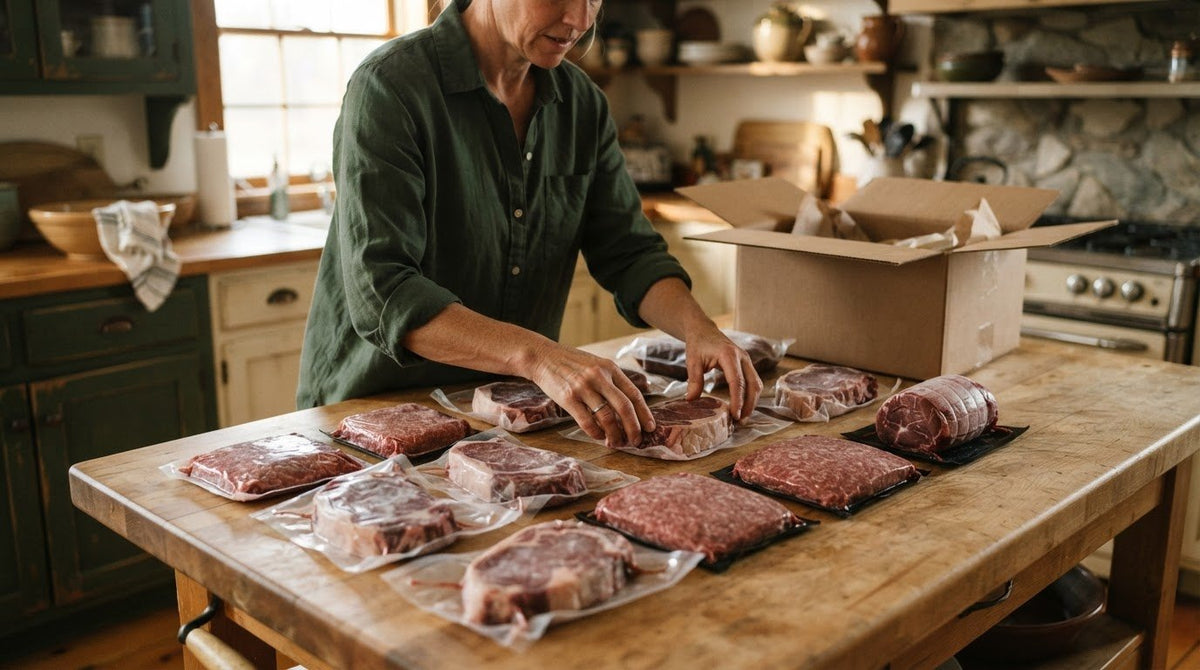
Freezer-ready beef arrives as individual cuts, not as one large piece of meat. A package might hold ground beef for a weeknight meal, while another holds a roast for a slower Sunday supper. For households choosing Leelanau County beef for the freezer, the cut names, package sizes, and amount of trimming shape what fits their cooking plans and freezer shelves.
Boneless cuts have had the bones removed before packaging. Examples include boneless roasts and steaks; ground beef is packaged separately. The cut list matters because a freezer order is useful when its contents suit the meals you actually cook. One household may reach first for ground beef; another may prefer steaks and roasts.
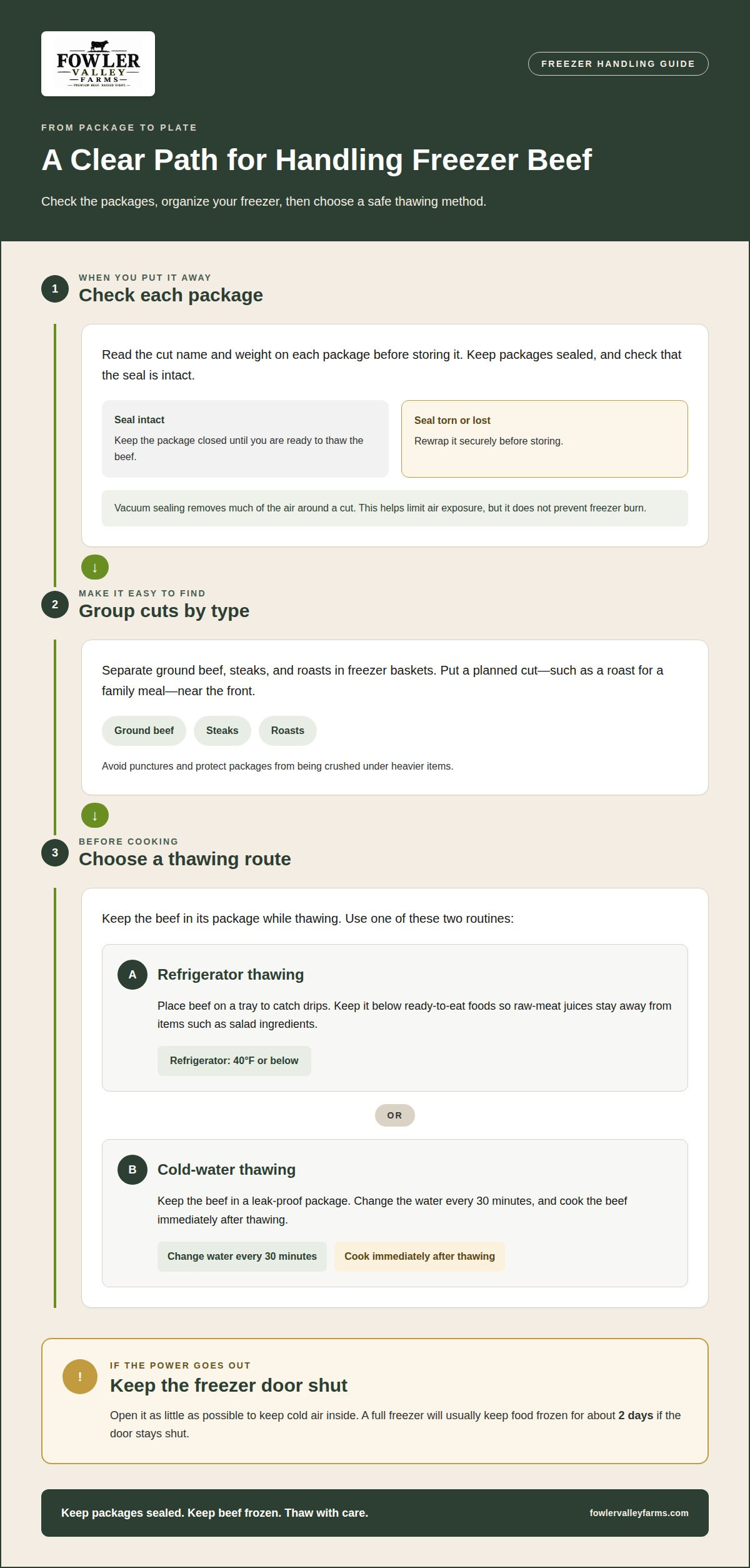
Vacuum-sealed packaging removes much of the air around each cut before sealing the plastic. This close fit helps limit air exposure, a major contributor to freezer burn, but it doesn’t prevent storage damage. Keep packages sealed, avoid punctures, and store them so the meat stays frozen rather than repeatedly warming and refreezing.
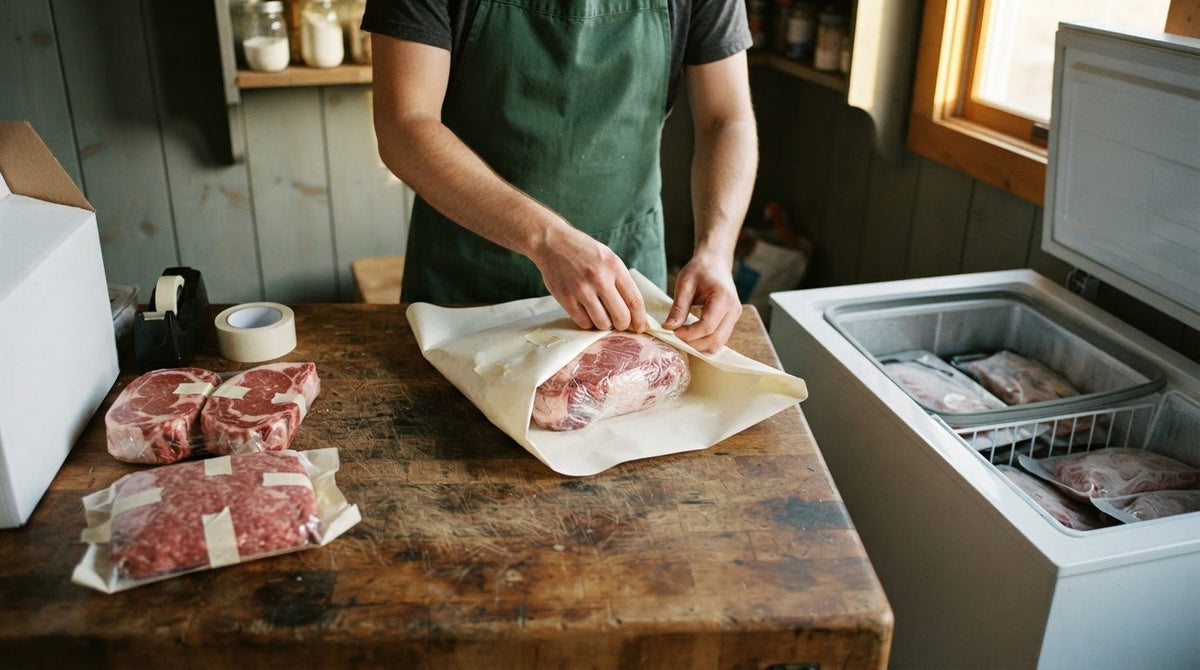
Check each package before putting it away. A cut name and weight help you identify the contents without opening the seal. Grouping ground beef, steaks, and roasts in separate freezer baskets also makes rotation easier. For example, keep a roast near the front if you plan to thaw it for a family meal.
- Boneless cuts: Meat packaged without bones, such as a boneless roast or steak.
- Vacuum sealing: Tight packaging that removes much of the air around a cut.
- Freezer burn: Dry, discolored patches caused by air reaching the meat, which can affect quality.
Packaging and handling matter after the meat is frozen, too. Keep packages closed until thawing and use a freezer that holds a steady temperature. If a package is torn or has lost its seal, rewrap it securely before storing. A sturdy freezer container can protect packages from being crushed under heavier items.
For safe refrigerator storage, the U.S. Department of Agriculture, Food Safety and Inspection Service says the refrigerator temperature should be 40 °F or below. Put thawing beef on a tray to catch drips, and keep it below ready-to-eat foods. This placement helps keep raw-meat juices away from items like salad ingredients.
Cold-water thawing calls for a different routine. According to the U.S. Department of Agriculture, Food Safety and Inspection Service, change the water every 30 minutes and cook the food immediately after thawing. Keep the beef in a leak-proof package during this process, rather than letting water touch the meat directly.
For a power outage, leave the freezer door shut as much as possible. A freezer full of food will usually keep food frozen for about 2 days if its door stays shut, according to the U.S. Department of Agriculture, Food Safety and Inspection Service. Opening the door repeatedly lets cold air escape and makes it harder to keep the contents frozen.
Comparing local freezer beef starts with the farm’s stated breed, feed, animal age, and processing practices. Look for clear descriptions of each, including whether beef is pasture-raised, grain-finished, and processed by a local USDA-inspected processor. Those details help you understand how the beef is raised and handled before it reaches your kitchen.
There isn’t one butcher shop that processes beef for every Leelanau County farm. Processing is arranged farm by farm, so the relevant shop is the processor named in that farm’s order information. The processor and cut-and-wrap arrangement affect how the meat is prepared, packaged, and labeled for the buyer.
When ordering freezer beef, first distinguish packaged cuts from an animal share. Deposits and lead times depend on the arrangement. A ready-to-order box differs from beef scheduled for processing as a whole, half, or quarter animal: the first contains finished packages, while the second involves coordinating custom processing.
Freezer capacity depends on the finished take-home amount, the cut mix, and how the packages stack. A quarter, half, or whole beef doesn’t translate into a dependable freezer-size estimate without its final packaged weight. Check the usable space on your shelves and account for other frozen food. Packaged orders can make planning more manageable when freezer space is limited.
For Leelanau County households, local delivery and farm pickup are distinct options. Free Friday delivery is available in Leelanau, Benzie, and Grand Traverse counties for orders placed by Thursday; Saturday pickup is available in Honor. These arrangements let you receive packaged beef without planning a processor pickup.
When comparing ways to buy beef, consider whether you want a set package or a custom animal share. A set package has a defined selection that’s easy to organize in your freezer. A custom share requires planning around processing choices and finished yield. Knowing which format suits your household makes the next decision clearer.
Local households looking for individual cuts can also browse individual beef cuts.
How Cutting and Processing Affect Take-Home Beef Weight
Live weight, hanging weight, and finished take-home weight describe different stages of processing. None represents the same amount of packaged beef.
Custom processing fees and cut-and-wrap choices in Northern Michigan vary by processor and the work requested. There is no single rate or option list for every order.
Processing Fees and Cut-and-Wrap Options
Cut-and-wrap means turning a carcass into selected cuts and packaging them for storage. The choices matter: steaks, roasts, ground beef, and trimming instructions affect the final mix and usable meat. Processing fees can depend on the work requested, so one order’s fee shouldn’t be assumed to cover another processor’s services.
A cut sheet records preferences such as steak thickness, roast size, and how much trim becomes ground beef. Asking for more ground beef changes how the available meat is divided among packages. The cut sheet guides the finished order, but it can’t add beef or restore weight removed during processing.
Hanging Weight
Hanging weight is the weight of an animal’s dressed carcass after slaughter and initial preparation. It is neither the animal’s live weight nor the final weight of packaged meat. The hide, head, organs, and other parts removed before weighing aren’t included.
Hanging weight is often used as the basis for a whole, half, or quarter beef arrangement. It includes bone and may include fat that is later removed during cutting and trimming. It describes one stage of processing, not how many pounds will fit in a buyer’s freezer.
A bone-in roast and a boneless roast from the same carcass can have different packaged weights because the bone is removed from one. The amount of fat trimmed also affects the final weight, as does whether suitable trim is kept for ground beef.
Live Weight Versus Take-Home Beef Weight
Live weight is the animal’s weight before slaughter. It includes parts that won’t become packaged beef, such as the hide and organs. The difference between live and hanging weight reflects what is removed before the carcass is weighed.
Finished take-home weight comes later. Cutting removes bones when boneless cuts are chosen, and trimming removes selected fat. Some trim may become ground beef. Because cut instructions influence the final mix, estimating freezer-ready meat with a simple calculation from live weight can be misleading.
Think of the process as three distinct measurements:
- Live weight: The animal’s weight before slaughter, including parts not sold as packaged beef.
- Hanging weight: The dressed carcass weight before cutting and wrapping.
- Take-home weight: The packaged cuts remaining after bones and selected trim are removed or used.
These stages explain why 1,300 pounds of live weight doesn’t mean 1,300 pounds of steaks, roasts, and ground beef. The cut list, bone-in or boneless choices, and trimming preferences all affect the finished packages. Treat each figure as a separate point in the process, not a direct measure of what you’ll carry home.
Share Contents and Meat Yield
A quarter or half share represents a portion of an animal, with the resulting cuts divided among buyers or assigned to one buyer. Depending on the cut instructions and how the carcass is divided, the finished mix may include steaks, roasts, and ground beef.
There isn’t one fixed take-home weight for every share. Carcass size, bone-in choices, trimming, and the cut mix all affect the yield. Before planning freezer space, distinguish quoted hanging weight from final packaged weight. A cut sheet can also clarify which cuts are included.
Michigan Inspection and Labeling
For the packaged beef discussed here, processing takes place at a local USDA-inspected processor. Package labels identify the contents, helping you distinguish cuts such as steaks, roasts, and ground beef as you organize your freezer.
Keep the package names with your cut list as you put the order away. That gives you a useful record of what’s available for meals and avoids confusing the carcass’s hanging weight with the combined weight of the packaged cuts.
If you’re comparing finished cuts rather than a carcass share, browse packaged beef box selections to see options based on ready-to-order beef.
Beef Delivery in Leelanau County and Northern Michigan
We help households in Leelanau County choose packaged beef that suits their freezer and meal plans. Our beef boxes, Build Your Own Beef Box, subscriptions, and local delivery offer different ways to order without buying a whole animal.
A beef box can make more sense than a whole, half, or quarter share when you want packaged cuts without planning around carcass weight. Available box sizes include 10 lb and 15 lb options, so you can consider the amount of freezer space you have and how quickly your household uses beef. That’s a different decision from estimating take-home yield from hanging weight.
With our Build Your Own Beef Box, you select cuts to suit your preferences. You might prioritize ground beef for weeknight meals or choose a different mix to match the way you cook. Selecting packaged cuts keeps the decision focused on what you’ll store and use, rather than an animal’s live or hanging weight.
Our Beef Boxes offer a set selection if you’d rather not choose each cut. Think about your regular cooking rhythm: ground beef may suit quick dinners, while roasts work well for meals planned ahead. Compare the box’s packaged contents and weight, not a carcass-weight estimate for a custom share.
Subscriptions suit households that want recurring beef orders rather than choosing a new box each time. Our Subscribe & Save option includes 10% off. A subscription is worth considering when beef is a regular part of your shopping routine; a single box may fit better when you’re stocking a freezer for the first time or buying occasionally.
We offer local delivery from our farm in Honor to households across Leelanau, Benzie, and Grand Traverse counties, including Traverse City and Frankfort. Free Friday local delivery is available in those counties for orders placed by Thursday. Saturday pickup in Honor gives nearby households another way to receive an order.
Plan delivery or pickup around your freezer restock. Before a Friday delivery or Saturday pickup, make room for the order and decide where to group the packages. Keep ground beef together, for example, and leave a clear spot for roasts. Organizing the freezer makes cuts easier to find, especially when it already holds other food.
For a Leelanau County household choosing beef for the freezer, the practical question is how you want to buy: a set box, a box tailored to your preferences, or recurring orders. None requires estimating how much packaged meat a whole animal will yield. You choose a boxed beef option, with the cut mix and amount determined by your order.
Place local delivery orders by Thursday for Friday delivery. That cutoff gives you a clear point for planning meals and freezer space. Saturday pickup in Honor is another option. Households outside the local delivery counties can also order nationwide; we ship orders frozen in insulated boxes with ice packs.
Our local delivery details can help you decide whether Friday delivery or Honor pickup suits your household. We offer these arrangements for Northern Michigan customers.
For many households, the right starting point is a box that matches the space available and the cuts they expect to cook. A 10 lb or 15 lb box gives you a defined packaged amount to plan around, while our Build Your Own Beef Box lets you shape the selection. Subscriptions make sense when you want recurring orders; we make receiving beef straightforward with local delivery across Leelanau, Benzie, and Grand Traverse counties.
For help choosing one of our Beef Boxes or arranging local delivery, contact us.
Choose a Freezer Plan That Fits Your Table
Choosing Leelanau County beef for the freezer is a chance to plan how you’ll cook in the weeks ahead. Think about the meals your household returns to, the cuts you reach for, and whether you prefer choosing a box once or setting up recurring orders. A Build Your Own Beef Box lets you guide the selection, while beef subscriptions suit households looking for recurring orders. Local delivery serves Leelanau and nearby Northern Michigan communities.
You don’t need to fill every shelf at once. Start with the option that feels manageable for your household, then adjust your approach as you learn which cuts get used first. A well-chosen freezer order should make everyday cooking feel more prepared, not more complicated. We’re glad to help you find a good fit.
Here’s to a freezer stocked with cuts you’re happy to bring to the table.
Frequently Asked Questions
If I buy a Whole Beef, will I get 1,300 pounds of meat?
No. A 1,300-pound live weight is not the amount of packaged beef you take home. The live animal includes parts that aren’t sold as meat, and processing changes the weight again. For freezer planning, focus on the finished, packaged weight rather than the live-weight figure. A box of packaged cuts offers a defined amount to plan around without estimating a whole animal’s yield.
What Can You Freeze?
You can freeze beef cuts and ground beef, along with many other foods suited to freezer storage. For a practical example, divide a large batch of cooked chili into meal-size containers before freezing, rather than storing it in one deep container. For best quality at 0 °F, uncooked beef roasts keep for 4 to 12 months, and ground beef for 3 to 4 months.
Which farms in Leelanau County, Michigan sell beef by the quarter, half, or whole?
We offer packaged beef to households in Northern Michigan, including Leelanau County. Options include Beef Boxes and individual cuts, rather than whole-animal shares. Choose packaged meat without coordinating a shared purchase or planning around carcass yield. Select a box or cuts based on your freezer space and the meals you have in mind.
What freezer capacity is needed for a quarter, half, or whole beef?
There is no dependable freezer-size estimate without knowing the finished packaged weight. Capacity depends on the cut mix and how packages stack, so check usable shelf space and account for food already stored. Packaged orders can make planning easier.