Regenerative Agriculture for Livestock: Cattle, Grazing and Land
Cattle can help grassland recover or wear it down; management makes the difference. For readers in Traverse City and across Northern Michigan, understanding what regenerative agriculture for livestock is starts with how farmers manage animals and land over time.
Cattle grazing, movement, and manure all affect the land. This guide explains what regenerative agriculture for livestock means, how managed grazing works, and how livestock can influence soil, plants, and the wider environment. The right approach depends on the land and forage available.
Key Takeaways
- Understand why cattle can support grassland health or damage it, depending on grazing management.
- Learn how rotating herds and allowing pasture recovery help balance forage use with plant growth.
- See how manure, grazing, and crop integration can influence soil nutrients and farm inputs.
- Recognize why regenerative agriculture has no single definition or fixed recipe for every farm.
- Explore how land conditions, forage, and livestock needs shape the practices used on a working farm.
What is the Role of Cattle in Regenerative Agriculture?
Cattle are one part of regenerative agriculture: their grazing, movement, and manure affect pasture and soil. Their impact depends on stocking pressure, recovery time, and the condition of the land.
Regenerative Grazing Management
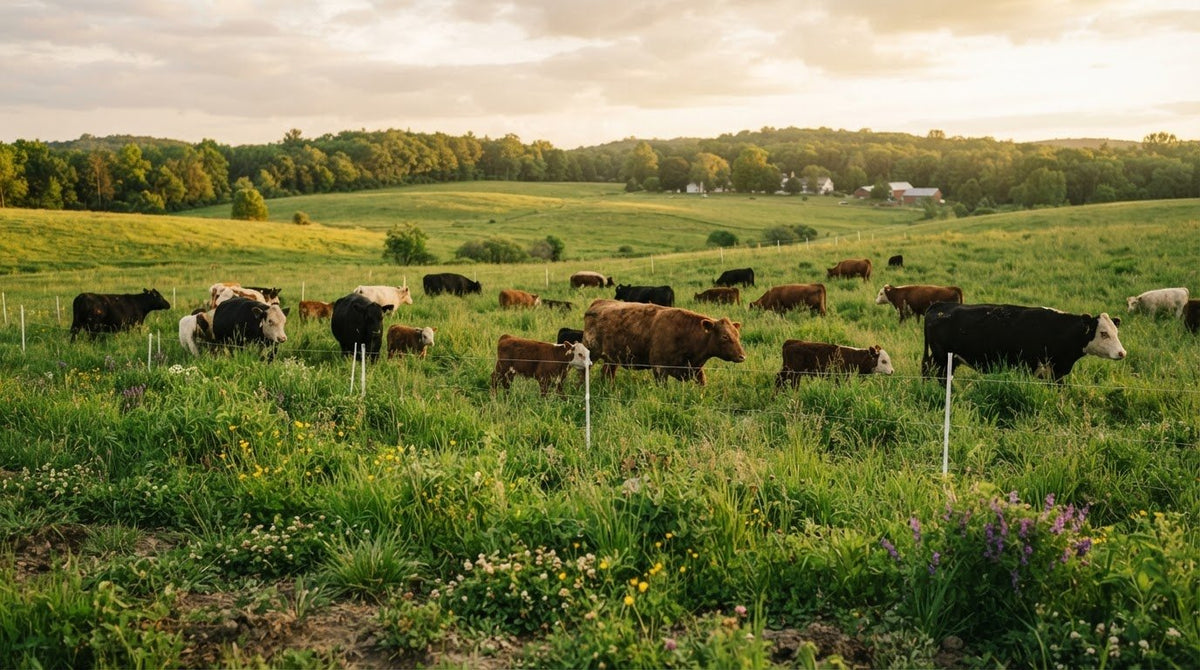
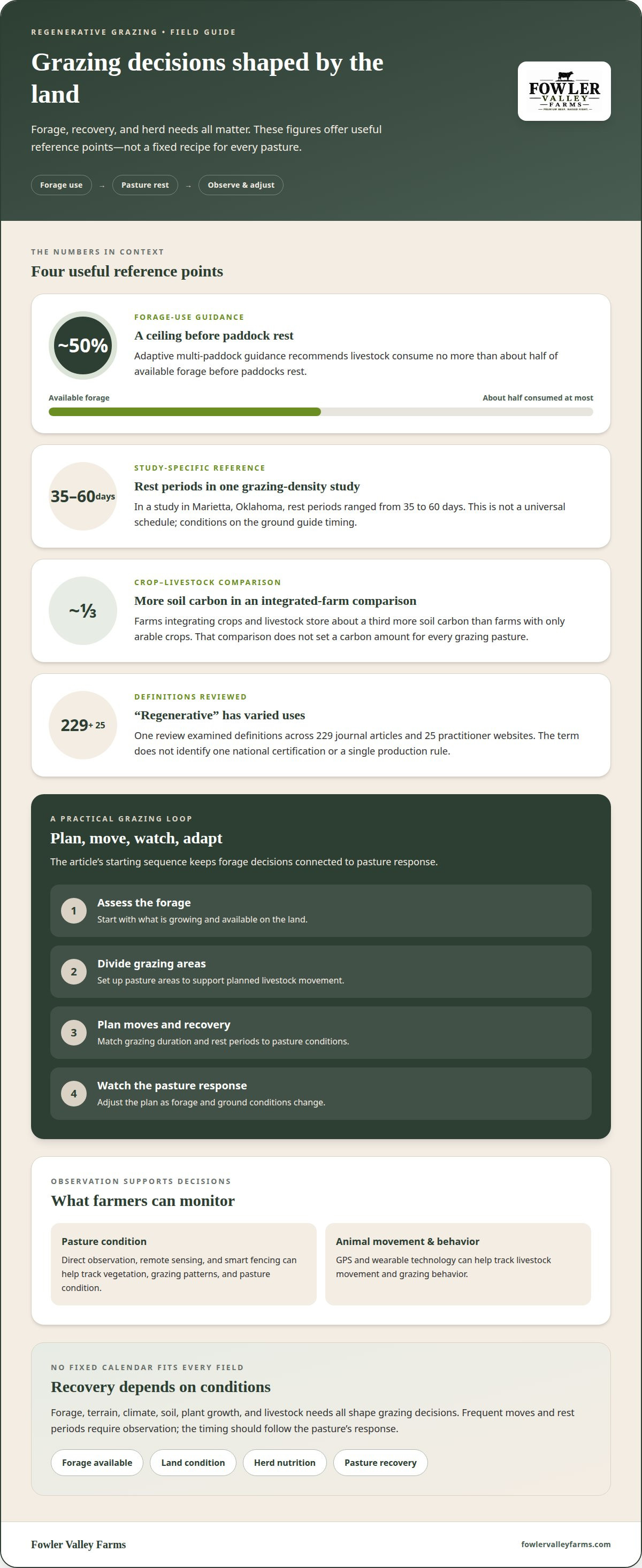
Regenerative grazing manages livestock movement and forage use to support land recovery and farm production. Cattle, sheep, and goats graze pastures; pigs and poultry can also fit into integrated systems when management suits the land. Rotational grazing moves animals among pasture areas, while management-intensive grazing uses frequent moves and planned recovery periods. To begin, assess forage, divide grazing areas, plan moves, and adjust based on how the pasture responds.
Pasture Monitoring and Rest
Pasture monitoring combines direct observation with tools that track vegetation and livestock movement. GPS, remote sensing, and smart fencing can help farmers see grazing patterns and pasture condition; wearable technology can track animal movement and grazing behavior. Management also depends on leaving enough forage for recovery. Adaptive multi-paddock guidance recommends livestock consume no more than about 50% of available forage before paddocks rest. Conditions on the ground guide the timing.
Livestock Grazing and Soil Health
Grazing affects soil through plant removal, hoof pressure, and manure. Manure returns nutrients, while well-managed grazing can leave plant material as soil-covering thatch. These processes can support soil health and plant, animal, and microbial diversity, but excessive pressure can damage the ground. Research on grazing density has found that higher stocking densities can increase soil bulk density and resistance to penetration while reducing water infiltration. This is why stocking density needs to suit the site.
Carbon Storage and Its Limitations
Soil carbon storage depends on vegetation, management, and local conditions, so grazing has no single reliable storage figure. Farms integrating crops and livestock store about a third more soil carbon than farms with only arable crops, but that comparison does not establish a carbon amount for every grazing pasture. Any gains depend on continued land management, while soil, climate, and plant growth all shape the outcome. Carbon is one measure of land health, not the only measure of success.
Livestock care is part of the grazing plan. Regenerative grazing uses short-duration, higher-intensity grazing and appropriate rest periods to help plants recover. It often involves high stock densities, frequent rotation, and long paddock recovery periods, with timing adapted to pasture conditions. The article recommends meeting cattle’s nutrient needs through grazing management, a planned production cycle, and supplementation when needed. This connects forage decisions to animal needs instead of treating pasture recovery and cattle nutrition as separate tasks.
When managed through regenerative grazing, livestock can build soil health, reduce nutrient loss and farm inputs, and diversify farm income. Monitoring can support those decisions: wearable technology can track livestock movement, health, stress, vital signs, and grazing behavior. In the Marietta, Oklahoma, grazing-density study, rest periods ranged from 35 to 60 days. That range is a study-specific reference, not a universal schedule; the appropriate recovery period still depends on conditions on the ground and the plan for the herd.
What is Regenerative Grazing?
Regenerative grazing manages livestock and forage to support soil and ecosystem health, as well as farm resilience. The balance comes from adapting grazing to the land rather than following one fixed recipe.
Balancing Productivity and Land Health
Balancing productivity with land health means meeting livestock needs while preserving the plants and soil that feed them. Perennial and annual forages support grazing, while manure returns nutrients to farmland. Farmers adjust grazing, production cycles, and supplementation to meet animals’ needs. Forage condition affects both herd performance and the land’s ability to keep producing.
Compared with feedlots, grazing systems rely more directly on pasture for livestock feed. Conventional grazing varies in animal movement and recovery time, while regenerative management emphasizes observation and adaptation rather than a universal schedule. Forage, terrain, and climate shape each farm’s approach. Grazing can also connect livestock and crop production through feed and manure.
Soil and Ecosystem Health
Healthy soil supports ecosystem processes by sustaining plant growth and organisms living in the ground. Regenerative grazing uses livestock on perennial and annual forage, with management shaped by the needs of the land and animals. Historically, crops and livestock were closely connected: animals grazed feed crops and deposited manure on the same land. That relationship can return nutrients to farmland.
No-till farming limits soil disturbance, while grazing management affects plant cover and forage use. In the United States, no-till is used on about 37% of cropland. That figure describes no-till adoption, not the outcome of regenerative grazing. Integrating crops and livestock can help close nutrient loops and reduce reliance on external inputs, though fertilizers or other inputs may still be needed.
Plant Diversity and Soil Health
Plant diversity means a pasture contains different kinds of vegetation rather than relying on a single forage. A varied stand can offer livestock different feed sources and support a wider range of organisms. Mob grazing is one example: animals graze an area briefly, then move so plants can recover. Timing and intensity depend on pasture conditions.
The term “regenerative” does not identify one national certification or production rule. A review examined definitions across 229 journal articles and 25 practitioner websites, showing varied use of the term. Regulations remain distinct from voluntary production claims. Costs, labor, and potential returns depend on the farm’s land, fencing, water access, and grazing plan. Frequent moves require observation and work, while improved forage use or diversified farm income may help support returns.
Environmental effects of managed livestock
Livestock affects soil, nutrient movement, and the wider food system through grazing and manure management. Outcomes depend on how farmers respond to pasture, soil, and animal needs.
Adaptive Management Through Observation
Adaptive management means adjusting grazing and nutrient plans as farm conditions change. Rainfall, forage growth, and animal needs shift through the year, so farmers can observe plant cover, bare ground, and manure distribution, then adjust livestock movement or recovery periods. Soil tests add another useful measure by showing nutrient levels that visual pasture checks cannot reveal.
Testing helps guide decisions before fertilizer is applied or collected manure is spread. Soil results, for example, can indicate whether a field needs added nutrients or whether manure can supply them. Matching applications to field conditions helps manage nutrient loss and avoids treating every pasture alike. Repeated observations during grazing help keep the plan responsive as plant growth and soil conditions change.
Intentional Management and Inputs
Intentional management uses grazing, manure, and purchased inputs according to a farm’s needs. Regenerative livestock practices do not automatically eliminate supplemental feed, fertilizer, or herbicides. A farmer can assess forage and soil, use grazing or manure where suitable, and retain other inputs when needed. The goal is thoughtful use, not an unsupported promise that inputs will disappear.
Crop and livestock integration can create a nutrient loop: crops provide feed, animals consume it, and manure returns nutrients to farmland. Where crop fields and grazing areas work together, manure collection and placement can direct nutrients to suitable ground. Separate operations may instead require manure hauling or imported synthetic fertilizers. Feed, animals, and soil management are connected parts of the food system.
Risks and Drawbacks of Regenerative Practices
Regenerative livestock practices carry risks when grazing pressure exceeds what plants and soil can support. Heavy pressure can compact soil and reduce water infiltration, while poorly timed grazing can leave forage without enough recovery. These risks make observation and adjustment essential, especially when pasture growth slows. A fixed grazing schedule may not suit changing conditions across a farm.
Labor and inputs also involve trade-offs. Frequent livestock moves require planning, while fencing, water access, and soil testing add work. Farmers may still need supplemental feed or fertilizer during difficult periods. Evaluating forage condition, animal nutrition, soil results, and nutrient placement together helps reveal where a practice fits. Ongoing assessment lets farmers adjust management as land and livestock needs change.
Regenerative grazing relies on observing the farm and adapting management to its needs, rather than following a fixed formula. Manure collection systems can help farmers manage manure and spread it in appropriate areas to improve soil health and reduce waste. As fields have become more monocropped, farm operations have increasingly broken nutrient loops, requiring manure hauling or imported synthetic fertilizers.
A Marietta, Oklahoma, grazing-density study examined soil impacts over 10 years. Pig farming accounts for 0.3 percent of total greenhouse gas emissions in the United States. About 29% of U.S. land is classified as grassland pasture and rangeland.
Definitions and practices of regenerative agriculture
Regenerative agriculture has no single definition shared by every farmer or organization. For livestock operations, the practical question is which practices build land health and how farmers assess their effects.
Definitions of Regenerative Agriculture
Regenerative agriculture describes farming intended to rejuvenate agricultural landscapes and communities, rather than merely sustain or degrade them. The definition matters because the term can describe different practices across different operations. A review examined definitions in 229 journal articles and 25 practitioner websites, showing how varied the language can be. Readers can look beyond a label and consider the land, practices, and outcomes being described.
Some definitions emphasize soil health; others also include farm profitability, human health, ecosystem health, or community resilience. These aims can be connected, but they are not identical. A farm, for example, may describe rotational grazing as regenerative because it moves cattle between pasture areas. That practice alone does not explain how long each area rests or how the farmer judges pasture recovery.
A clear description names the practice and its purpose. It might explain how livestock use forage, how manure returns nutrients, or how the farm limits tillage. This distinguishes a specific management choice from a broad claim about the whole operation. It also gives readers a practical way to understand what the term means on a particular farm.
Regenerative Practices for Livestock
In livestock farming, regenerative practices manage animals and land together to support soil, forage, and ecosystem health. Cattle, sheep, goats, and other species affect land differently through grazing, trampling, and manure. The right approach depends on the operation’s terrain, climate, forage base, and production goals. There is no fixed recipe for every farm.
Practices can include moving livestock among grazing areas, allowing plants time to recover, and matching herd needs to available forage. Animals can harvest grass, trample plant material into ground-covering thatch, and return nutrients through manure. Mob grazing is one example: a group of animals grazes an area briefly, then moves so vegetation can regrow. Timing and intensity depend on pasture conditions, not a universal calendar.
Regenerative livestock systems may also connect grazing with crops. Historically, animals grazed land that produced their feed and deposited manure there, linking crop and livestock operations. Today, farms can use manure as a nutrient source and manage tillage and synthetic inputs according to field needs. Regenerative production is often practiced with low or no synthetic inputs or tillage, but that does not mean every farm eliminates them.
To understand a farm’s approach, consider how its practices work together: how animals access forage, how land recovers, and how nutrients move through the operation. One grazing method is only part of the picture. The broader question is whether decisions work together across the farm and respond to the needs of the land, livestock, and food system.
What is regenerative agriculture for livestock?
Regenerative agriculture for livestock manages animals and farmland with the aim of improving land health while supporting a productive farm. It isn't one grazing method or a promise that every input disappears. The defining idea is active stewardship: farm decisions respond to local conditions and consider how today’s choices affect future production.
That starts with fit. Cattle should suit the operation’s terrain, climate, and forage base, because those conditions shape what they can eat and how they use pasture. A 1,200-pound cow generally has lower forage consumption and maintenance requirements than a 1,500-pound cow, while the larger cow will usually wean a bigger calf.
Productivity also depends on a planned production cycle, not weight alone. One example of a productive cow is an animal that can calve every 365 days and get bred within the first 30 days of breeding season. Farmers can select animals that hold condition and raise good calves relative to the herd. Those choices connect animal performance to available feed and the demands placed on the land.
In practice, regenerative management brings several decisions together: how livestock meet nutrient needs, how forage is used, and how the operation responds to changing conditions. Grazing can provide the main feed source, with supplementation when needed. Crop and livestock integration can return manure nutrients to farmland and connect feed production with animal care. The mix depends on the farm’s land, crops, herd, and production plan.
Results should be judged across more than one measure. Farmers can consider whether cattle maintain condition, whether forage remains available, and whether soil and plant cover support future grazing. Crossbred cows produced 30% more cumulative calf weaning weight, 511 pounds, than purebred Hereford, Angus, or Shorthorn cows in a 12-year experiment. That result illustrates how animal selection can affect production, but it does not prescribe one breed for every operation.
To understand a livestock operation, consider how its choices work together over time. The animals, land, and farm’s production needs all matter. Viewing them as a connected system offers a more useful measure of stewardship than relying on a single practice or label.
Fowler & Valley Farms: Build Your Own Beef Box
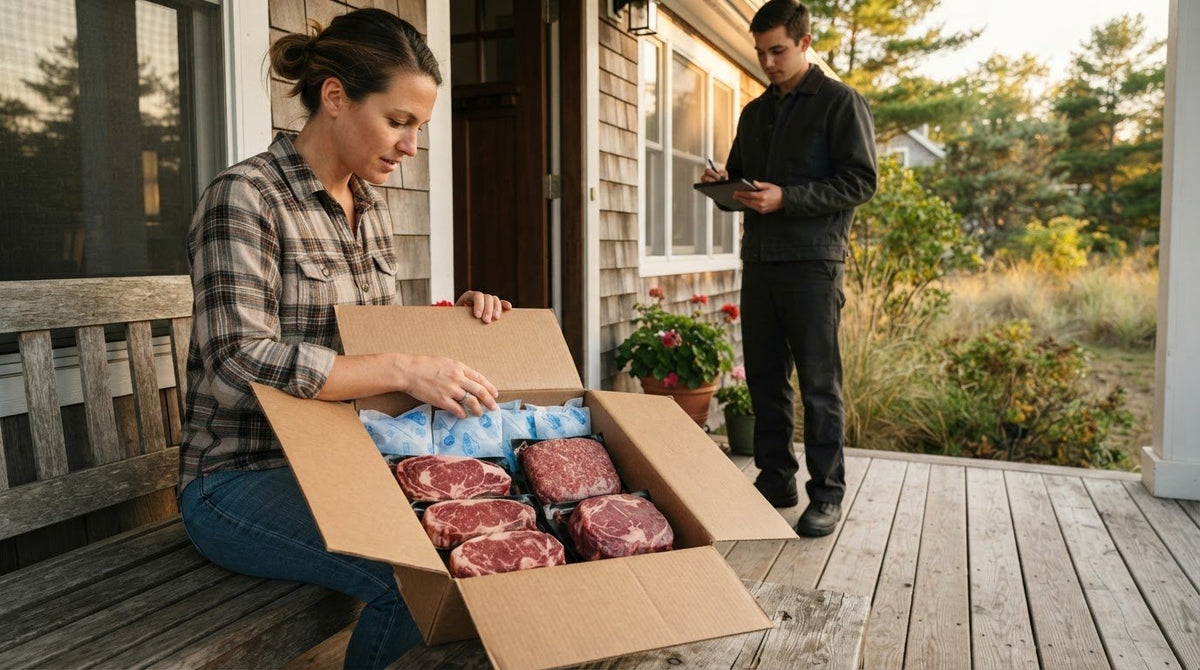
Fowler Valley Farms offers a Build Your Own Beef Box for households choosing beef for their table. Understanding how livestock management connects cattle, pasture, and soil can inform your next practical choice: selecting beef for home meals in a format that fits your needs.
Choose Beef Boxes for a ready-made option, or use the Build Your Own Beef Box to select your order. Beef Subscriptions provide a recurring purchasing option, and Local Delivery is available for orders. These options make it easier to bring beef into your household routine without confusing a buying decision with the separate work of evaluating farm practices.
For details about beef options, visit fowlervalleyfarms.com.
Let Your Next Choice Reflect Your Values
Understanding what regenerative agriculture for livestock means can help you ask clearer questions about how food is raised and what caring for land looks like in practice. Keep that curiosity with you. Decisions about grazing and soil begin on farms, but they also shape how households connect with the food on their tables.
If you’re ready to bring that connection closer to home, Fowler Valley Farms offers a Build Your Own Beef Box, Beef Subscriptions, and Local Delivery. Choose the buying option that fits your household and take the next step at your own pace.
Contact Fowler Valley Farms to continue the conversation. Thoughtful food choices start with honest questions, and every step toward understanding is a good one.
Frequently Asked Questions
What is soil health?
Soil health is the soil’s ability to support plants, animals, and the surrounding ecosystem. On a working pasture, signs to observe include living roots, plant cover, earthworm activity, and soil that absorbs water rather than leaving it standing or running off. No single sign tells the whole story. Farmers consider these observations alongside forage growth and soil test results.
What are the core principles of regenerative livestock farming?
Core principles include caring for soil, keeping living plants and roots in the ground, managing livestock to suit available forage, and returning nutrients through manure where appropriate. For example, a farmer might adjust grazing after a dry spell, when pasture growth slows, instead of keeping the same movement schedule. Regenerative management also considers animal needs and farm viability, since land stewardship must work alongside a functioning livestock operation.
How does rotational grazing work, and what are its benefits?
Rotational grazing divides pasture into areas and moves livestock between them instead of letting animals graze the same ground continuously. A farmer, for example, may move cattle after they have used the available forage in one area, then let that pasture regrow while the herd grazes elsewhere. This can help distribute grazing and manure more evenly and reduce repeated pressure on plants. Results depend on timing and pasture conditions.
What U.S. standards, certifications, or regulations apply to regenerative livestock farming?
Regenerative agriculture has no single national certification or production rule. Regulations are distinct from voluntary production claims.