Questions to Ask a Local Beef Farmer Before You Buy
Processing isn’t always included in the beef price. Local producers may charge a flat per-pound fee or calculate the price by hanging weight, then add processing fees. The most useful questions to ask a local beef farmer cover how the total cost is calculated and where the beef is processed.
Get clear answers before committing to an animal share or choosing individual cuts. The details affect what you bring home, how it’s prepared, and what to expect from the beef. Ask about processing charges, the animal’s age, grain or grass finishing, inspection, medications, and cut choices. Understanding how these answers fit together can help you choose an option that suits your household and freezer.
Key Takeaways
- Clarify how the beef’s total cost is calculated, including whether processing is handled separately.
- Ask the animal’s age and how it was finished to better understand the beef you’ll bring home.
- Find out where processing takes place and how inspection fits into the purchase.
- Ask about the farm’s practices for antibiotics and added hormones, and what information it can share.
- Use cut-sheet choices to tailor portions and the mix of steaks, roasts, and ground beef to your household.
1. Animal age and expected eating experience
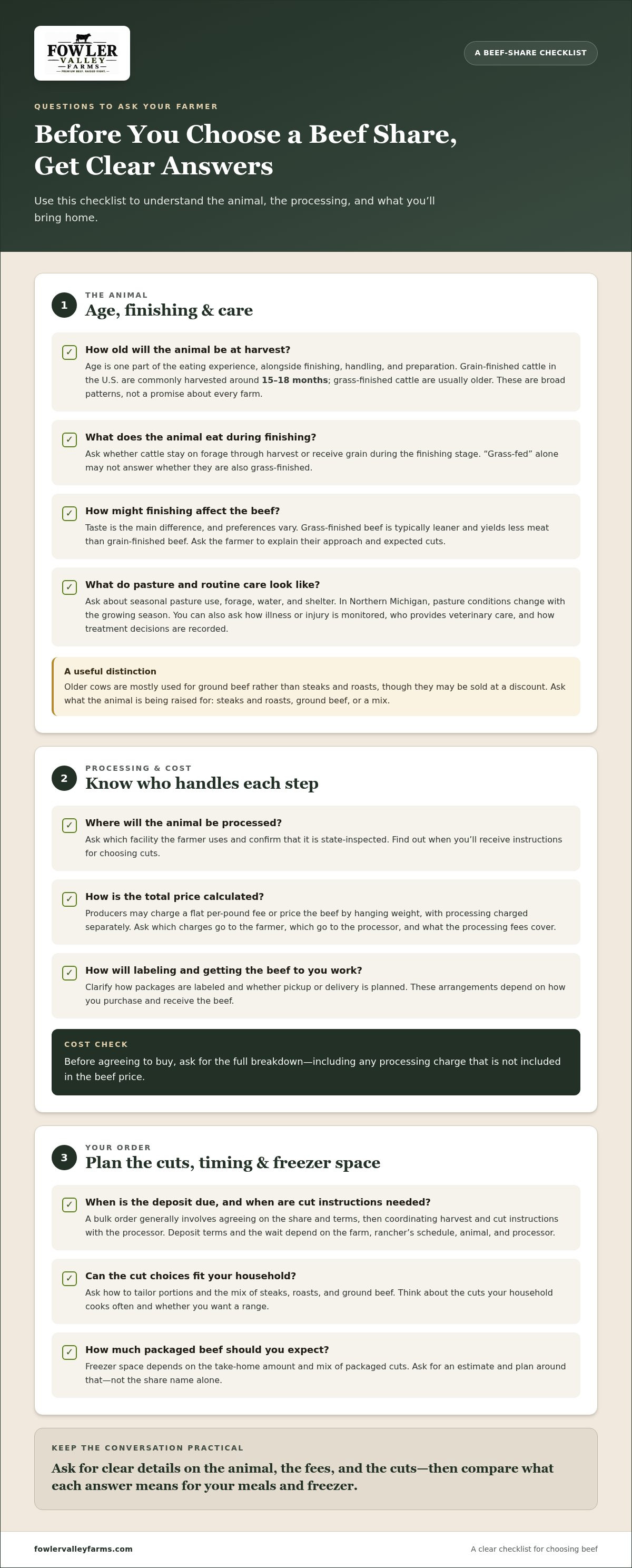
Ask how old the animal will be at harvest and what that means for the cuts you’ll receive. Age is one factor in the eating experience, alongside finishing, handling, and preparation. Ask whether the animal is raised for steaks and roasts, ground beef, or a mix. Older cows are mostly used for ground beef rather than steaks and roasts, though they may be sold at a discount.
For grain-finished cattle in the United States, harvest commonly happens around 15–18 months of age. Grass-finished cattle are usually older because they take longer to finish on grass. Those are broad patterns, not a description of every farm’s herd. Ask for the animal’s age or expected age at harvest, then ask how the farm’s finishing approach affects the beef you’ll take home. These are useful questions to ask a local beef farmer before choosing a bulk share.
A practical ordering conversation should cover what happens after you reserve beef. A bulk order generally starts with agreeing on the share and ordering terms, then coordinating harvest and cut instructions with the processor. Deposit terms and the expected wait depend on the farm’s arrangements, the rancher’s schedule, the animal being raised, and the processor’s schedule. Ask when the deposit is due and when you’ll submit cut instructions.
Pasture-raising deserves its own conversation. Ask how cattle use pasture through the seasons, what forage makes up their diet, and how the farm provides water and shelter. In Northern Michigan, pasture conditions change with the growing season, so ask how the herd’s routine shifts from spring growth to winter. Specific answers help you understand the farm’s practices beyond a label.
Animal health is closely tied to daily care. Ask how the farmer watches for illness or injury, who provides veterinary care, and how treatment decisions are recorded. You can also ask how long cattle remain on pasture and what happens when weather or ground conditions make grazing difficult. Look for clear explanations about routine care, not a promise that animals never get sick. The aim is to understand the practices behind the beef.
Age and pasture practices won’t tell you exactly how every steak will taste, but they give useful context. A grain-finished animal and an older grass-finished animal may produce different eating experiences, and household preferences vary. For a closer look at available beef cuts, consider which cuts your family cooks often and whether a range of steaks, roasts, and ground beef suits your meals.
2. Has it been grain-finished or grass-finished?
Ask what cattle eat during the finishing period, not only earlier in life. Cattle spend most of their lives on grass whether they’re grass-finished or grain-finished. The finishing stage is the key distinction. Ask whether cattle remain on forage through harvest or receive grain as they finish, and invite the farmer to describe the routine plainly.
“Grass-fed” and “grass-finished” don’t always answer the same question. If a farmer says the herd is pasture-raised, grain-finished, ask whether the cattle are also finished on grass or whether grain is introduced during finishing. That follow-up clarifies the feeding description. A direct answer should explain what the animal eats in its final stage, rather than relying on a broad label.
Finishing affects the eating experience. Taste is the main difference between grass-finished and grain-finished beef, and preferences vary by household. Grass-finished beef is typically leaner and yields less meat than grain-finished beef. Those differences can help you decide what suits your cooking. If you prefer leaner beef, ask how the farm’s grass-finishing approach shapes the cuts. If you enjoy grain-finished beef, ask how grain is used during finishing.
Keep your questions practical. Ask what cattle eat throughout the year, what changes during finishing, and how that approach affects flavor and leanness. A useful answer distinguishes the herd’s regular pasture diet from its finishing diet. You can also describe meals you cook often, such as grilled steaks or slow-cooked roasts, and ask how the finishing method might suit your preferences. The farmer can explain the approach, while your own taste remains part of the decision.
Freezer space matters when you’re choosing a beef box size. The space required depends on the take-home amount and mix of packaged cuts, so ask how much beef to expect and plan your freezer around that estimate. Don’t judge capacity by the share name alone.
Finishing also affects planning because grass-finished cattle usually take longer to finish than grain-finished cattle. Harvest timing depends on the rancher’s schedule, the livestock being raised, and the processor’s schedule. Ask how the farm’s feeding approach influences its harvest plan. This helps explain why timing varies without assuming every farm follows the same calendar. Clear answers about feed, finishing, and expected cuts give you useful grounds for comparing options.
3. Will it be processed in a state-inspected facility?
Ask where the animal will be processed and whether the facility is state-inspected. Beef must be processed in a state-inspected facility. This matters when arranging a whole, half, or quarter share, because processing turns the animal into packaged cuts. Ask which processor is involved and when you’ll receive instructions for choosing cuts. A clear sequence shows who handles each step.
For buying, processing, labeling, and transporting beef in the United States, ask the farmer how processing, labeling, and transport are handled. Labeling and transport arrangements depend on how you purchase and receive the beef, so clarify package labels and the pickup or delivery plan before ordering.
Ask how the processing charge is calculated before agreeing to buy. Local producers may charge a flat per-pound fee or calculate the beef price by hanging weight, with processing charged separately. When buying a whole, half, or quarter of a live animal, ask how the processor’s fees are calculated and what they cover. These approaches differ, so ask which charges go to the farmer and which go to the processor.
Once the animal reaches the processor, your contact is with the processor rather than the producer. Ask who will contact you about cut choices, when you’ll provide instructions, and how the processor will share the final charges. Knowing who handles each step can prevent confusion if you have questions about the cut sheet or processing bill.
A quarter, half, or whole order typically includes a mix of steaks, roasts, and ground beef. The exact balance depends on how the animal is divided and the cut instructions you provide. Ask which cuts are included, what choices are available, and how the processor handles cuts you don’t select. For example, discuss steak thickness, roast sizes, and ground-beef portions when completing the instructions.
Before the animal goes to the facility, confirm how to submit cut instructions and receive the finished packages. Ask how packages are labeled and whether you’ll pick them up from the processor or arrange another handoff. These details matter for planning at home, especially if you need to make room in your freezer. If local delivery is part of your arrangement, ask how its timing fits the processor’s schedule. Keep the processor’s contact details and agreed cost method for reference.
4. Antibiotics and added hormones
Ask how animal health treatments, including antibiotics and added hormones, are handled. These are separate topics, so ask about each directly. For antibiotics, find out whether cattle may receive them when illness or injury requires treatment and how the farm records those decisions. For added hormones, ask whether any are used during the animal’s life. A straightforward answer helps you understand the farm’s practices beyond a broad label.
Specific follow-up questions make the conversation more useful. Ask what happens if an animal becomes sick, who guides treatment decisions, and whether the farm keeps treatment records. You might ask, “If an animal needs antibiotics, how do you document that treatment?” Then ask how the farm identifies that animal and tracks its care. These questions focus on the farm’s actual process rather than assumptions about every animal.
Label terms can leave room for interpretation. If a farmer describes beef as “raised without antibiotics,” ask what that means for the farm’s practices. Does it refer to the animal’s entire life or a particular stage, and how does the farm handle an animal that needs treatment? The goal is to understand the care decision and the records behind the wording, not to pressure a farmer to avoid necessary veterinary care.
Discuss added hormones separately. Ask whether the farm uses them and what that means in practice. If you hear a phrase such as “no added hormones,” ask whether it applies to the animal being sold and how the farm communicates that information. Don’t treat “pasture-raised,” “grass-finished,” and “no added hormones” as interchangeable descriptions. Each refers to a different aspect of the farm’s approach.
It can help to write down answers before choosing beef. Record whether antibiotics may be used for treatment, how decisions and treatments are tracked, and the farm’s answer about added hormones. If farms describe their practices differently, compare the details rather than relying on a single phrase. For example, distinguish a clear explanation of treatment records from a general statement about animal care.
These conversations help you understand how a farm manages its herd, from routine observation to decisions about an individual animal. Ask follow-up questions if a term is unfamiliar, and request a straightforward explanation in everyday language. A farmer who can describe the process, give a concrete example, and explain the farm’s labels gives you a clearer basis for choosing beef that fits your preferences.
5. Cut-sheet customization
A cut sheet lets you tell the processor how you want the beef portioned. Ask whether your order includes one and when you’ll complete it. Bulk orders commonly include steaks, roasts, and ground beef, but the cut sheet helps tailor those portions to your kitchen. Read each choice before submitting it. If a term is unfamiliar, ask the processor what it means for the finished package.
Start with the cuts your household cooks most often. If you regularly grill steaks, ask about the steak options and portion sizes on the cut sheet. If pot roast is a familiar Sunday meal, ask how to request roasts that work for your cookware. For ground beef, ask what package sizes the processor offers. These examples turn general preferences into clear instructions.
The size of your share affects how much of each cut you receive. A quarter, half, or whole order represents a different portion of the animal, so ask how the processor divides available cuts among those shares. Find out whether cut choices are limited by share size or by how the animal is divided. This helps set realistic expectations before you make selections.
Review the whole sheet rather than focusing only on steaks. A selection of roasts and ground beef may suit your meals better than directing every choice toward premium cuts. Ask how less familiar cuts are handled and whether you can choose how they’re prepared. If you don’t recognize a cut’s name, ask for a plain description and a cooking method before deciding.
Make choices that suit your freezer and cooking habits. For example, choose package sizes that work for the meals you prepare, and consider how often you cook for one person versus a full household. Ask when the processor needs the completed cut sheet. Changes may be difficult once cutting has begun, so review your selections carefully and keep a copy.
Before signing off, confirm the choices that matter most: steak thickness, roast sizes, ground-beef portions, and how remaining cuts are handled. The exact options depend on the processor’s cut sheet, so use its wording when recording your preferences. You might note “smaller roasts” or “ground beef in family-meal portions” where available. Clear instructions give the processor a useful guide and help the finished mix suit your household’s everyday cooking.
Some local beef producers offer cut sheets that let buyers customize how their meat is portioned. Ask whether this option is available for your order.
Fowler & Valley Farms: Build Your Own Beef Box
Fowler Valley Farms offers a Build Your Own Beef Box, so you can choose beef to suit your household’s meals. It’s a practical next step if you want individual cuts without arranging a whole, half, or quarter animal and working through processor cut instructions. You can also choose Beef Boxes or set up Beef Subscriptions for recurring orders. Local Delivery offers another way to receive your order.
Think about what your household cooks most often, such as ground beef for weeknight meals or steaks for the grill, then explore the options that fit. Visit fowlervalleyfarms.com to learn more about the Build Your Own Beef Box and other beef options.
Make Your Next Beef Purchase With Confidence
Choosing beef is also a chance to build a direct relationship with the people who raise it. The questions to ask a local beef farmer can open a practical conversation and help you decide what suits your household. Pay attention to how clearly the farmer explains their choices and which details matter most to you.
You don’t need to know every farming term before you begin. Talking about the meals you cook and the kind of beef you prefer can help you choose a next step that feels right for your table.
If you’d like to choose cuts for your household, explore the Build Your Own Beef Box. We’ll be glad to help you take the next step with confidence.
Frequently Asked Questions
Does your price include processing or do I need to pay that separately?
Processing may be billed separately, so ask for a written breakdown before placing an order. Have the farmer explain what goes to the farm, what the processor charges, and how each charge is calculated. Ask whether the final processing amount is based on hanging weight or take-home weight. Keeping these details together helps you understand the full purchase and avoid comparing one farm’s beef price with another farm’s total cost.
What do you estimate the quality grade to be?
A farmer can share an estimate, but a specific quality grade cannot be guaranteed before harvest. Quality grading may not be available, so ask what the farmer can tell you about the animal and its production. If the processor doesn’t grade the beef, ask what the farmer can tell you about the animal and its production. That gives you useful context without treating an estimate as a formal grade.
What questions should I ask when buying beef from a local farmer or rancher?
Start with the details that affect your decision: the animal, feeding approach, health practices, processing arrangements, and cut options. Then ask how ordering works, which costs are separate, and what happens after the animal reaches the processor. The questions to ask a local beef farmer should reflect your household’s needs. If you’re new to bulk beef, for example, ask what decisions you’ll need to make and when.
How are hanging weight, take-home weight, and processing costs calculated?
Bulk beef is commonly priced by hanging weight, while take-home weight is typically 25–35% less. Producers may charge a flat per-pound fee or use hanging weight with separate processing fees; in most cases, buyers pay the processor based on the pounds of beef they take home.
Can I visit the farm or see how the cattle are raised?
Some local beef producers offer farm tours so customers can see the operation firsthand. You can also connect with farmers and ranchers at farmers markets and ask about their production practices.
What is the ordering process, deposit, and expected wait time?
A bulk order generally starts with agreeing on the share and ordering terms, then coordinating harvest and cut instructions with the processor. Ask when the deposit is due and when to submit cut instructions. Deposit terms and the expected wait depend on the farm, rancher, animal, and processor schedules.