What Is Grass-Finished Meat? How It Differs from Grain-Finished Beef
Two cattle can spend time on pasture and still be finished on different diets. That’s the detail behind the question, what is grass finished meat? Grass-finished beef comes from cattle that eat grass and forage through the finishing stage, while grain-finished cattle receive grain during that stage. “Grass-fed” alone may not explain what the animal ate before harvest.
It’s understandable when these labels blur together. They don’t always explain whether they refer to pasture access, an animal’s full diet, or its finishing approach. Here in Northern Michigan, we believe you deserve a clear explanation of how your beef was raised.
In this article, we’ll explain the difference between grass-fed and grass-finished, how finishing can relate to flavor and texture, and which details to look for when comparing beef. We’ll also explain how we raise pasture-raised, grain-finished beef at Fowler & Valley Farms. It’s a distinct approach, and we’re glad to describe it plainly so you can choose beef that fits your preferences.
Key Takeaways
- To understand what is grass finished meat, focus on what cattle eat during the finishing period, not pasture access alone.
- Compare grass-finished and grain-finished beef by finishing diet. The label alone doesn’t explain every detail about sourcing or care.
- Grass-finished doesn’t automatically mean beef is organic or guarantee a particular health outcome. Look for specific details and certifications.
- Consider your cooking preferences, then compare them with the feeding practices described.
- Fowler Valley Farms raises pasture-raised, grain-finished beef, a distinct approach from grass-finished.
What Does Grass-Finished Meat Mean?
In Northern Michigan, the growing season shapes what cattle can graze, but pasture access and finishing diet are separate parts of the story. The finishing description tells you what the animal ate during the final stage before harvest. By itself, it doesn’t tell you where cattle spent their lives or how the farm managed them.
Grass-finished beef comes from cattle raised on grass and forage through the finishing stage, rather than switched to grain to finish. In common usage, the phrase often describes cattle that ate grass and forage throughout their lives. Because labels and producer descriptions can differ, look for the actual feeding details rather than relying on a phrase alone.
How Is Grass-Finished Different from Grass-Fed?
People sometimes use “grass-fed” and “grass-finished” as if they mean the same thing. The distinction is the finishing period. “Grass-fed” can describe cattle that ate grass for part of their lives, but the phrase alone may not explain whether they received grain later. “Grass-finished” is intended to clarify that the cattle were finished on grass and forage.
That’s why the feeding timeline matters. If a label says only “grass-fed,” the final diet may be unclear. A useful description explains whether grain was part of the finishing diet. For a real-world example of the combined wording, Tallgrass Beef Company is described as selling “grass-fed and grass-finished beef.” The takeaway is the distinction between the terms, not an assumption that every seller uses them identically.
Does Grass-Finished Tell You How Cattle Were Raised?
No. Finishing describes diet, not the entire raising system. Cattle may have pasture access without being grass-finished, and “grass-finished” alone doesn’t tell you how much pasture access they had at each stage. Those details are separate.
Think of sourcing as several questions, not one label. A finishing description tells you what cattle ate near the end of production. It doesn’t automatically establish where the beef came from, whether it is certified organic, or what animal-care practices a farm follows. The term doesn’t prove broader environmental claims, either.
When comparing beef, look for a plain description of the animal’s diet and finishing period, then consider pasture access and other farm practices separately. Specific details are more useful than reading extra meaning into a short label. This makes it easier to compare approaches, including pasture-raised beef that is grain-finished, without mistaking it for grass-finished beef.
How Grass-Finished and Grain-Finished Beef Differ
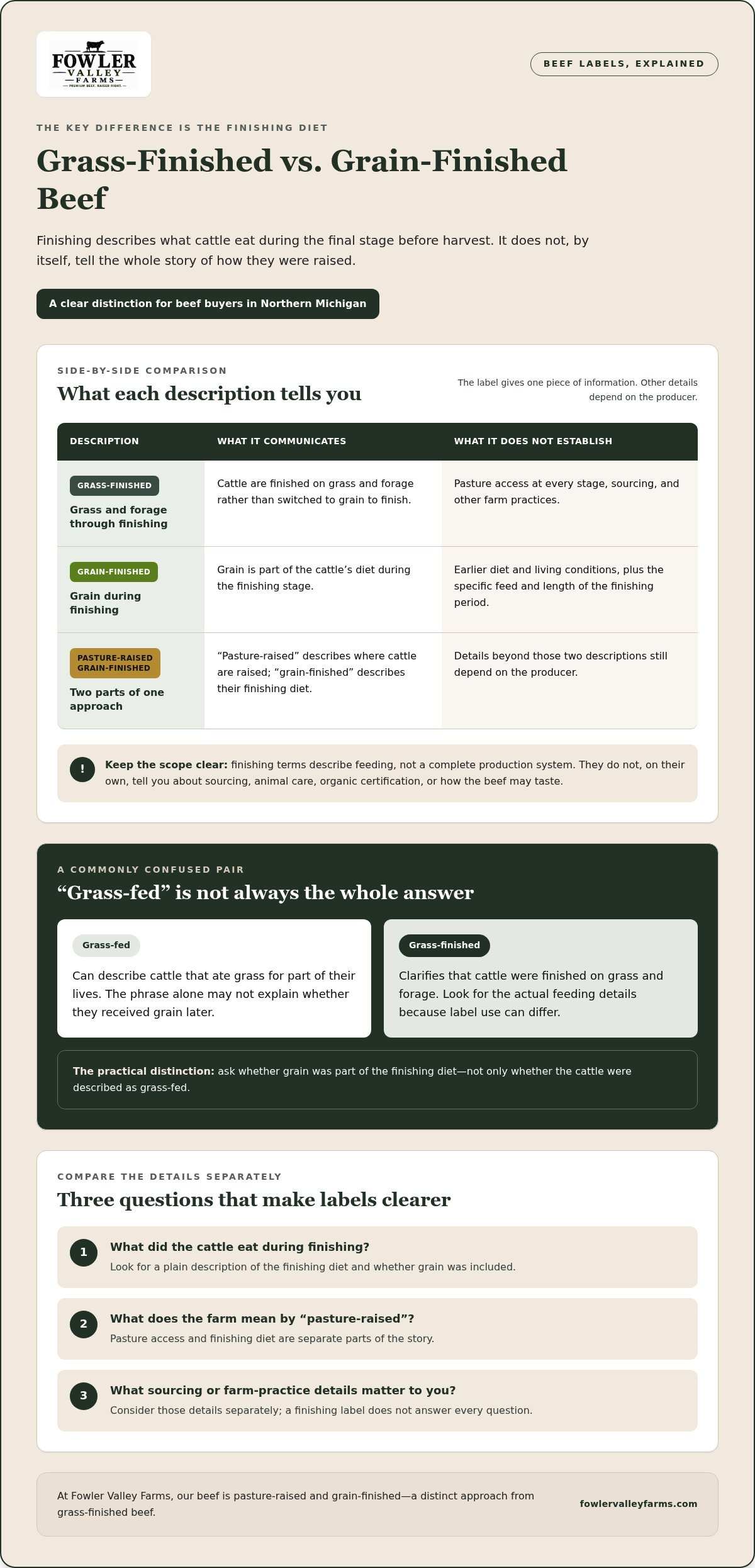
The clearest difference is the finishing diet. Grass-finished cattle are finished on grass and forage; grain-finished cattle receive grain as part of the finishing approach. These terms describe feeding, not a complete production system. Finishing terms alone don’t describe every farm practice, including pasture access, sourcing, animal care, or how beef may taste.
| Description | What it communicates | What remains unknown |
|---|---|---|
| Grass-finished | Grass and forage are used through the finishing stage. | Pasture access at every stage, sourcing, and other farm practices. |
| Grain-finished | Grain is part of the finishing diet. | Earlier diet and living conditions, plus the specific feed and finishing period. |
| Pasture-raised, grain-finished | Pasture raising and grain finishing describe different parts of the approach. | Details beyond those two descriptions still depend on the producer. |
What Does Grain-Finished Beef Mean?
Grain-finished means cattle receive grain during the finishing stage. The term doesn’t specify the precise feed, how long that stage lasts, or where the animals lived earlier. Those details are separate from the label. It describes a feeding approach, not a verdict on the farm or a guarantee about flavor or nutrition.
When comparing label language, separate what a term says from what else you may want to know. Grass-finished points to grass and forage during finishing; grain-finished points to grain. Neither phrase tells the whole story of how the beef was raised. The American Grassfed Association (AGA) is one example of an organization with its own grass-fed standards, which can provide context when a producer refers to a specific standard.
Can Pasture-Raised Beef Be Grain-Finished?
Yes. “Pasture-raised” describes where cattle are raised, while “grain-finished” describes their finishing diet. The phrases can describe different parts of one approach; they aren’t contradictory. At Fowler Valley Farms, our beef is pasture-raised and grain-finished. We describe our approach plainly so you can distinguish it from grass-finished beef. Our farm and raising approach explains that distinction.
Keep the questions separate when comparing beef: What did the cattle eat during finishing? What does the farm mean by pasture-raised? What sourcing details matter to you? The answers help you compare production approaches without assuming that one label settles every question or guarantees a particular eating experience.
What Grass-Finished Labels Do, and Do Not, Tell You
Understanding what is grass finished meat starts with one detail: the cattle’s diet during finishing. The label doesn’t fill in every part of the farm’s story. Diet, pasture access, sourcing, certification, and animal-care practices are related topics, but each describes something different.
One feeding label cannot describe every farm practice. Grass-finished alone doesn’t establish that beef is organic, identify where the cattle were raised, or explain how they were cared for throughout their lives. It also doesn’t guarantee a particular health outcome. Read the label as one piece of information, then look for specific details about claims that matter to you.
What Questions Help Clarify a Beef Label?
A few direct questions can turn a broad label into a clearer account. Focus on what the wording means for the cattle and the farm’s practices:
- What did the cattle eat during the finishing stage?
- Does the grass-fed or grass-finished description cover the animal’s full life or a particular stage?
- What does pasture access mean in this farm’s approach?
- Where was the beef raised and processed?
- Are claims such as organic status supported by a named certification or product information?
Each question addresses a separate part of sourcing. An answer about pasture access doesn’t tell you whether cattle were finished on grass or grain. A finishing description doesn’t explain origin or certification, either. Keeping these details distinct helps you compare products without asking one phrase to carry more meaning than it can.
Does Grass-Finished Automatically Mean Organic or Healthier?
No. Grass-finished describes a feeding approach; on its own, it isn’t proof of organic certification or a promise of a specific health benefit. If organic status matters to you, look for product information that specifically addresses that claim. For health claims, seek reliable evidence about the particular claim rather than treating the finishing label as proof.
The same care applies to animal-welfare and environmental claims. A diet description doesn’t establish every aspect of animal care or the farm’s environmental practices. Those claims need their own explanation and support. Start by deciding which detail you want to understand.
As you read a package or product page, use this quick check:
- Diet: What does the finishing term say about feed?
- Access: Is pasture access described separately?
- Origin: Does the producer identify where the beef comes from?
- Claims: Are certification or other specific claims explained on their own terms?
This helps you make a choice based on what’s stated, rather than assumptions attached to a label. When buying direct from a farm, a plain explanation of its practices makes the distinction easier to understand.
How to Choose Beef Based on Finishing and Cooking Preferences
Choose beef by weighing how it was raised alongside how you plan to cook and serve it. A label can help narrow your options, but it can’t predict exactly how a particular cut will taste at your table. Knowing what is grass finished meat helps you understand the finishing term. Next, decide which details and cuts fit your household.
- Name your priorities. Decide whether finishing diet, pasture access, sourcing details, or the cut itself matters most to you.
- Clarify the feeding approach. Look for a plain explanation of what cattle ate during finishing, rather than relying on a broad label alone.
- Compare the details. Consider the producer’s account of sourcing and raising practices alongside the cuts available.
- Choose for the meal. Match the cut to your cooking plans and household preferences, not assumptions based only on a label.
How Might Finishing Affect Flavor and Cooking?
Finishing can be part of a beef’s flavor and texture story, but it isn’t the only factor. The animal, cut, and preparation all play a role, so a grass-finished or grain-finished label can’t guarantee a particular taste, tenderness, or cooking result. Consider what you enjoy, then choose a cut suited to the meal.
For a Northern Michigan household planning a winter pot of stew, a braising cut may suit slow, steady cooking better than a steak intended for a quick sear. If you’re grilling in summer, you may prefer a cut that fits that method. Either way, the cut and how you prepare it matter alongside the finishing description.
Which Details Matter Most to Your Household?
Rank your priorities. You might care most about the cattle’s finishing diet, want to understand pasture access separately, or value clear information about where the beef comes from. That order makes label comparisons more useful and keeps unrelated claims from crowding your decision.
Grain-finished beef may suit your preferences. This doesn’t have to be a judgment about one method being best for every household. It’s about understanding the approach and choosing what works for your table. Our beef is pasture-raised and grain-finished, and our beef boxes offer a practical way to choose cuts for family meals.
Keep your cooking habits in view as you compare options. A household that often makes burgers, roasts, or weeknight skillet meals may prioritize different cuts than one planning a steak dinner. Knowing what you like to cook turns sourcing details into a practical choice.
If our pasture-raised, grain-finished approach fits what you’re looking for, explore Fowler Valley Farms beef and choose cuts for the meals you enjoy making.
Fowler Valley Farms’ Pasture-Raised, Grain-Finished Beef
At Fowler Valley Farms, we raise pasture-raised, grain-finished beef. We don’t describe our beef as grass-finished. The terms mean different things, and we believe it’s worth being plain about the difference so you can decide what belongs in your freezer.
Why Be Clear About the Finishing Approach?
Knowing what is grass finished meat means looking at the cattle’s diet through the finishing stage. Our cattle are pasture-raised and grain-finished, so our approach is distinct from beef finished on grass and forage. Neither description needs to be presented as the only right choice. What matters is whether the stated practices fit your preferences.
For some households, finishing diet is a central priority. Others may weigh pasture access, sourcing, the cuts they cook most, or how they want to buy beef. Clear wording lets you compare those details without assuming one label answers every question. If you’re looking specifically for grass-finished beef, focus on a description of the finishing diet. If pasture-raised, grain-finished beef suits your preferences, that’s a different choice, and it should be described just as plainly.
Our family farm is operated by the Putt family across multiple generations. We raise beef with a commitment to using the whole animal and avoiding shortcuts. Our beef goes directly from the family farm to customers’ freezers, keeping the relationship between the farm and the household close and straightforward.
Where Can Northern Michigan Shoppers Explore Fowler Valley Farms Beef?
We’re part of Northern Michigan, a region shaped by communities such as Honor, Frankfort, Traverse City, and towns across Benzie and Leelanau counties. Those places matter to us because this is home. They’re also a reminder that buying beef is about more than a label: it’s useful to know the family and raising approach behind the food you serve.
Our family farm background offers more context about the Putt family and Fowler Valley Farms. Keep the two parts of our description in view: pasture-raised speaks to the raising approach, and grain-finished tells you about the finishing diet. Together, those words describe our beef accurately. They don’t make it grass-finished.
Some shoppers come to this subject specifically looking for grass-finished beef. Use the distinctions in this guide to compare labels and descriptions. Look for the finishing diet you prefer, and consider pasture access and sourcing separately. A clear description makes it easier to choose according to your own standards.
If our pasture-raised, grain-finished approach sounds right for your household, explore Fowler Valley Farms beef. We’re glad to share what we do, plainly and without asking you to choose more than what fits your table.
Make Your Next Beef Choice With Confidence
Let your next meal help shape what you look for. Before choosing beef, think about the dishes your household returns to, the cuts you enjoy cooking, and which sourcing details matter most to you. That gives you a practical starting point at the counter or while browsing online. Compare what’s stated with the meals you want to make, rather than choosing by a label alone.
Knowing what is grass finished meat can help you read that label carefully, but the right choice is the one that fits your preferences and table. Look for clear descriptions and take your time deciding. Good food choices don’t need to follow someone else’s rules.
Ready to choose beef for your freezer? Explore our Beef Boxes, with options starting at $79, and find a box that suits the meals you like to make.
Frequently Asked Questions
Is grass-finished beef the same as grass-fed beef?
Not necessarily. “Grass-fed” may describe cattle that ate grass at some point, while “grass-finished” signals that grass and forage were part of the finishing diet. When comparing packages, look for an explanation of the feeding period rather than assuming the phrases are interchangeable. A product description can clarify what the label means for that particular beef.
Can cattle eat hay during winter and still be grass-finished?
Yes. Hay is dried forage, so cattle can eat hay during winter and still fit a grass-finished description. Northern Michigan winters make this distinction especially practical because fresh pasture isn’t available year-round. What matters is the stated feeding approach across the finishing period. Look for an explanation of what the cattle were fed through winter and at other stages.
Does grass-finished beef automatically mean the meat is organic?
No. Grass-finished and organic describe different claims, so one doesn’t establish the other. If organic status matters to you, look for that claim and its supporting certification information on the product or producer’s materials. Don’t rely on the cattle’s finishing diet as a substitute. Keeping each claim separate makes it easier to compare products and choose based on the details that matter to your household.
Can pasture-raised beef also be grain-finished?
Yes. The two descriptions can apply to different parts of how cattle are raised. A farm may describe cattle as pasture-raised and grain-finished. If you’re buying beef for a particular meal, that distinction helps you understand the production approach without guessing from “pasture-raised” alone. Read both parts of the description, especially if you’re looking specifically for grass-finished beef.
Does grass-finished beef taste different from grain-finished beef?
It can, but a label can’t tell you exactly how an individual cut will taste. Flavor and texture also depend on the cut and how it’s prepared. If you’re curious, try the same cut from different finishing approaches using a familiar recipe, then note what you prefer. Keeping the cut and cooking method similar gives you a more useful comparison than changing several things at once.
How should I cook grass-finished ground beef?
Use a familiar ground-beef recipe and watch the pan as the meat cooks, since the label alone doesn’t determine how quickly it will brown or how moist it will be. For tacos or a skillet meal, break the beef into crumbles and stir as needed for even cooking. Follow the recipe’s safe-cooking guidance, and season to taste. Your usual method is a good starting point.